Best Bidet Under $50 in 2026: Simple Models Compared
Disclosure: We may earn a commission when you buy through links on this page, at no extra cost to you. As an Amazon Associate I earn from qualifying purchases. Learn more
Attachments and handheld sprayers compared on fittings, nozzles and install, to help you choose the best bidet under 50 for your toilet.
A bidet does not have to cost hundreds of dollars to clean well. At the budget end you give up heated seats and warm air drying, but the core job, a steady and adjustable stream of water, is well within reach. This guide shows you how to find the best bidet under 50 dollars for your toilet and plumbing, and the product table below sums up the main types side by side.
Almost every model at this price is a simple mechanical design that runs on your home water pressure alone, which keeps cost, installation, and upkeep low. If your budget can stretch further one day, our guide to the best bidet options across all price bands is a useful next read, but for most first time buyers this range is the sensible place to start.





Who Should Buy a Bidet Under $50?
First Time Buyers Who Want a Low Risk Trial
If you are curious about washing with water but unsure you will like it, a budget attachment lets you try the idea for about the cost of a large pack of toilet paper. You install it in under an hour, use it for a few weeks, and learn what you value before spending more. Our step by step guide on how to use a bidet covers technique, aim, and drying so your first week feels easy.
Renters Who Cannot Change the Fixtures
Renters need gear that installs without drilling, wiring, or permanent changes, and budget attachments fit that brief well. They mount under your existing seat, tap into the supply line with a simple adapter, and come off just as cleanly when you move out. Keep the original supply hose in a labeled bag, and you can restore the toilet to its original state in minutes at the end of your lease.
Households Adding a Second Bathroom
Once one bathroom has a bidet, the other one feels unfinished. A low cost model is a practical way to equip a guest bath or a basement toilet without repeating a premium purchase. Family members who rotate bathrooms will appreciate the consistency, and because these units have no electronics, a rarely used guest bath model asks for almost no attention between visits.
What You Get and Give Up Under $50
Under $50 you get the essentials done properly: a nozzle that aims at the right spot, a dial or lever that meters pressure, and fittings that hold your home water pressure without dripping. Attachments at this price are slim enough to sit under most standard seats, and many include a self cleaning rinse that washes the nozzle before and after use. What you give up is comfort hardware. There is no heated seat, no warm air dryer, no remote, and no deodorizer, because each of those needs electricity and adds far more than $50 of cost.
Water temperature is the other trade off. Most budget models draw cold water only from the toilet supply line. Many users find cool water perfectly fine, and in warm climates the line water is rarely truly cold. Dual temperature attachments exist near the top of this budget, but they need tubing run to a nearby sink hot water line. If powered comfort matters more than price, our best electric bidet guide shows what the extra money buys.
Bidet Types Compared at This Price
Attachments That Mount Under Your Seat
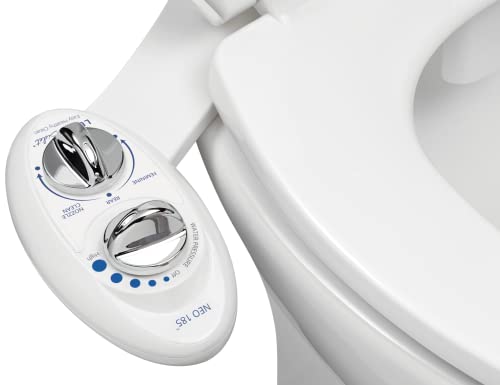
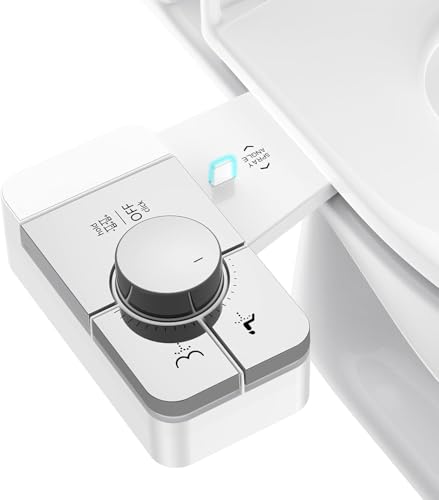
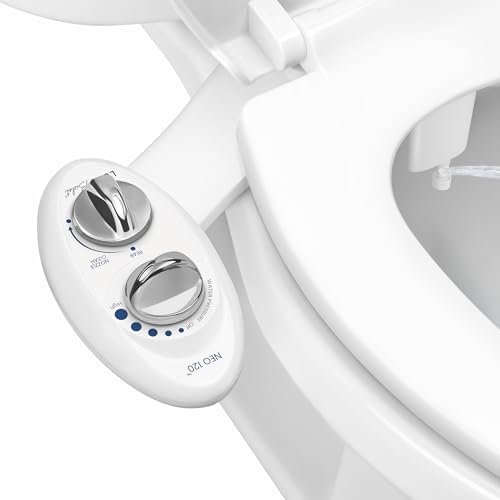
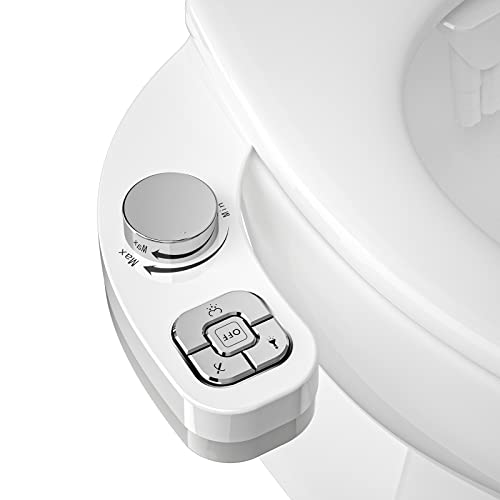
The attachment is the default choice under $50. A flat plate with one or two nozzles bolts between the bowl and your existing seat, and a side dial or lever controls pressure. Because it adds almost no height, your seat stays stable and familiar. Dual nozzle versions add a second spray angle aimed further forward, which many women prefer. Attachments suit most two piece toilets with round or elongated bowls, as long as the seat hinge bolts are reachable.
Handheld Sprayers
A handheld sprayer hangs on a hook or tank mount and works like a small shower head on a flexible hose. You aim it by hand, which gives precise control and makes it easy to rinse cloth diapers or clean the bowl itself. The trade off is that aim takes practice, and a careless squeeze can splash outside the bowl. The hose and trigger also add wear points that a fixed attachment does not have.
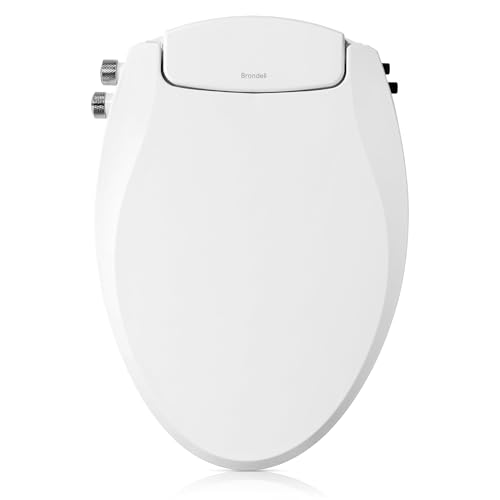
Basic Replacement Seats
A small number of full seats with a built in nozzle land near $50 on sale. You swap your whole seat, so there is no plate shifting under you and the look is tidier. The nozzle usually offers one spray pattern with pressure set by a side knob. Seats are sized by bowl shape, so measure before ordering, because an elongated seat on a round bowl overhangs and feels unstable. At this price the hinge and lid are basic plastic, so expect a shorter service life than a pricier seat.
Key Features to Compare
Installation and Compatibility
Installation decides whether a cheap bidet feels like a bargain or a headache. Look for a kit that includes the tee adapter, hose, and washers, plus clear sizing for the adapter threads, because toilet supply valves vary. Confirm that your shutoff valve turns freely and that you have room to work behind the tank. Flexible supply lines are easiest to tap into, while rigid pipes may need an extra fitting. For a full walkthrough, see our guide on how to install a bidet before you buy, and match its tool list against what you own.
Build Quality and Finish
At this price the body is plastic, so the fittings are where quality shows. Brass or stainless steel tee adapters and hose ends resist cross threading and cracking far better than all plastic connectors, and they are worth a few extra dollars. Check the stated pressure rating and look for smooth molding with no sharp seams near the nozzle housing, since rough edges collect grime and are harder to wipe clean.
Nozzle Design and Pressure Control
A retractable nozzle that tucks behind a guard gate stays cleaner between uses, because it sits out of the direct splash zone. Adjustable nozzle angle helps you place the stream without shifting your body, and dual nozzles widen the covered area. Pressure control matters just as much. Home water pressure often runs 40 to 80 psi, far more than you need at full blast. A dial with a gentle low end and fine steps lets you start soft and build up, while a control that jumps from off to strong in a quarter turn is unpleasant to learn on.
Water Temperature Options
Cold water only is the norm under $50, and nearly every model here belongs to the category covered in our best non electric bidet guide. If cool water puts you off, a dual temperature attachment feeds from the sink hot line as well, and a mixing dial blends the two. That setup only works when the sink sits close to the toilet, and you must run water at the sink first to bring heat through the line. In a large bathroom with a distant sink, the wait makes the feature more promise than benefit.
Certifications and Warranty
Budget gear rarely carries long certifications lists, but a few marks still matter. Look for plumbing components that meet ASME or CSA standards and hoses and valves described as lead free, since every part sits in your drinking water path. A backflow safeguard keeps bowl water from ever moving toward your supply. Warranty length at this price is usually one year, and the practical test is whether spare washers, adapters, and hoses are easy to order.
How Much Should You Spend?
Under about $30 you get a single nozzle attachment or a basic sprayer with mostly plastic fittings. It works, but pressure control tends to be coarse. The $30 to $50 band is where value peaks, adding metal fittings, dual nozzles, and finer dials. Stepping up to about $100 to $250 buys sturdier seats and better finish, while powered seats start higher still. Washing also cuts toilet paper use sharply, a saving we break down in bidet vs toilet paper, and for most households the middle band pays for itself fastest.
Common Mistakes to Avoid
- Skipping the shutoff valve check, so a stiff or leaking valve turns a simple install into an emergency call.
- Overtightening plastic fittings, which cracks them and causes slow drips that damage the floor over time.
- Buying an elongated seat or attachment layout for a round bowl, leaving the seat rocking and the nozzle misaligned.
- Cranking the dial to full pressure on the first use, which startles new users and can sting sensitive skin.
- Ignoring a slow leak at the tee adapter after installation, because small drips rarely fix themselves and often grow.
- Choosing a dual temperature model when the sink is across the room, making the hot line run impractical.
How to Make Your Bidet Last Longer
Rinse the nozzle weekly using its self cleaning setting, and wipe the housing with a soft cloth and mild soap. Hard water slowly narrows the nozzle openings, so soak the nozzle tip in vinegar every few months if your water leaves scale on faucets. Check the hose and adapter joints twice a year by running your fingers around each connection while the line is pressurized, since a damp fingertip finds leaks your eyes miss. Close the control dial fully after each use rather than leaving the unit under partial pressure. If the spray weakens, rinse the small filter screen at the water inlet before assuming the unit has failed.
FAQ
Can you get a good bidet for under $50?
Yes, if good means a strong and adjustable wash, a clean install, and fittings that stay dry. Models in this range clean as effectively as far pricier units, because water does the work and pressure comes from your plumbing. What the money removes is comfort extras like seat heating. Judge listings by fitting materials, nozzle shielding, and the fineness of the pressure dial, and a sub $50 unit can serve you well for years.
Do bidets under $50 need electricity?
No. Budget attachments and sprayers are fully mechanical and run on water pressure alone, so there is no cord, no outlet requirement, and nothing to fail during a power outage. That also suits older bathrooms with no outlet near the toilet. The only comfort you might miss in winter is warm water, and even that can come from a sink hot line on dual temperature models rather than an electrical element.
Are bidets under $50 sanitary to use?
Yes, when the nozzle is shielded and rinsed regularly. Retractable nozzles hide behind a guard gate between uses, and the self cleaning rinse flushes the tip with clean supply water. The spray comes straight from the same line that fills your tank, so it is as clean as your tap water. Sharing one attachment among household members is normal practice, much like sharing a shower head. If someone at home has a weakened immune system, ask their clinician about any extra cleaning routine.
Will a bidet attachment fit a one piece toilet?
Often yes, but one piece toilets deserve a closer look before ordering. Many have tight curves where the tank meets the bowl, and some use concealed seat bolts or a skirted base that hides the supply connection. Measure around your seat hinge bolts and check that you can reach the fill valve connection under the tank. If access is blocked, a handheld sprayer that taps the supply at the wall valve is often the easier fit.
Does a bidet under $50 raise your water bill?
Barely. A typical wash uses roughly a pint or two of water over 20 to 30 seconds, a small fraction of one toilet flush. Most households see no visible change on the bill, and the saving on toilet paper is far larger than the added water cost. If your home has high water rates, shorter washes at moderate pressure keep use minimal while still cleaning well.
Final Thoughts
A tight budget does not lock you out of a proper wash. Focus on metal fittings, a shielded nozzle, and a dial with a gentle low end, and the best bidet under 50 dollars will handle daily use for years. Compare the types in the product table above against your bowl shape and supply access, pick the format that fits, and start at low pressure while you learn.