Best Bed Pillows for Sitting Up in 2026: Matching the Right Pillow to Your Routine
Disclosure: We may earn a commission when you buy through links on this page, at no extra cost to you. As an Amazon Associate I earn from qualifying purchases. Learn more

Compare bed pillows for sitting up by routine, shape, fill and size, with honest price bands and care tips to help you choose the right pillow first time.
Choosing the best bed pillows for sitting up starts with the routine you repeat most nights, because a reader, a film watcher, and a laptop worker lean at three different angles. There is no single shape that wins for all three, and the priciest pillow on the shelf is often the wrong shape bought at a higher price. This guide sorts the choice by routine first, then by shape, fill, and size, and the shape table further down gathers the main shape classes in one place.
One point deserves saying plainly before the details. A pillow for sitting up in bed is bedding, bought to make reading, watching, and working in bed more comfortable, and it does not treat, cure, or correct any condition. What a good one does is hold your back, shoulders, and arms at a steadier angle than a stack of ordinary sleep pillows can, so the routine stays comfortable for longer.







The Routine Fork: How You Sit Up Decides the Shape
Angle is the whole decision. Sit bolt upright and you need height and firmness behind the shoulder blades, while a reclined lean needs a slope more than it needs height. Work out which of the three routines below sounds like your bed, and the shape choice in the next section mostly makes itself.
One boundary is worth drawing first. Sleeping upright through the whole night is a different purchase from sitting up awake, and shoppers looking for the best pillows for sleeping sitting up should judge loft and neck support by sleep rules, not by the comfort rules in this guide.
Reading Upright, Book or Tablet in Hand
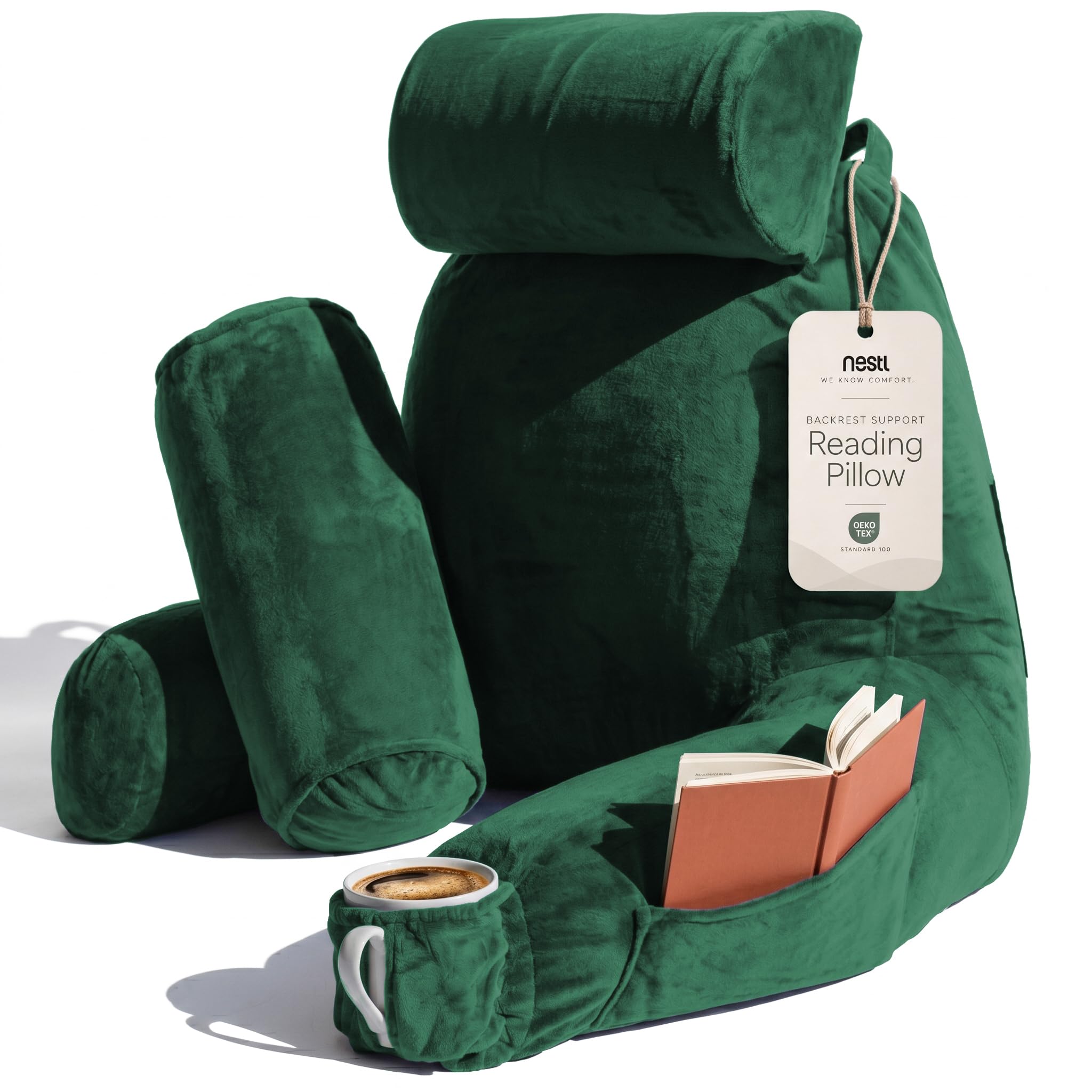
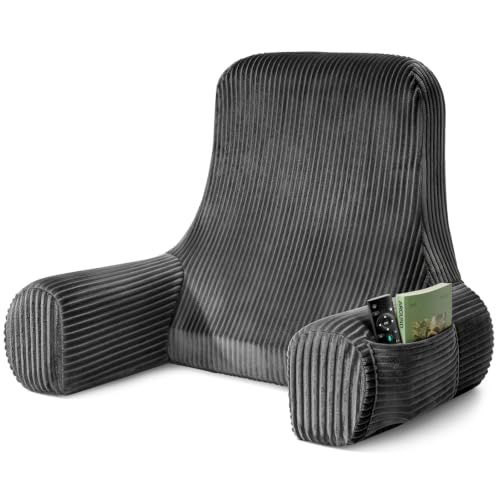
Readers sit the most upright of the three groups, often for an hour or more at a stretch. You need a back that reaches the shoulder blades, a firm enough fill that the shape does not sink as the chapter runs long, and arms or side wings that give your elbows somewhere to rest while you hold the book up. Shoppers comparing the best bed reading pillows will find firmness judged first for exactly this reason.
Reclined Watching and Browsing
Film watchers and phone browsers lean back at a shallow angle and stay there, so height matters less than a smooth slope with no ridge digging in at the waist. A gentle wedge or a low backrest suits this routine better than a tall upright back. Surface feel counts for more here as well, because your weight rests on the pillow for the full length of a film.
Laptop Work, Calls, and Breakfast Trays
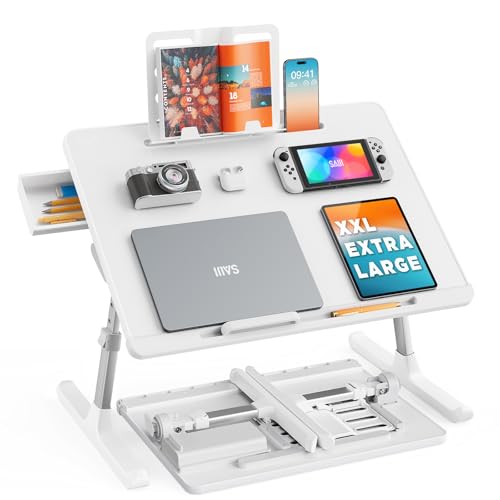
Working in bed adds a task the other routines do not have: your hands need to stay level with a keyboard or a tray for a long stretch. A stable base that does not creep away from the headboard matters most, with arms at a height that lets your elbows rest while you type. Pair the pillow with a lap desk rather than balancing the laptop on the duvet, because the screen height, not the backrest, decides whether your neck stays comfortable.
Shape Classes: Wedges, Backrests, and Bolsters
Nearly every product in this corner of the bedding shelf belongs to one of three shape families. The families overlap at the edges, but the differences below decide which routine each one serves.
| Shape class | Best for | Watch out for |
| Wedge | Reclined watching, gentle support | Fixed angle, no arms |
| Backrest with arms | Upright reading, laptop work | Large, takes bed space |
| Bolster | Fine tuning an existing setup | Too small to work alone |
Wedge Pillows: One Fixed Slope
A wedge is a single slope of foam, usually about 8 to 12 inches tall at the high edge, and it asks nothing of you beyond leaning back. The fixed angle is its strength and its limit: it will not slump or need fluffing, but it also cannot sit you more upright on the nights you want to read. Choose the gentler slopes for watching and the taller ones for reading, and expect to pair it with a small pillow at the neck for longer sessions.
Backrest Pillows With Arms
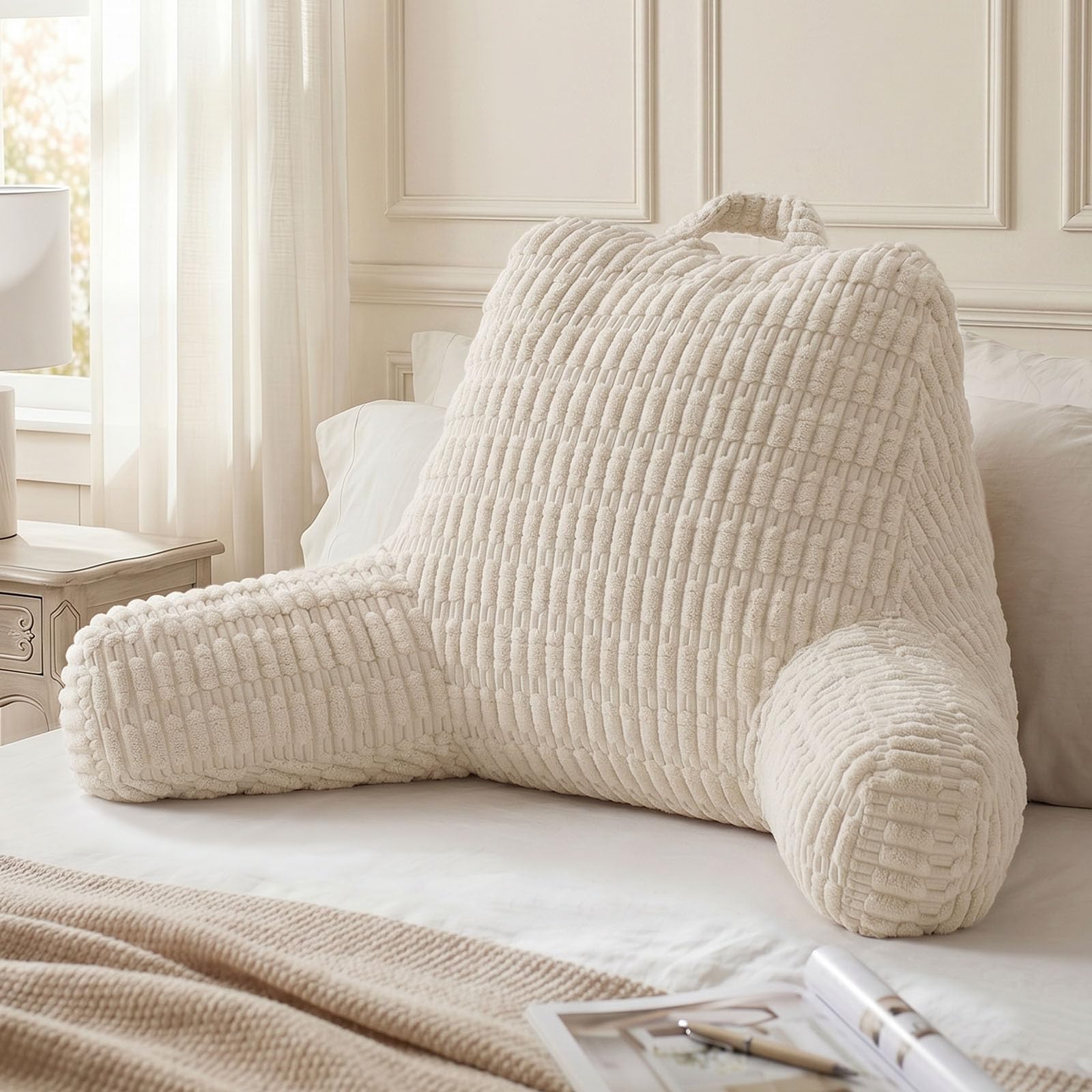
The backrest class, often sold as a husband pillow, wraps support around your sides as well as behind you, with arms that give your elbows a shelf. Most stand about 18 to 24 inches tall, and the better ones carry a handle on top because you will move yours daily. Shoppers comparing best sit up bed pillows will meet this class under several names, so judge it by height, arm height, and fill rather than by the label.
Bolsters and Small Add On Pillows
A bolster is the supporting actor of the shelf: a roll or small wedge that fills one gap, behind the neck, under the knees, or at the small of the back. Bought alone it cannot hold you upright, but paired with a plain sleep pillow it can rescue a setup that is nearly right. The same logic runs through guides to best sitting pillows for chairs and floors, where small shapes fine tune a seat that already exists.
Who Should Buy the Best Bed Pillows for Sitting Up?
First Time Buyers
Start simple: a mid height backrest or a gentle wedge with a removable cover, at about $25 to $45, covers most routines well enough to learn what you like. Your first purchase is partly a measurement exercise, because an hour of real reading tells you more about angle and height than any product page can. Keep the return window in mind when you order, and judge the pillow on your third night, not your first.
Value Seekers
Value in this category lives in the fill and the cover, not in extra features. Shredded foam fills that open with a zip let you add or remove fill as it settles, which stretches the useful life of the pillow by a season or more. Expect to pay about $35 to $60 for that adjustability and a washable cover, and treat loose threads and flimsy zips at this price as a warning sign.
Buyers Who Want the Best Performance
Spending more, roughly about $80 to $150, buys shape retention and cover quality rather than a different kind of comfort. Dense foam cores and latex classes hold their angle for years where cheap fill flattens in months, and taller backs suit taller torsos properly. What the money does not buy is a medical benefit, so judge the premium shelf by materials, warranty length, and how the pillow feels at the end of a long film.
Key Features to Compare
Fill, Firmness, and Loft
Shredded memory foam can be added to or scooped out, which makes it the forgiving choice for a first purchase, while a solid foam core holds one steady angle and runs warmer. Polyester fill is light and cheap but flattens soonest, and latex feels springy and stays cooler while adding real weight. For long reading sessions a medium firm back usually wins, because a very soft fill lets you sink until you are slumped rather than seated.
Comfort is the whole job of this product, and it is worth keeping the boundary clear. If you live with persistent or worsening back or neck pain, numbness, or weakness, treat that as a medical question and talk with a clinician, because no fill, firmness grade, or loft is a treatment for it.
Size Against Your Bed and Your Torso
Measure two things before ordering: the width of clear bed space the pillow may take, and your own seated back height from mattress to shoulder blades. A wide backrest on a twin bed leaves little room to shift sideways, while a short back under a tall torso ends at the waist and pushes the shoulders forward. Most makers list height and width in inches, so a tape measure settles the question in a minute.
Covers, Cooling Fabrics, and Washing
Look for a cover that unzips and goes in the wash, because a pillow that lives against skin and hair oils needs regular cleaning that the fill itself cannot take. Cooling in this category describes cover fabrics and gel touched foams that feel cool at first contact, which is pleasant at lights out but fades as the pillow warms to body temperature. A plain cotton cover over ordinary foam often serves a hot sleeper just as well across a whole evening.
Certifications: CertiPUR US and OEKO TEX
Two labels are worth recognising on the tag. CertiPUR US covers foam and speaks to how the foam was made and what it does not contain, while OEKO TEX covers textiles and checks fabrics for substances that touch skin. Both labels speak to materials and manufacturing, not to comfort, so treat them as a hygiene check that supports the decision rather than the reason for it.
The Headboard and Wall Do Half the Job
Here is the point most buyers learn the hard way: the bed setup behind the pillow does half the support job. A backrest pushed against a flat headboard or a wall has something solid to lean on and stays where you put it. The same pillow against open rails or a soft upholstered headboard slides, twists, and slowly migrates down the bed.
Before blaming a pillow that wanders, close the gap behind it with a spare cushion or a folded blanket and try the routine again. Wedges need the wall most of all, because their slope turns your weight into a slow push away from the headboard. A firm base behind the shape is part of the product, even though it never appears in the product photo.
Common Mistakes to Avoid
- Buying the tallest backrest for a reclined routine, so the pillow pushes you upright when you wanted to lean back.
- Judging size from photos alone, then finding the pillow crowds a twin bed or ends at your waist.
- Choosing the softest fill for long reading sessions, so you sink and slump within the hour.
- Skipping the cover check, then owning a pillow that cannot be washed where it actually gets dirty.
- Expecting a pillow to fix back or neck pain, when persistent pain is a question for a clinician, not a bedding purchase.
Care and Setup Tips
Fluff a shredded fill pillow for a minute each week, working the fill back up into the top corners where your shoulders press it flat. Turn the pillow around every few nights so the same edge does not take the load every time, and wash the cover on the label settings while the fill stays out of the water. Foam cores smell faintly chemical when first unwrapped, so air a new pillow in a ventilated room for a day before its first night. Store a spare bolster off the bed during the day, because shapes left under a made duvet flatten faster.
Bed Pillows: Your Questions Answered
What features matter most in bed pillows for sitting up?
Angle match matters most: the pillow should hold you at the angle of your main routine without a gap at the small of your back. After that come a washable cover and a fill you can adjust. One check few buyers make is the return window, because angle fit is personal and a fair returns policy is the honest way to try a shape across a week of real evenings before you commit to it.
Are cooling bed pillows worth it for hot sleepers?
They are worth it for the first minutes, less so by the end of a film, because cool touch fabrics warm up to body temperature in use. A hot sleeper usually gains more from a breathable cotton cover, a lighter duvet over the legs, and a cooler room than from gel layers inside the foam. If you run warm, choose the removable cotton cover first and treat any cooling claim as a small bonus.
How do I wash bed pillows safely?
Wash the removable cover on its own, on a gentle cycle, and dry it fully before it goes back on. Most fills should stay out of the machine: shredded foam clumps when soaked, solid foam tears when wrung, and polyester fill mats down. Spot clean the fill with a barely damp cloth, then let the pillow air until it is completely dry, because a damp core put back inside its cover will smell within days.
Is a higher thread count always better for a pillow cover?
No. Thread count is only one number, and past a mid range point it says little about how a cover feels or lasts. Weave matters more in daily use: percale feels crisp and cool, sateen feels smooth and slightly warm, and both outlast their thread count claims when the cotton itself is good. For a sitting up pillow, judge the cover by whether it unzips, washes well, and feels pleasant against the arms.
What firmness is best in a bed pillow for sitting up for back comfort?
For comfort while reading, most people settle on a medium firm back that holds its angle without feeling like a board. Treat firmness as a preference you try across a week of real routines, changing one thing at a time, rather than as a prescription. If your back aches every day, in and out of bed, that pattern deserves a clinician's attention, and no firmness grade should be bought as the fix for it.
How often should I replace a bed pillow for sitting up?
Replace it when the shape stops recovering: the fill stays flat after a good fluffing, the slope of a wedge softens at the top edge, or the cover wears thin at the corners. Polyester fill usually reaches that point soonest, often within a couple of years of nightly use, while dense foam classes last longer. A pillow that needs constant rearranging in the middle of a film has already given you the answer.
Wrapping Up
Start from the routine, then the shape, then the cover, and the rest of the shelf sorts itself. Readers sit upright and need height and firmness, watchers need a slope, and workers need a base that stays put against the headboard. The sleep side of the same shelf is a different purchase, covered in our guide to best bed pillows.
Check the shape classes in the table earlier in this guide against your routine, and the best bed pillows for sitting up for your bed is the one that is still earning its place a month from now. Buy the shape your evenings ask for, keep the cover washable, and let the routine, not the price tag, lead.