Best Bathroom Vanities for Small Spaces: Every Type Explained Side by Side for 2026
Disclosure: We may earn a commission when you buy through links on this page, at no extra cost to you. As an Amazon Associate I earn from qualifying purchases. Learn more

Pick the best bathroom vanities for small spaces with a clear guide to types, sizes, storage and prices so the cabinet fits your tight layout.
A small bathroom punishes a wrong vanity choice quickly, because a few extra inches of depth can block a door, crowd the toilet, or make cleaning miserable. The best bathroom vanities for small spaces solve a layout problem first and a style problem second. Width, depth, storage shape, and how the doors or drawers open all matter more in a tight room than they ever would in a large one.
This guide compares the main types side by side in plain language, so you can see what each one gives up and what it gives back. Use the product table below for sizes and price ranges, then read on for measuring advice that prevents the most common ordering mistakes.


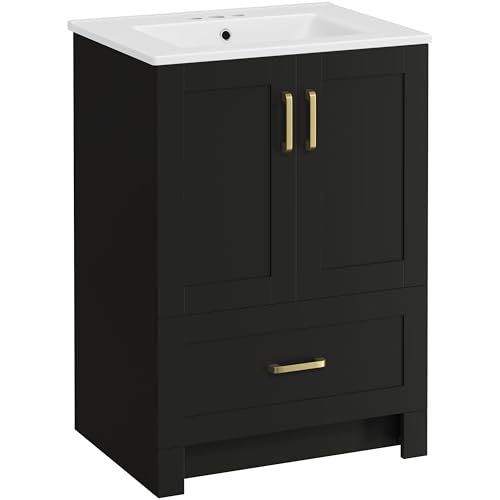


Types of Bathroom Vanities Compared
Small space vanities fall into a few broad groups. Freestanding cabinets sit on the floor and hide plumbing inside. Wall mounted, often called floating, vanities lift the cabinet off the floor and make the room feel larger. Corner vanities turn a dead corner into a working sink. Narrow depth cabinets keep standard width but slim the front to back dimension, which can be the difference between a door that opens fully and one that does not.
Budget Options
Budget vanities for tight rooms usually cost around $150 to $400 and use simple cabinet boxes with a basic top and sink. They work well for a rental refresh, a guest bath, or a first remodel where the layout stays the same. Storage is often one open cabinet rather than drawers, which holds tall bottles well but wastes space around the plumbing. Finishes and hardware are plain, and particle board construction means you must wipe up standing water quickly. Choose this tier when the room is small, use is light, and you would rather spend the savings on a good faucet and mirror.
Premium Options
Premium small vanities, often around $800 to $1,800, earn their price through better materials in the same small footprint. Solid wood or quality plywood boxes resist moisture far better than basic board, and drawers with careful cutouts around the drain give you organized storage that a plain cabinet cannot match. Soft close hardware, durable stone or quartz tops, and well sealed edges all add up in daily use. This tier suits a primary bathroom used every morning by two people, where the vanity is small but the demands on it are not.
Compact Options
Compact vanities are designed first for fit. Widths of 18 to 24 inches and depths as slim as 12 to 16 inches let them serve powder rooms, closets converted to baths, and narrow older homes. Wall mounted compact models free floor space for a scale, a step stool, or simply easier mopping. The trade off is storage and counter room. You may fit a toothbrush, soap, and little else on top, so plan on a mirror cabinet or a wall shelf for the rest. If guests mainly wash hands in the room, compact is often the smartest choice of all.
Mid Range Options
Mid range vanities, roughly around $400 to $800, are where most small bathroom remodels land, and for good reason. You typically get plywood or better board construction, a wider choice of widths from 24 to 36 inches, and at least one drawer in many designs. Tops are often cultured marble or ceramic, which balance looks and upkeep. This tier gives you room to choose between a floor standing cabinet for maximum storage or a floating design for a lighter look, without paying premium prices for solid wood and stone.
Budget Options vs Premium Options: Which Should You Choose?
The honest difference is lifespan and storage quality, not looks on day one. A budget vanity photographs well but may swell at the base after a few years of splashes, while a premium cabinet in the same size keeps its drawers smooth and its finish intact. Judge by who uses the room. A guest bath used a few times a week asks little, so budget or mid range money is well spent there. A small primary bath used constantly rewards the premium tier, because drawers that organize daily items save time and counter clutter every single morning.
Also weigh installation. Both tiers need the same plumbing connections, so labor costs are similar, which means the price gap is mostly the cabinet itself. If you plan to stay in the home, paying more once usually beats replacing a swollen budget cabinet later. Our guide to the best quality bathroom vanities explains the construction details that separate durable cabinets from short lived ones.
How to Choose the Right Bathroom Vanity
Ease of Use and Setup
In a small room, daily ease depends on how storage opens. Drawers let you see everything from above and suit shared morning routines, while doors need swing clearance that a tight room may not have. Sliding or open shelf designs avoid the clearance problem entirely. For setup, a vanity that arrives assembled saves hours in a cramped space where you cannot lay parts out. Check whether the top and sink come attached, whether the back is open for plumbing, and whether your drain and supply lines match the cabinet cutouts before delivery day.
Key Performance Specs
The specs that matter are width, depth, height, and storage volume, in that order. Common small widths are 18, 24, 30, and 36 inches, and depths run from about 16 to 21 inches, with slim models below that. A comfort height around 32 to 36 inches suits most adults and reduces bending. Check the sink size too, because a tiny basin splashes more. A slightly deeper bowl in the same cabinet width is worth choosing, since daily hand washing and face washing stay tidier with less water on the counter and floor.
Intended Use and Who It Is For
Match the vanity to the room job. A powder room needs a hand washing station and almost no storage, so a compact or corner unit shines. A small full bath needs to hold towels, cleaning supplies, and daily toiletries, so storage volume jumps to the top of the list. Families should favor drawers and easy to clean tops, while a single user can trade storage for a slimmer profile. If two people share the mornings, even a 36 inch vanity with two small drawers beats a wider looking cabinet with one dark, undivided space inside.
Features That Matter for Small Spaces
Small spaces reward specific features. A floating mount shows more floor and makes the room read larger, plus it lets you clean underneath without moving anything. Drawers with a plumbing cutout turn the dead zone around the drain into storage for flat items. Integrated tops with a built in backsplash protect the wall where splashes are constant. When you plan the whole room, pairing the vanity with one of the best small toilets for small bathroom options can free several more inches of leg room and make the layout feel planned rather than squeezed.
Measuring for Size and Portability
Measure the wall width, then measure again from any trim, not from the drywall corner alone. Note the door swing, the toilet center line, and where the drain exits the wall or floor, because moving plumbing can cost more than the vanity. Leave at least 15 inches from the toilet center line to the vanity edge, and aim for 21 inches of clear floor in front. Use painter tape on the floor to outline the vanity footprint for a day. Walking past the tape outline tells you more about comfort than any product photo can.
How to Make Your Bathroom Vanity Last Longer
Read the manual before first use, especially the notes on which cleaners the finish allows. Wipe splashes off the cabinet front and base the same day, because moisture at the floor line is what kills small vanities first. Clean and inspect regularly under the sink, where a slow drip can soak a cabinet bottom for weeks before you notice. Keep the room ventilated during and after showers, store backup toiletries in a dry place rather than under a damp sink, and reseal the joint between the top and the wall whenever the caulk line cracks or pulls away.
FAQs
What features matter most in bathroom vanities for small spaces?
Fit comes first, meaning width and depth that leave comfortable clearance around the toilet and door. Next comes storage shape, with drawers or a floating design usually beating a plain cabinet. Moisture resistant construction matters more in a small room because steam has nowhere to go. A vanity that nails those three will serve you better than a larger looking unit with decorative details.
What features matter most when buying bathroom vanities?
Box material, top material, and hardware quality decide how long any vanity lasts. Plywood or solid wood boxes outlast basic board, stone and ceramic tops resist stains better than thin laminates, and full extension drawer slides feel solid for years. Measure your plumbing rough in before you fall for a design, because a beautiful vanity that fights your drain location becomes an expensive problem during installation.
How much should I spend on a bathroom vanity?
For a small space, most buyers land between around $300 and $900 for the vanity itself, with compact and budget models below that and premium small models above it. Remember to budget for a faucet, a mirror, and possible plumbing adjustments on top of the cabinet price. Spending a little more on the box material usually returns more value than spending the same amount on decorative hardware.
How do I maintain a bathroom vanity?
Wipe the top and fronts with a soft cloth and mild cleaner, and dry the base after mopping so water does not sit against the cabinet. Check under the sink every few months for dampness around the supply lines and drain. Keep the exhaust fan running after showers to cut humidity, and touch up caulk lines yearly. Small, regular attention prevents the swelling and peeling that end most vanity lives early.
Are expensive bathroom vanities worth it?
In a small primary bathroom, yes, because you use the same drawers and top many times a day and better materials handle that load for far longer. The storage design also tends to be smarter, which matters most when space is scarce. In a rarely used guest bath, the case is weaker, and a mid range vanity usually gives you nearly the same daily experience for much less money.
The Bottom Line
Measure carefully, choose the type that fits your room job, and put your money into box material and storage shape before style extras. Do that, and the product table above will help you spot the best bathroom vanities for small spaces for your layout, your routine, and your budget without a costly second purchase.