Best Backrest Pillows: A Buyer Checklist for 2026
Disclosure: We may earn a commission when you buy through links on this page, at no extra cost to you. As an Amazon Associate I earn from qualifying purchases. Learn more

The best backrest pillows keep you upright in bed or on the sofa. Compare shape, fill, firmness, cover and size before you buy.
A backrest pillow props you upright in bed, on a sofa, or on the floor so you can read, watch a show, or work on a laptop without stacking ordinary pillows behind you. The best backrest pillows hold their shape through a long evening, support your lower back and shoulders, and stay comfortable when you shift position. The product table lets you compare the main options side by side.
This guide walks through shapes, fills, firmness, covers, and sizes, then gives you a short checklist to run before you order. Use it to match the pillow to where you will sit and how long you usually sit there, rather than buying on looks alone.





Who Should Buy the Best Backrest Pillows?
Backrest pillows suit different sitters in different ways. The right choice depends on your usual seat, your posture habits, and how much support you want around your arms and shoulders.
Bed Readers and Show Watchers
If you read or watch shows in bed, look for a tall wedge or a pillow with a high back and side arms. The height keeps your head above your shoulders so you are not craning your neck forward, and the arms give your elbows a resting place. A removable, washable cover matters here, since a bed pillow picks up everyday use quickly.
Home Workers and Students
If you answer messages or study from a sofa or a bed, choose a firmer pillow that keeps you upright instead of letting you sink backward. A shape with a lumbar roll or a gentle curve at the base helps your lower back stay in a neutral position. Check that the pillow fits your seat depth, so your knees are not pushed forward by a base that is too deep.
Floor Sitters and Travelers
If you sit on the floor for games, crafts, or reading, or you want a pillow you can move between rooms, pick a lighter model with a carry handle. A compact wedge or a foldable backrest stores more easily than a large lounge pillow. Look for a cover that wipes clean, since floor seating collects dust and pet hair faster than bed seating.
Key Features to Compare
Five factors decide most of the comfort difference between the best backrest pillows and the rest. Compare them in this order, and let your sitting spot set the priority.
Shape and Height
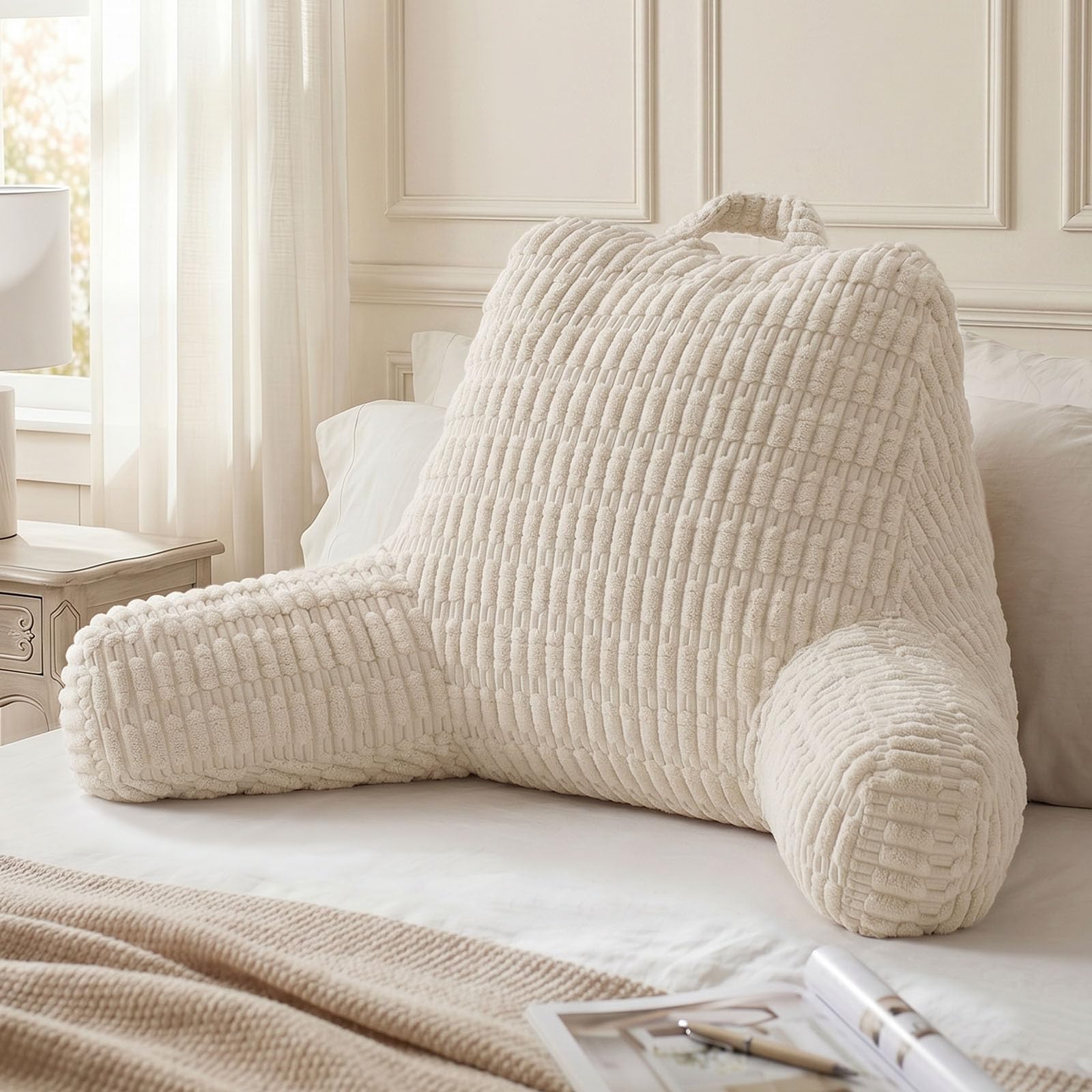
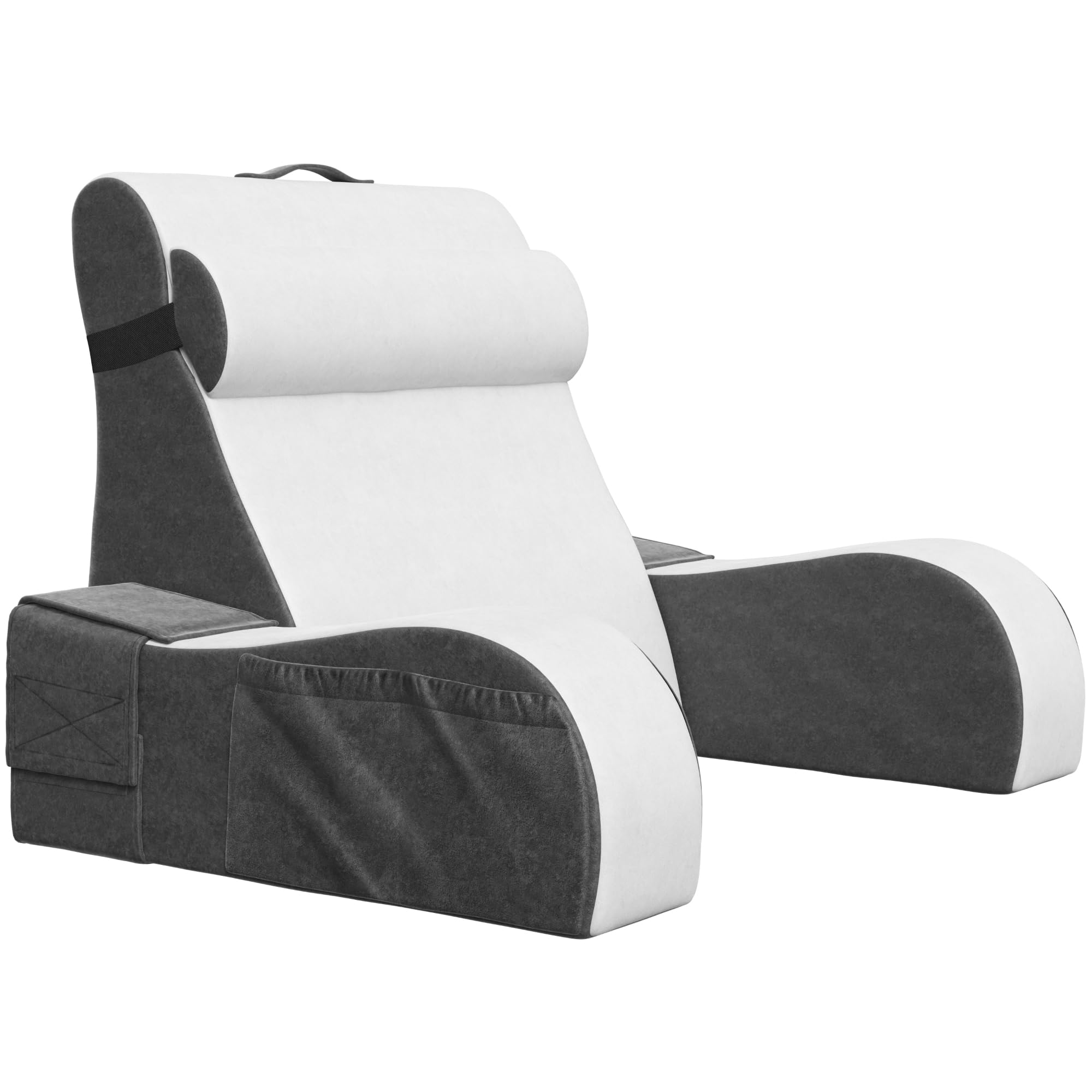
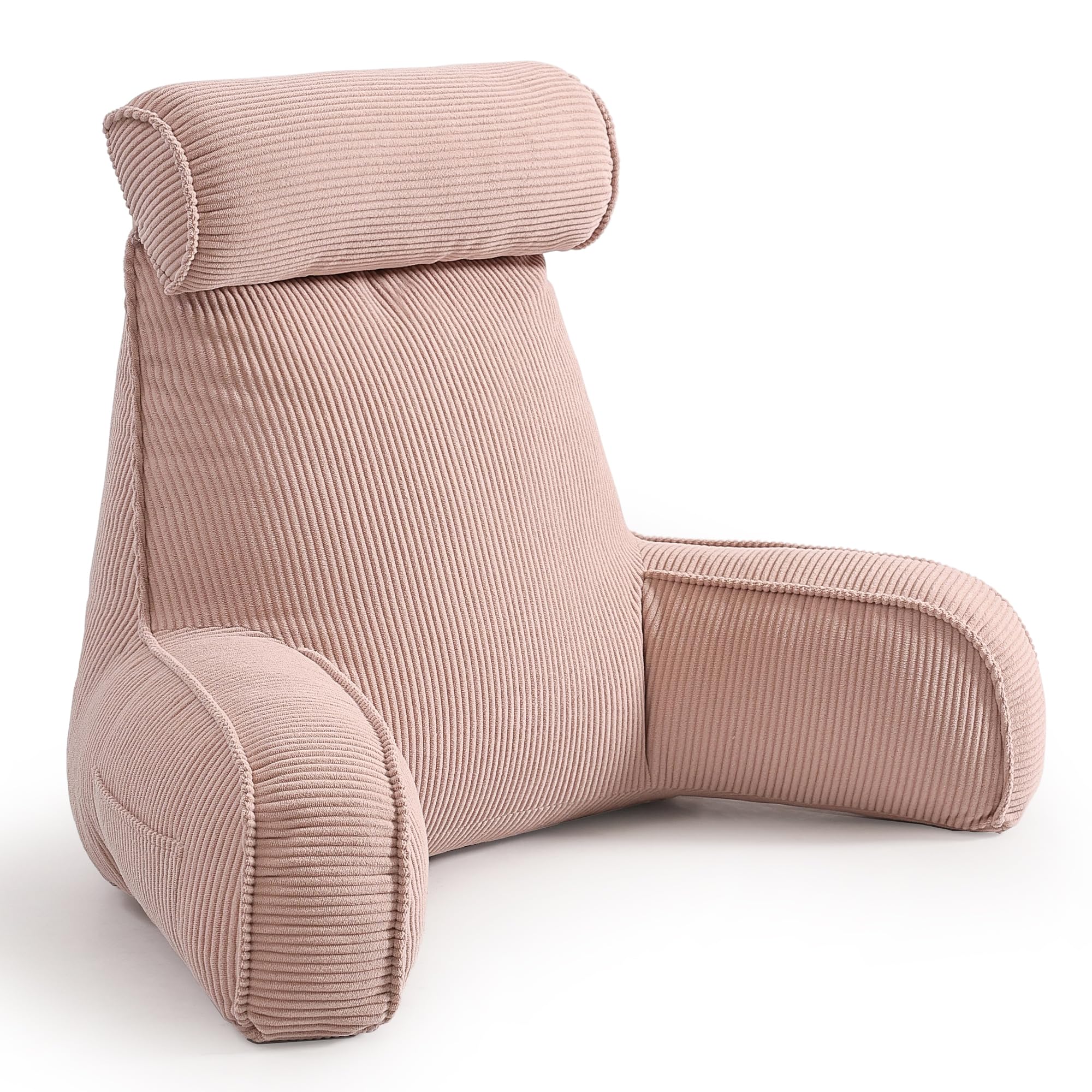
Shape sets how the pillow holds you. A wedge slopes from low at the front to high at the back and suits readers who lean back at a gentle angle. A lounge pillow with arms wraps around your sides and suits people who like elbow support.
A lumbar roll or a curved base adds support low on the back. Measure the height against your torso: a pillow that ends below your shoulder blades will not support your upper back, while one that towers over your shoulders can push your head forward.
Fill and Firmness
Fill sets how the pillow feels and how long it keeps its shape. Shredded memory foam molds around your back and can be fluffed back into shape, while solid foam holds a fixed angle and feels firmer.
Fiber fill feels softer and lighter but flattens sooner under daily use. Firmness is a comfort choice, not a treatment: a firmer pillow suits long upright sitting, while a softer pillow suits short lounging. If you have ongoing back pain, numbness, or weakness, talk with a doctor about your sitting setup rather than expecting a pillow to fix the problem.
Cover and Care
The cover decides how easy the pillow is to live with. A removable cover you can machine wash keeps the pillow fresh, which matters for a pillow used in bed every night.
Look for a sturdy zipper and a fabric that resists pilling, since a weak zipper turns a washable cover into a fixed one. Some covers add a soft velvet or cotton feel, while others use a smooth fabric that stays cooler. Check the care label before you buy, and follow the maker guidance on water temperature and drying.
Size and Portability
Size must fit both your body and your seat. A wide lounge pillow needs a wide bed or a broad sofa, while a narrow wedge fits a twin bed or a single chair.
Weight matters if you move the pillow between rooms: a large filled lounge pillow can be heavy and awkward to carry, while a smaller wedge is easy to shift. Handles help, but they do not make a very large pillow portable. Measure your seat width and depth before ordering, and compare those numbers with the listed pillow dimensions.
Support Details
Small details change everyday comfort. Armrests raise your elbows to a relaxed height for reading or holding a tablet. A side pocket holds a phone, a remote, or reading glasses within reach.
A handle or a foldable design helps with storage in a small room. None of these details replaces good shape and firmness, but they decide whether a pillow you like on day one still suits you after weeks of use. Skip extras you will not use, and spend instead on the shape and fill that fit your sitting style.
Spending Levels: What Your Money Gets You
Price mainly buys fill quality, cover quality, and size. At a lower price, expect simple fiber fill, a basic cover, and a smaller wedge shape. These pillows suit occasional use and short sitting sessions.
At a middle price, expect shredded foam or denser fiber fill, a removable washable cover, and better stitching. These pillows suit daily reading or working from bed.
At a higher price, expect larger lounge shapes with arms, premium covers, and stronger zippers and seams. These pillows suit people who sit upright for hours each day and want the pillow to keep its shape over time. Compare the product table above before settling on a level, and weigh how often you will use the pillow against what each level offers.
Quick Buyer Checklist
Run through these questions before you order, and skip any pillow that fails more than one of them.
- Does the height reach at least your shoulder blades when you sit against it?
- Does the base depth fit your bed or sofa without pushing your knees forward?
- Is the firmness right for your usual sitting time, firmer for long sessions and softer for short lounging?
- Is the cover removable and washable, with a sturdy zipper?
- Does the fill hold its shape after you press it down and let go?
- Does the pillow include the support details you actually need, such as arms, a pocket, or a handle?
- Can you move it and store it easily in your room?
- Does the maker guidance on care and use match how you plan to use it?
When you compare options, it also helps to see how pillows are grouped by purpose. For a broader view of pillow types, see our guide to the best ranked pillows alongside the shapes covered here.
Red Flags to Watch For
- Vague fill descriptions that never name the fill type or density.
- No care label or washing guidance, which makes a daily use pillow hard to keep clean.
- Dimensions missing from the listing, so you cannot check the fit for your seat.
- A very short warranty or return window on a pillow meant for daily use.
- Claims that a pillow treats, cures, or prevents a health condition. Treat comfort claims as comfort claims, and see a doctor for persistent or worsening pain, numbness, or weakness.
How to Make Your Backrest Pillow Last Longer
Fluff a shredded fill pillow regularly so the fill stays even instead of clumping at the bottom. Wash the removable cover on the cycle the maker recommends, and let it dry fully before putting it back on.
Keep the pillow dry and out of direct sun for long stretches, since dampness and strong sun wear down covers and fill. Store a pillow you use only sometimes in a dry place where it will not be crushed under heavy items. Replace the pillow when the fill no longer springs back or the support feels uneven, even if the cover still looks fine.
Neck support deserves its own check, since a backrest pillow that holds your back well can still leave your neck unsupported. A pillow with enough height and a gentle curve near the top helps your head rest in line with your spine. If neck discomfort is your main concern, compare options in our guide to the best pillows for neck problems before deciding. Readers dealing with recurring neck aches may also want to read our guide to the best pillows for neck ache for additional fitting points.
Backrest Pillows: Your Questions Answered
How often should I replace my backrest pillow?
Most backrest pillows last about one to three years with daily use, depending on fill and care. Replace yours when the fill stays flat after fluffing, the shape leans to one side, or you notice you are adding extra cushions behind it to stay upright. A pillow used only a few times a week can last longer. Check the seams and zipper at the same time, since a failing cover often signals the pillow is near the end of its useful life.
How do I wash backrest pillows safely?
Start with the care label, since washing guidance varies by fill and cover. Most removable covers can be machine washed on a gentle cycle, while the inner pillow itself often needs spot cleaning only. Use mild detergent, avoid harsh bleach unless the label allows it, and dry the cover fully before refitting it. Never soak a foam filled pillow unless the maker says it is safe, because trapped moisture can damage the fill and leave an odor.
Is a higher thread count always better for a backrest pillow cover?
No, a higher thread count does not always mean a better cover. Thread count describes how tightly woven a cotton fabric is, but it says little about softness, durability, or breathability on its own. A mid range cotton cover with strong stitching often outlasts a very high thread count cover made from weaker yarn. Feel the fabric, check the seam quality, and confirm the cover is removable and washable before letting thread count decide your purchase.
Are cooling backrest pillows worth it for hot sleepers?
Cooling covers and breathable fills can help if you tend to feel warm while sitting in bed, but they do not change room temperature. Look for open cell foam, breathable cotton or mesh panels, and a cover you can wash often, since a fresh cover feels cooler than a stale one. If you overheat mainly at night while sleeping flat, a sitting pillow is not the right fix for that problem. Judge a cooling pillow on ventilation and cover fabric, not on cooling claims alone.
What firmness suits a sore back when sitting upright?
A medium firm to firm pillow usually suits upright sitting better than a very soft one, since it holds your back in place. The best check is sitting against the pillow and noticing whether your shoulders stay relaxed. A pillow that feels fine for five minutes can still tire you out over an evening.
If soreness persists, worsens, or comes with numbness or weakness, see a doctor. For neck comfort, see our guide to the best pillows for sore neck and compare the neck support advice there with the back support covered here.
Final Thoughts
Shape, firmness, and a washable cover matter more than any single extra feature. Pick the shape that fits your seat, the firmness that suits your sitting time, and a cover you can keep clean, then use the checklist above to confirm the fit. The best backrest pillows are the ones that keep you comfortable through a whole evening without constant rearranging, so judge them on the product table above and on how they feel in your own sitting spot.