
Best Affordable Playground Sets Made Simple: A Clear Buying Guide for 2026
Disclosure: We may earn a commission when you buy through links on this page, at no extra cost to you. As an Amazon Associate I earn from qualifying purchases. Learn more
Shopping for the best affordable playground sets for the first time? Learn the key terms, compare options, and avoid common mistakes with this guide.
Buying a backyard play set for the first time is confusing, because listings mix swing counts, lumber types, and footprint numbers without explaining what any of it means for your yard or your kids. The best affordable playground sets are not the biggest ones in the photo. They are the ones that fit your space safely, match your children ages, and stay sturdy for years.
This guide starts with the basics, explains each key spec in plain English, and flags the mistakes first time buyers make most often. Use the comparison table below to see typical sizes and price ranges, then work through the sections in order and you will know exactly what to order.




Playground Sets 101: The Basics
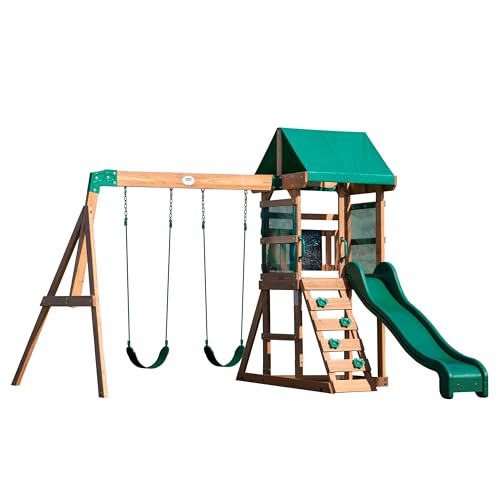
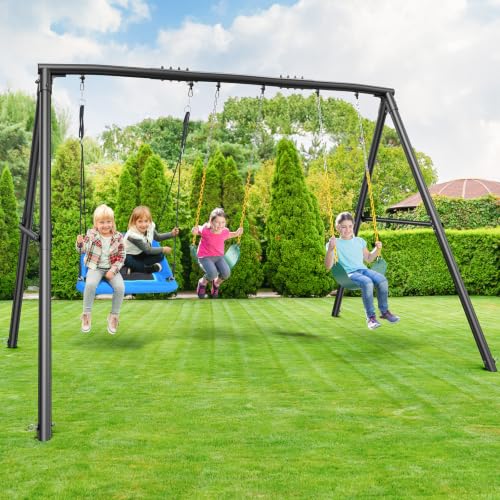
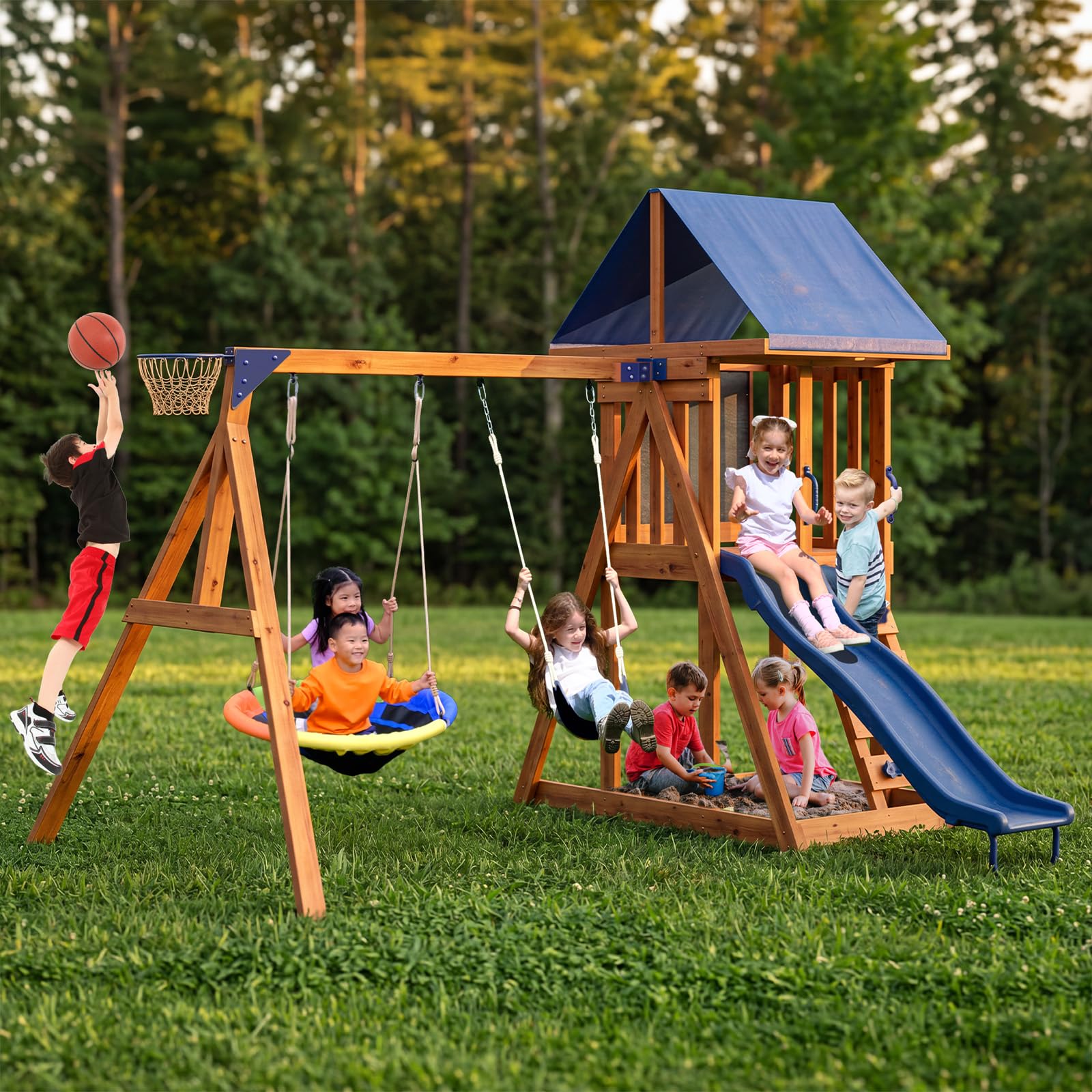
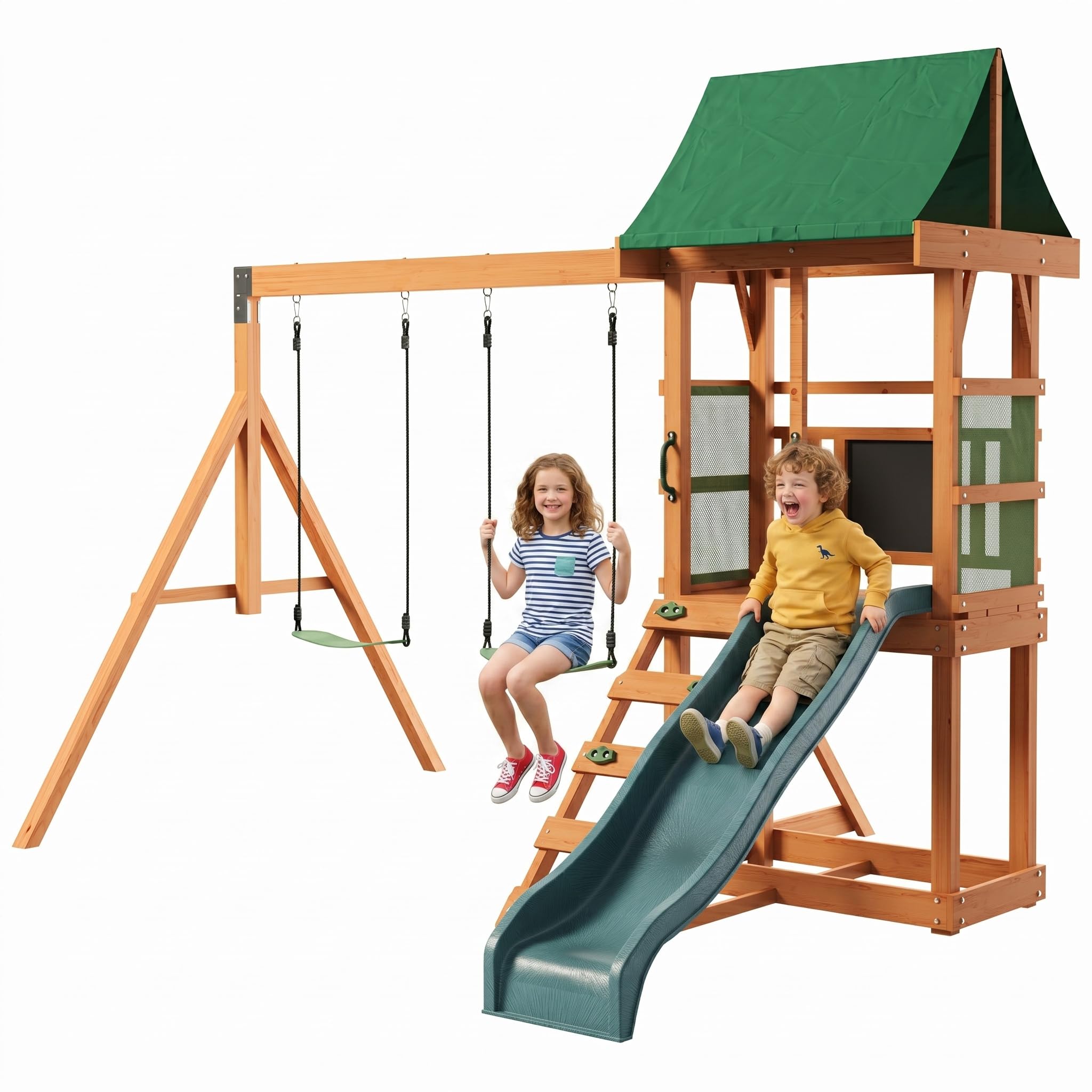
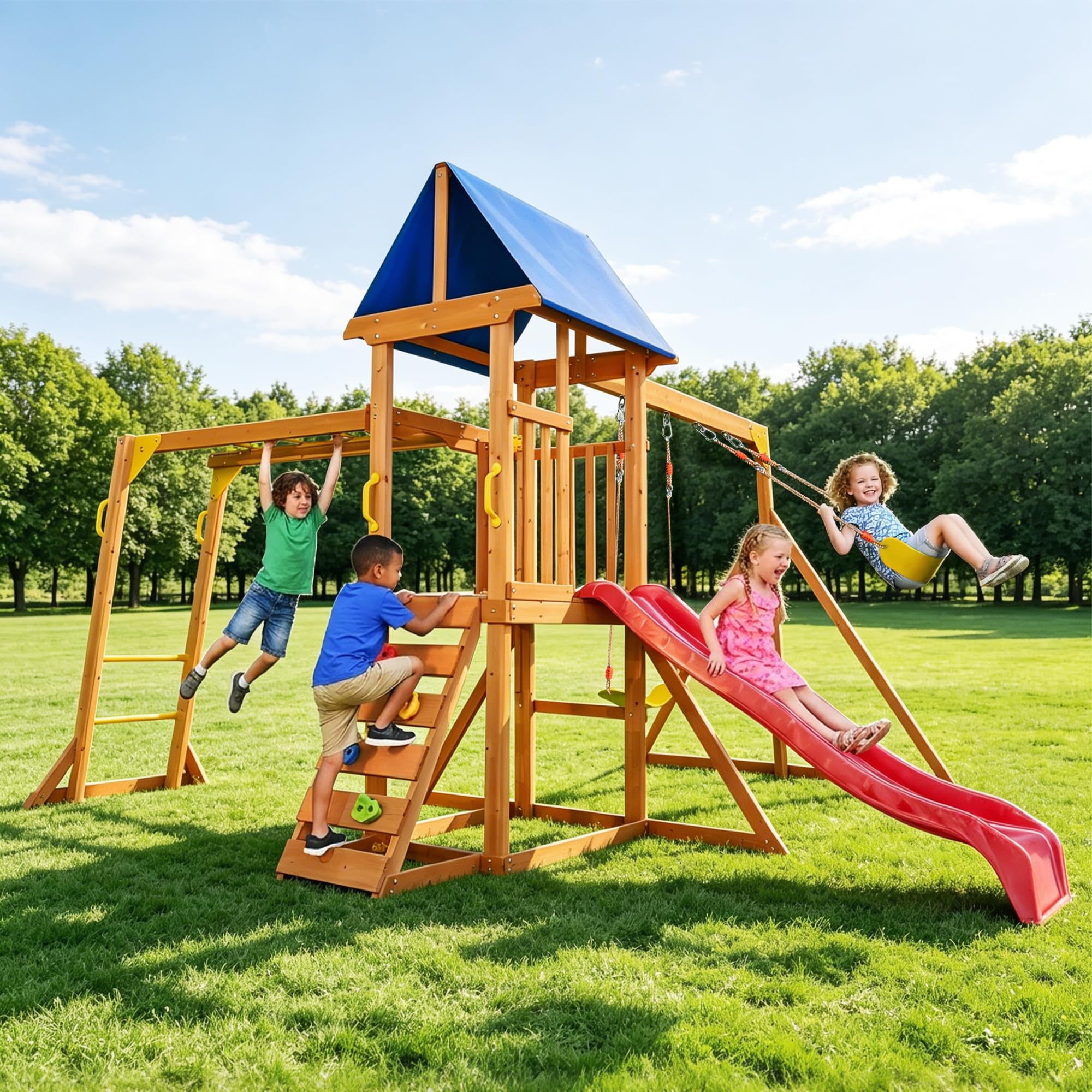
A playground set, often called a playset or swing set, is a fixed backyard structure that combines a raised play deck with activities such as swings, a slide, and a climbing feature. The deck, sometimes called a fort, is the platform children stand on, usually covered by a roof or canopy. Swings hang from a horizontal swing beam supported by an A frame at one end.
Common terms are simple once translated. A glider is a two person swing that moves back and forth. A trapeze bar is a hanging bar for swinging and hanging by the hands. Monkey bars form an overhead ladder children cross hand over hand. Sets are built mainly from wood, usually cedar or pressure treated lumber, or from powder coated steel and plastic.
Most home sets serve children roughly from age 2 to age 10, with weight limits per activity that you should check for every component. If you want to see how larger and more elaborate designs differ, our guide to the best playground sets shows the full range before you focus on affordable models.
Key Specs Explained in Plain English
What You Can Realistically Get on a Budget
Around $400 to $900 typically buys a wood or metal set with two or three swings, one slide, a small deck, and one climbing feature such as a rock wall or ladder. Canopies are often fabric rather than wood roofs, lumber pieces are thinner, and hardware is lighter. Assembly instructions at this level can be brief, so patience matters.
Do not cut corners on the swing beam, anchors, and main posts, because those parts carry the load and decide safety. You can accept a smaller deck or a simpler canopy, and you can add accessories later. A set that feels rock solid at a modest size beats a sprawling set that sways when two children swing together.
Intended Use and Who It Is For
Match the set to the children who will use it most. Toddlers need a low deck, a gentle slide, and a bucket style swing seat with high sides, plus constant adult supervision. Children from about age 4 to 7 use standard belt swings, longer slides, and climbing walls most. Older children want monkey bars, taller decks, and more challenging climbing routes.
Count regular users honestly, including cousins and neighbors who visit often. A set rated for a certain number of children at once should not be overloaded at birthday parties, because weight limits apply per activity. If your children span wide ages, choose a set with a mid height deck and swap swing types as they grow.
Size, Weight, and Fit for Your Space
Measure more than the set itself. Manufacturers list the footprint, but you also need a safety zone of about 6 feet of clear space around all sides, especially in front of swings and at the slide exit. A set with a 15 foot footprint can need a clear area closer to 27 feet long once swing space is included.
Ground slope matters as much as size. Sets need near level ground, and leveling a sloped yard can take real work before assembly day. Check for overhead clearance from branches and wires, and keep the set visible from a house window if possible, because easy sight lines make supervision far simpler during daily play.
Build Quality and Materials
Cedar is popular because it resists rot and insects naturally and does not get as hot in the sun as dark metal. Thicker boards, ideally with rounded edges and a smooth finish, reduce splinters and last longer. Steel sets cost less and assemble faster, but coatings must stay intact or rust begins at scratches.
Inspect hardware quality in product photos and reviews of the category in general: look for bolts that pass through posts rather than short screws holding key joints, covered bolt ends, and swing hangers with smooth bearings or bushings. Plastic parts should feel thick, and slides should be one solid piece rather than thin sections that flex.
Ease of Use and Setup
Setup is the hidden cost of every play set. Affordable wood sets commonly take about 8 to 20 hours for two adults, spread over a weekend or two, because hundreds of boards and bolts must be sorted and leveled. Some brands pre drill holes and label every board, which saves hours and prevents the most common errors.
Plan the build before the box arrives. Sort and inventory all parts on day one, build on the final site rather than dragging a finished frame, and keep children off the set until every anchor is set and every bolt is checked. A square and level deck at the start prevents doors, panels, and roofs from fighting you at the end.
Warranty and Customer Support
Warranties on affordable sets often cover lumber for about five to ten years against rot and insect damage, with one year on hardware and accessories. Read the limits: many lumber warranties exclude surface cracks and cosmetic splits, which are normal in outdoor wood, and cover only structural failure.
Support quality matters because missing parts are common in large kits. Brands with US based parts service can ship a replacement board or bolt pack quickly, which saves a stalled weekend build. Before ordering, check that replacement swings, canopies, and slide parts are sold separately, since those wear items will need renewal long before the frame does.
Rookie Mistakes to Avoid
- Buying for the photo instead of your yard: measure the full safety zone, not just the set footprint, and confirm the slide exit and swing path stay clear of fences and trees.
- Skipping ground anchors: an unanchored set can rock or tip when several children swing in rhythm, so install every anchor the manual lists, on day one.
- Ignoring the surface underneath: hard ground under swings and slide exits causes injuries, so plan mulch, rubber mats, or another soft landing material from the start.
- Choosing for today only: toddlers become climbers fast, so a deck height and swing beam that allow bigger challenges in two years saves a second purchase.
- Rushing assembly: mixing up similar boards or skipping the level check creates wobble that no later tightening fully fixes.
Getting Started: Setup and First Use
Read the manual before first use, all the way through, and note the tools required: most builds need a drill, sockets, a level, and a rubber mallet. Clean and inspect every part as you unpack, and report shortages or shipping damage before you start, because mid build discoveries stall everything. Build in stages: frame first, then deck and roof, then swings and slide last.
Once assembly is complete, walk the whole set with a wrench and check every bolt, then test each activity yourself as far as weight limits allow. Show children the rules on day one: one child per swing, no standing on slides, and no playing on the set until an adult says it is ready. Schedule a second bolt check after the first two weeks of use, since new wood settles and joints loosen slightly.
FAQs
What features matter most when buying playground sets?
A strong swing beam, secure anchors, and a deck height matched to your children ages matter most. Those three decide safety and how long the set stays fun. After them, look at slide length, lumber thickness, and whether swing positions can swap seats as children grow. Extra accessories look exciting in listings but add little if the core frame is weak or the deck is already too small.
How long does a playground set last?
A well maintained wood set usually lasts about ten to fifteen years, while budget metal sets often last five to ten years before rust or worn joints appear. Longevity depends on climate, anchoring, and yearly care such as tightening bolts and sealing wood. Children often outgrow a set before it wears out, so buying with resale or hand me down use in mind is realistic.
How much should I spend on a playground set?
Most first time buyers land between around $400 and $1,200 for a set that feels sturdy and complete. Below that range, expect smaller decks, thinner lumber, and longer, fussier assembly. Budget extra for ground cover such as mulch, plus anchors or a border to hold it in place. Spending a little more on thicker lumber usually returns more years of use than spending on extra accessories.
Are expensive playground sets worth it?
They are worth it when the price buys thicker lumber, a wood roof, heavier hardware, and longer lumber warranties, all of which extend service life. They are less worth it when the price only adds themed decoration. Compare board thickness, deck size, and warranty years across price levels. For a set you expect siblings to use for a decade, paying more once is usually cheaper than replacing a flimsy set.
How do I maintain a playground set?
Inspect the set each spring: tighten bolts, check swing chains and hangers for wear, look for splinters or cracked plastic, and confirm anchors still hold firmly. Wash wood with mild soap, let it dry, and apply a water repellent sealant about once a year. Replace worn swing seats and frayed ropes promptly, and stop children from using any part that looks damaged until it is repaired.
Our Verdict
For a first purchase, anchor your decision on three things: a safety zone that truly fits your yard, a frame and swing beam built from thick, sound materials, and features matched to your children ages for the next several years. Keep supervision rules firm, inspect the set each season, and talk with your pediatrician if you have questions about safe play heights or activities for your child age and development. Compare your shortlist in the product table above, and you will choose the best affordable playground sets for your family with confidence.


