
Best Affordable Home Elliptical Machine: Buying Guide for 2026
Disclosure: We may earn a commission when you buy through links on this page, at no extra cost to you. As an Amazon Associate I earn from qualifying purchases. Learn more

A plain guide to the best affordable home elliptical machine: stride length, resistance, space, noise, and warranty.
Buying your first elliptical can feel confusing because every listing uses the same big words and very different numbers. This guide slows things down and explains what each spec actually means for your body, your room, and your budget. By the end, you will know how to judge a best affordable home elliptical machine without guessing.
We start with the basics, then walk through stride length, resistance, noise, and warranty one by one. You will also find the rookie mistakes that waste the most money, plus simple setup steps for your first week. Keep your room measurements and your height nearby as you read, because those two facts decide more than any feature list. The comparison table below pulls the main options into one view once you know what to look for.


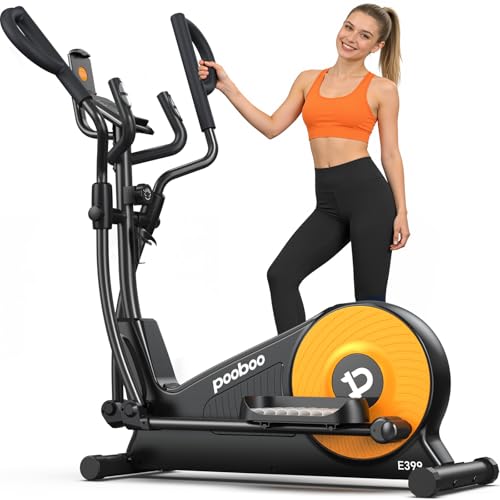
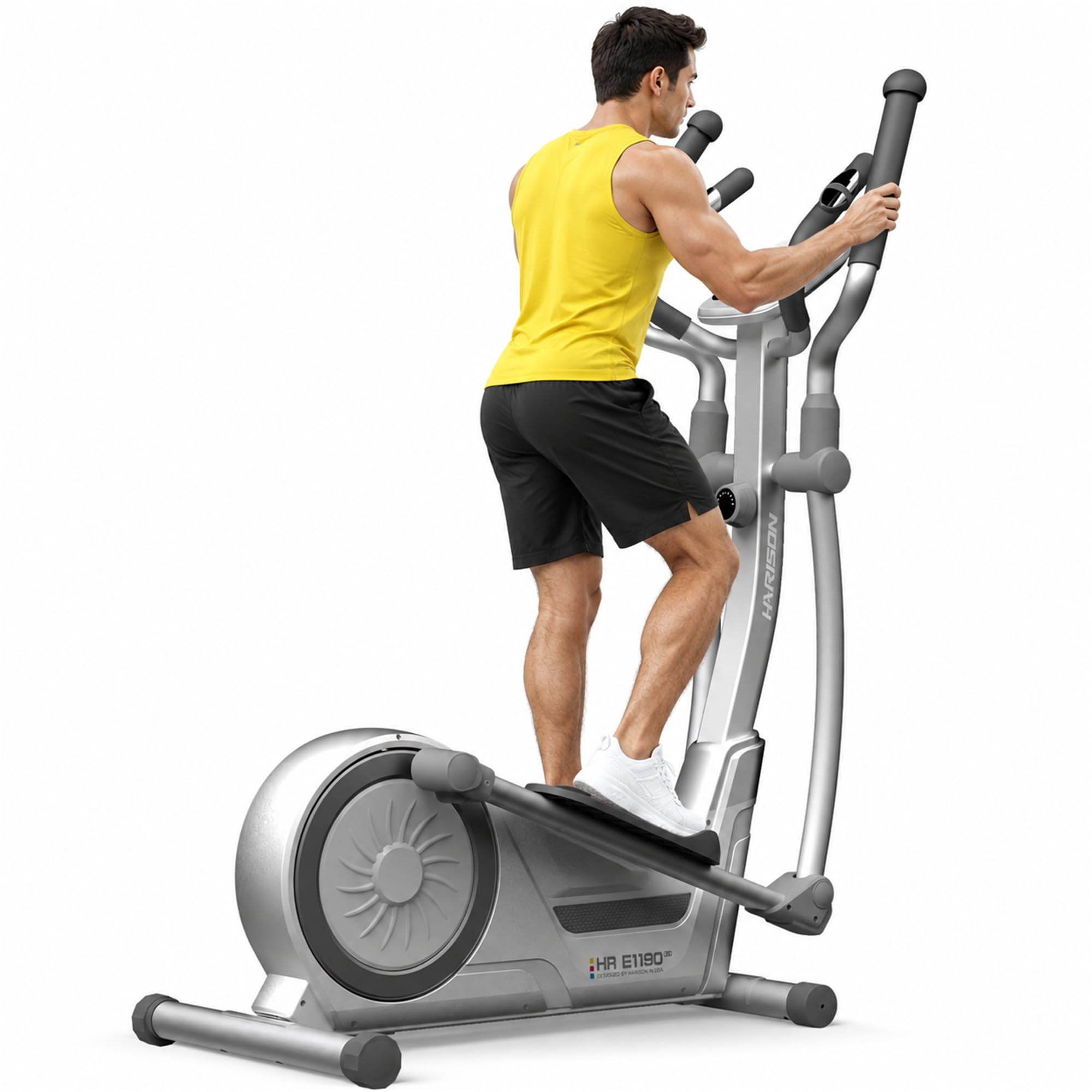


Home Elliptical Machines 101: The Basics
An elliptical is a cardio machine that guides your feet along a smooth oval path while your hands push and pull moving handles. Your feet stay on the pedals the whole time, so there is no impact when a foot lands, unlike running on a road. That low impact feel is why many people choose one for daily movement, joint comfort, and steady fat burning workouts at home.
The front or rear wheel, called the flywheel, creates resistance as you move. Heavier flywheels usually feel smoother because they carry momentum between strides. The console counts time, distance, speed, and calories, and on connected models it can sync workout data through Bluetooth to a phone app. None of that matters if the stride feels cramped or the frame wobbles, so fit and build come before screens.
Two terms will appear everywhere. Stride length is how far the pedals travel front to back, measured in inches. Resistance is how hard you must push, and most budget models change it with a dial or buttons. Keep those two ideas in mind and the rest of the specs become much easier to compare.
Key Specs Explained in Plain English
What You Can Realistically Get on a Budget
At around $300 to $600, you can expect a steel frame, magnetic resistance, a basic console, and a weight capacity near 250 to 275 lb. What usually gets cut at this price is stride length, flywheel weight, and quiet operation at high speed. Do not cut corners on frame stability or pedal spacing to save a small amount. A wobbly machine you dread using is never a bargain, while a simple machine you use daily is money well spent.
Space, Footprint, and Ceiling Height
Measure the floor space and then add at least two feet of clear space behind the machine and one foot on each side. Most budget ellipticals need about six feet of length during use, even if the frame looks shorter in photos. Ceiling height matters too, because you stand tall on raised pedals. Add your height plus about 14 to 18 inches and compare that total with your ceiling, especially in a basement. Foldable designs help storage, but check the folded size as carefully as the open size.
If space is truly tight, compare the options in the product table above with your tape measure in hand before you order. Readers planning a shared room often start with our guide to the best at home elliptical machines to see how different footprints suit different layouts.
Noise Level for Apartments
Magnetic resistance is the quietest common system because nothing rubs against the flywheel to slow it down. Most noise on a budget machine comes from loose bolts, a rocking frame, or the pedals on an uneven floor, not from the resistance itself. A thick mat under the machine absorbs vibration and protects the floor below. If you live above another unit, plan workouts at reasonable hours and keep the machine away from shared walls where you can.
Resistance Type and Range
Magnetic systems use magnets near the flywheel to create drag, and they change resistance smoothly with no contact and little wear. Air systems get harder the faster you move, which suits short hard efforts but can feel loud. Hydraulic and friction systems show up on the cheapest compact models and tend to feel jerky over time. Look for at least 8 to 16 resistance levels so you can progress gradually. If level one already feels hard, or the top level feels easy after a month, the range is too narrow for you.
Stride Length, Range of Motion, and Ergonomics
Stride length should match your height and natural step. As a rough guide, people under about 5 feet 4 inches often do well near 14 to 16 inches, average height users near 18 inches, and taller users near 20 inches or more. A stride that is too short forces a choppy shuffle and can bother knees and hips over time. Pedal spacing also matters, because pedals set wide apart push your hips outward with every step. Narrow spacing that lets your feet track close to your body line usually feels more natural.
Check the handle reach as well. Your hands should grip the moving handles without leaning forward or rounding your shoulders. Fixed handles often include pulse sensors, but treat those readings as a rough guide rather than a medical measure. If you want a broader view of higher rated frames and longer strides, see our guide to the best rated elliptical machine for home before you decide how much stride you really need.
Warranty (Frame, Parts, Labor)
A warranty has three parts and they are not equal. Frame coverage is often the longest, sometimes five years or more even on budget models. Parts coverage, often one to two years, is the part that matters most because consoles, belts, and resistance motors are what usually fail. Labor coverage may be as short as 90 days, which means you could pay for a repair visit even while the part itself is free. Read who pays for shipping on replacement parts, because a heavy flywheel or rail can cost real money to send.
Rookie Mistakes to Avoid
- Buying by screen size alone. A large display adds cost but does nothing for stride, stability, or resistance quality, which decide how the workout feels every day.
- Ignoring your ceiling height. Many returns happen because the user head nearly touches the ceiling at the top of the pedal path in a low room.
- Choosing the shortest stride to save money. A cramped stride changes your gait and can make a bargain machine uncomfortable within a week.
- Skipping the weight capacity check. Stay at least 20 to 30 lb under the listed limit so the frame has margin for movement and long term wear.
- Forgetting the delivery path. Measure doors, stairs, and tight turns, because budget ellipticals often arrive in one large heavy box.
One more practical point is assembly time. Most budget models take one to two hours with two people, and a second pair of hands makes aligning the heavy frame far easier and safer. If a listing promises a full setup in ten minutes, read the fine print with care. For a wider look at value focused frames, our guide to the best affordable elliptical for home explains how budget lines differ across brands.
Getting Started: Setup and First Use
Place the machine on a mat on a level floor before you tighten every bolt fully, so the frame can settle evenly. Tighten in stages, then check for rocking by pushing the handles side to side. Keep the power cord, if the console needs one, away from the pedal path and from walking routes where someone could trip.
For your first session, use the lowest resistance for five minutes and focus on posture. Stand tall, keep your heels down, look forward, and let your arms move with the handles rather than gripping hard. Increase time before you increase resistance, adding a few minutes per session during the first two weeks. Wipe down the handles, console, and rails after each workout, because sweat left on metal and plastic shortens the life of both.
Stop and rest if you feel dizzy, sharp pain, or unusual shortness of breath, and talk with your clinician about a safe starting plan if you have a heart condition, joint problems, or you are returning to exercise after a long break. Readers building a full room can also compare machines in our guide to the best home gym elliptical machine for layout ideas that keep airflow and access in mind.
Home Elliptical Machines: Your Questions Answered
Is it quiet enough for an apartment?
Yes, most magnetic models are quiet enough for an apartment when they sit on a mat and every bolt is tight. The main sounds are your breathing, your shoes on the pedals, and any frame creak from a loose joint. A useful test is a phone call in the next room during a moderate session. If someone can talk at a normal volume, your setup is fine for most buildings and most hours.
Which is better for beginners?
A simple magnetic model with a manual dial is better for most beginners than a connected model with a large screen. You learn pacing and form without menus, accounts, or monthly fees competing for your attention. Among the best affordable home elliptical machines, the ones beginners keep using share three traits. They start easily, they feel stable at slow speeds, and the resistance changes in small steps you can actually feel.
How much space do I need?
Plan on about six to seven feet of length, about two feet of width, and two feet of clear space behind the machine for safe mounting. You also need ceiling clearance equal to your height plus roughly 14 to 18 inches. Garages and spare rooms suit most people best. If you must use a living room corner, choose a compact frame and confirm the folded or parked size in the listing before you buy.
Is a subscription required?
No, a subscription is not required on most budget models, and the machine should work fully without one. Some connected models offer paid classes, routes, and coaching inside an app, and a few lock advanced programs behind that paywall. Before you buy, check which console features work with no account at all. If basic programs, resistance control, and your workout stats need a paid plan, that ongoing cost belongs in your real budget.
How long does it last?
A budget elliptical used three to five times a week often lasts about three to five years before parts like pedals, belts, or the console need attention. Frame life is usually longer than electronics life. You can stretch that span by keeping the machine indoors away from moisture, tightening bolts every few months, and wiping sweat off after sessions. When a repair costs more than about half the price of a comparable new model, replacement usually makes more sense.
Final Thoughts
For a first purchase, put stride length, frame stability, and parts warranty ahead of screens and app features every time. Match the stride to your height, confirm your ceiling and floor space with real measurements, and stay well under the weight capacity. Do that, and a best affordable home elliptical machine can give you years of low impact cardio at home. Look back at the comparison table above with those three checks in mind and choose the frame that fits your room and your body best.


