Best Adam Studio Monitors: A Buying Guide for 2026
Disclosure: We may earn a commission when you buy through links on this page, at no extra cost to you. As an Amazon Associate I earn from qualifying purchases. Learn more

Choosing the best adam studio monitors starts with woofer size, ribbon tweeter detail, room tuning and placement. This guide explains each factor clearly.
Choosing studio monitors is really choosing how honestly you hear your own work. If the low end is exaggerated or the top end dull, every mix decision leans the wrong way and the track sounds different everywhere else. The best adam studio monitors for your room depend on woofer size, tweeter detail, tuning controls and how close you sit, not on the longest spec list.
This guide covers who each size class suits, the features that change what you hear, and the setup errors that make good monitors sound bad. Start with the comparison table below, then match a pair to your room and the work you do.
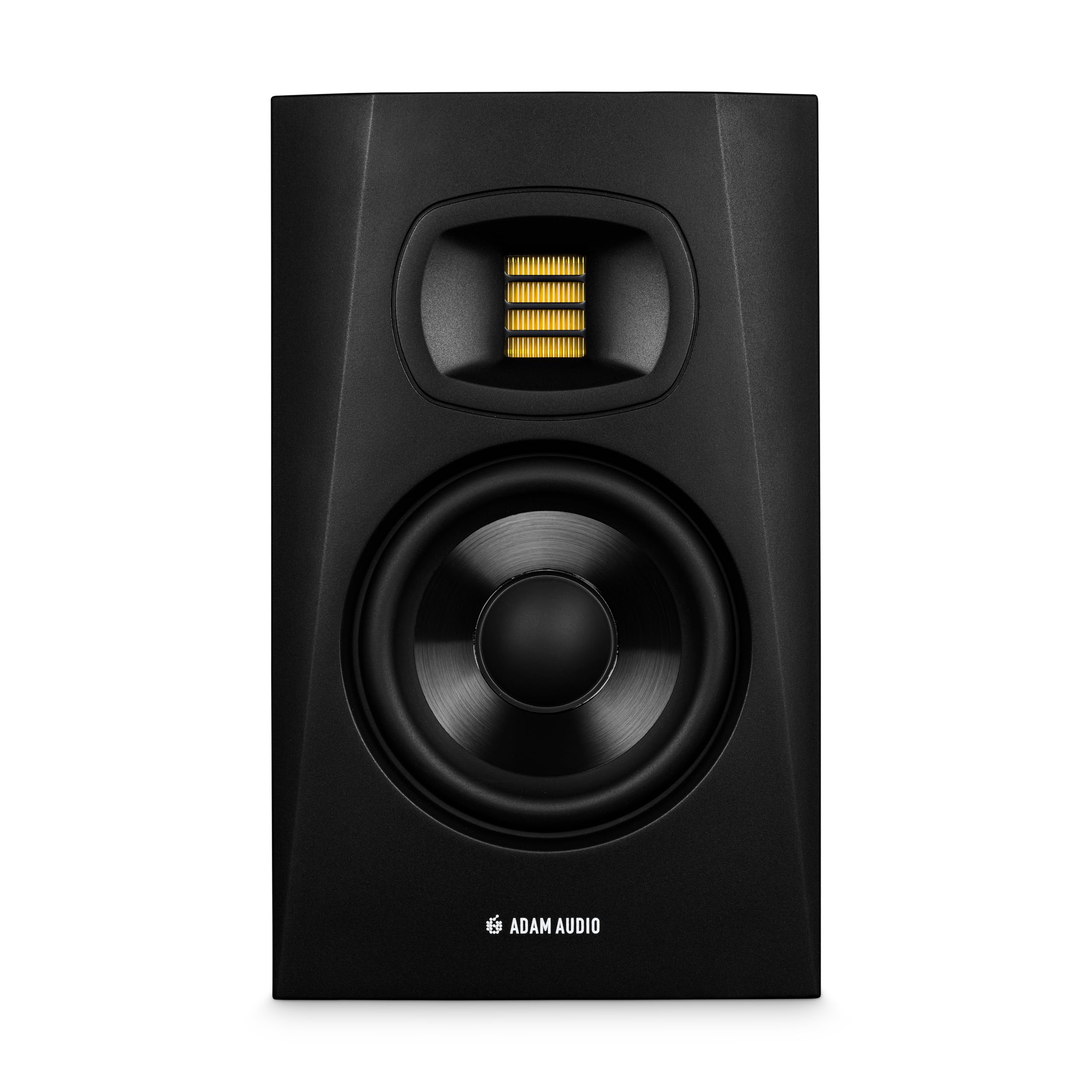
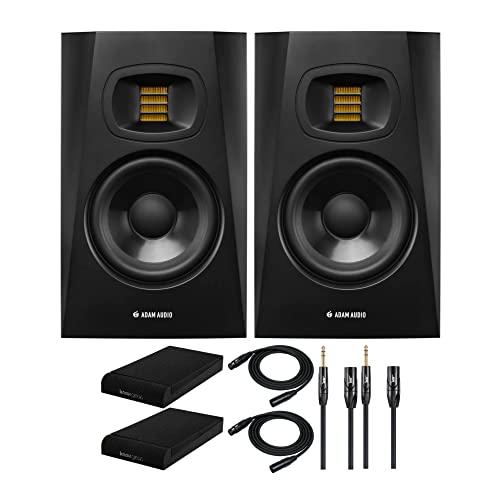
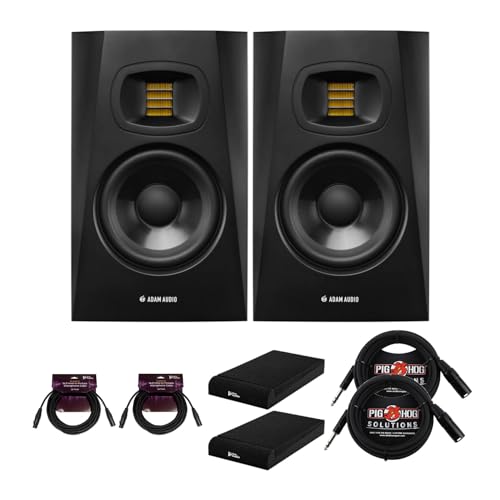

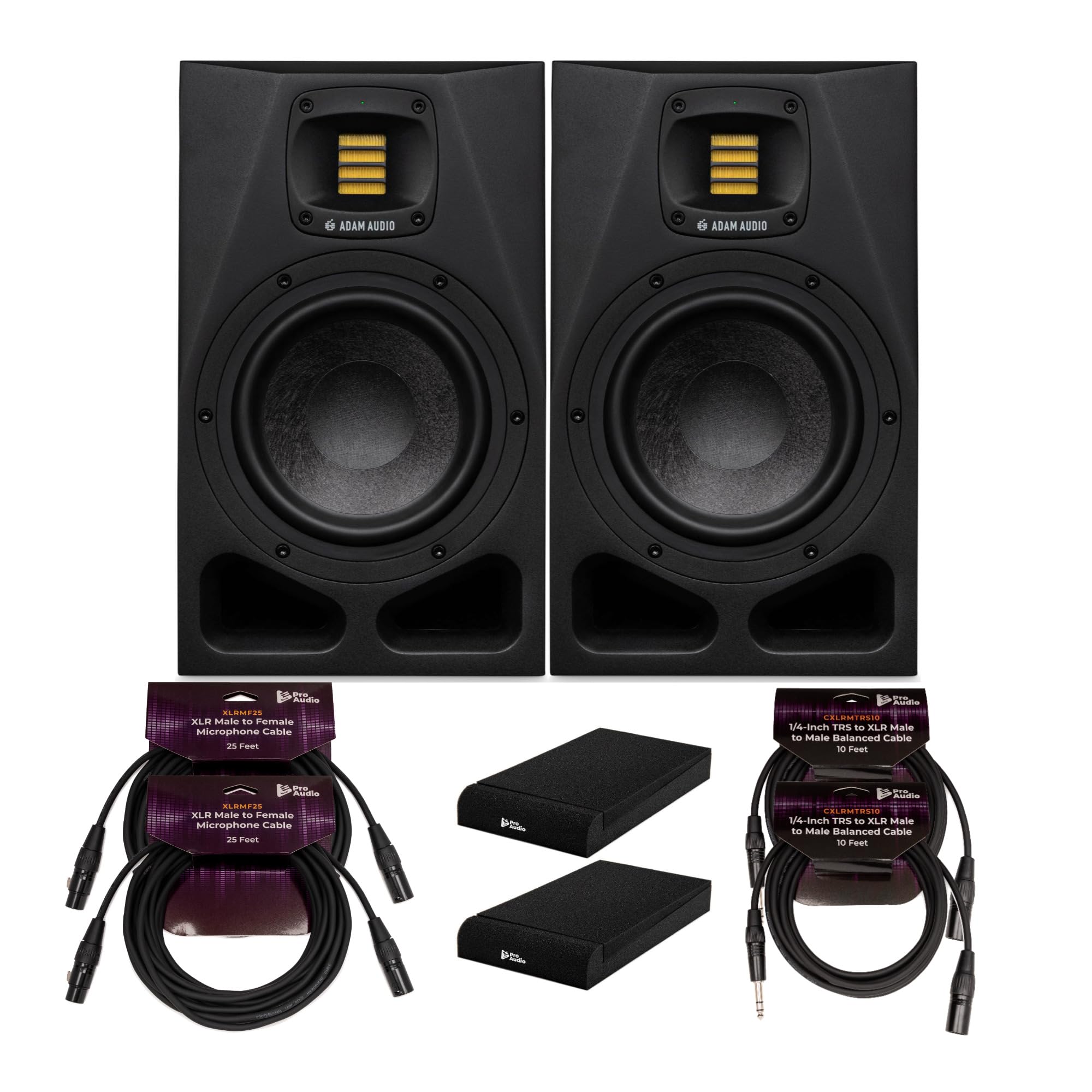

Who Should Buy ADAM Studio Monitors?
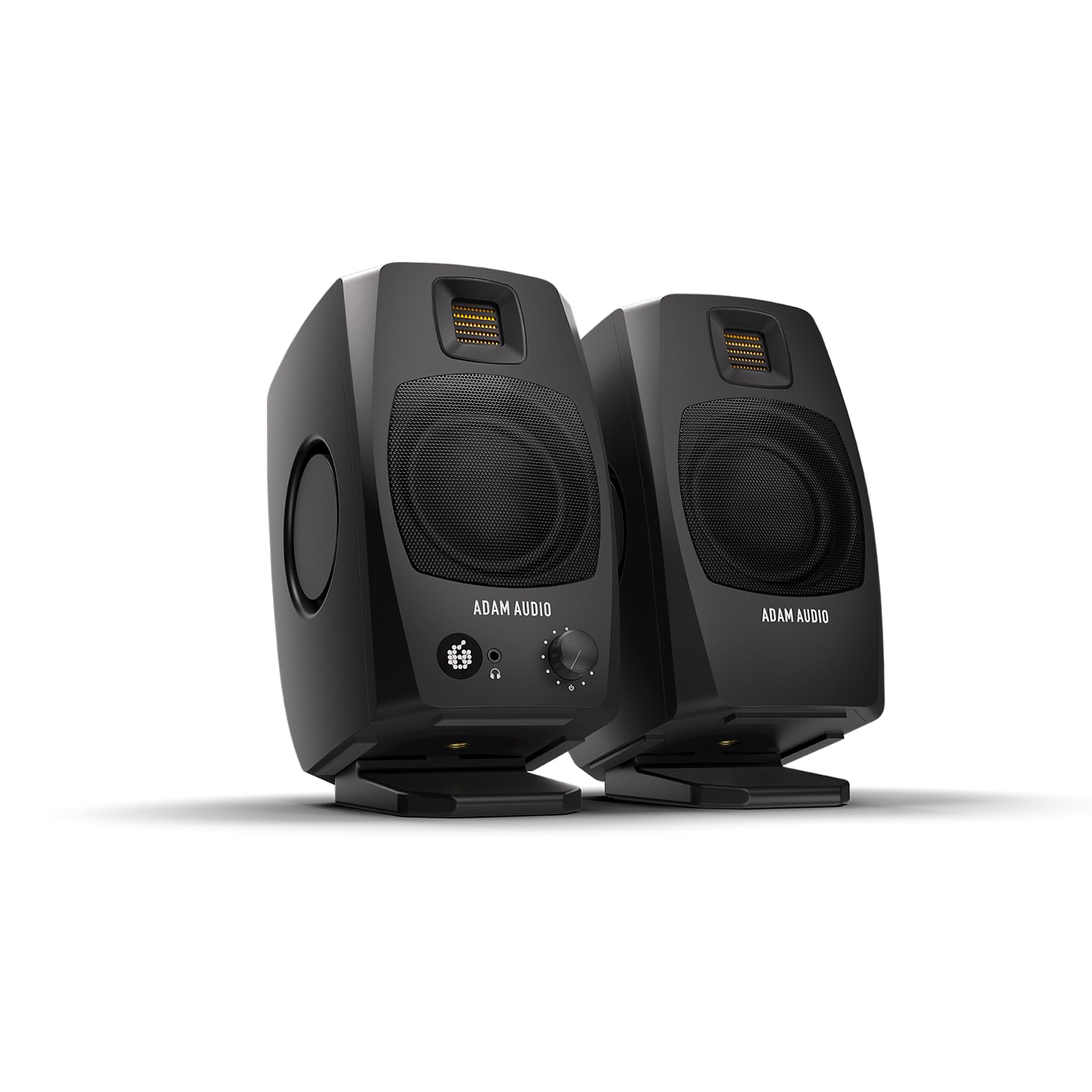
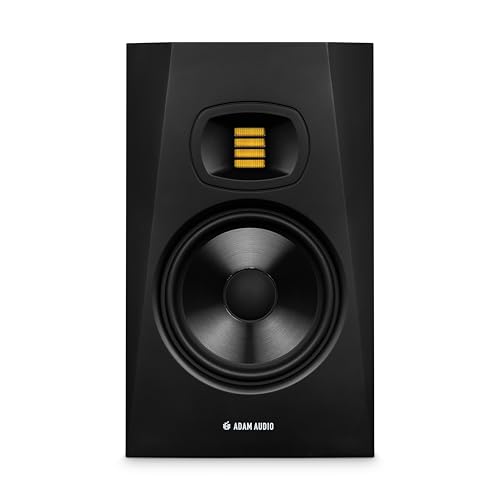
ADAM monitors share a house sound built around a folded ribbon tweeter, so the real choice is size, tuning flexibility and budget. These three groups cover most buyers.
Home Producers Working in Small or Untreated Rooms
If you produce in a bedroom or spare room with bare walls, a compact pair with a 5 inch woofer is usually the honest choice. A smaller woofer excites less boom in a tight space, and front facing ports let cabinets sit closer to the wall. Look for back panel switches that trim the bass, since they compensate for wall loading you cannot fix with furniture. If budget comes first, see our guide to the best inexpensive studio monitors before stretching for a larger pair.
Mix Engineers Who Need Mixes That Translate
If clients hear your mixes on earbuds, car systems and club rigs, you need midrange clarity and a stereo image that holds up. A 7 inch woofer gives vocals and guitars more body without a subwoofer, and the ribbon tweeter reveals sibilance and reverb tails dome tweeters soften. Engineers comparing accuracy above all else often cross shop our guide to the best sounding studio monitors, but the wider sweet spot and tuning controls usually decide it here.
Creators Stepping Up From Headphones
Podcasters, video editors and streamers who mixed on headphones for years gain most from a first pair of monitors, because speakers show how voices sit in a real room and how loud music feels under dialogue. A mid sized pair on isolation pads covers spoken word work. Our guide to the best studio monitors headphones explains how the two tools divide that work.
Key Features to Compare
Six factors separate one ADAM pair from another. For wider category context, see our overview of the best studio monitor speakers.
Woofer Size and Low End Reach
The woofer sets how much low frequency energy the monitor can move, and bigger helps only when the room can handle it. A 5 inch woofer typically reaches around 50 to 60 Hz, covering kick drums and most bass guitar at desk distances. A 7 or 8 inch woofer extends lower and plays louder, but in small rooms the extra energy returns off the walls as muddiness. Match woofer to room first: compact rooms point to 5 inch designs, treated moderate rooms reward larger cones.
Folded Ribbon Tweeter and Top End Detail
ADAM built its reputation on a folded ribbon tweeter, where a pleated diaphragm squeezes air instead of pushing it like a piston. The pleats give more working surface than a dome of the same footprint, so transients such as stick clicks and consonants arrive crisp without harshness at normal volumes. The design also spreads high frequencies widely, widening the sweet spot. For long dialogue or acoustic editing sessions, that detail with low fatigue is the main reason to choose this brand.
Amplification and Headroom
Every ADAM monitor is powered, with amplifiers inside the cabinet matched to the drivers and separate channels for woofer and tweeter. What matters is headroom: enough wattage that loud passages stay clean instead of compressing. Check rated power per driver and maximum sound pressure level at one meter. Mixing happens around 75 to 85 decibels at the chair, so a pair rated comfortably above that sounds relaxed, and quiet detail survives.
Tuning Controls and Room Correction
No monitor sounds flat in a real room, so the tuning tools on the cabinet decide how close you get. Simpler models carry back panel switches for bass, midrange and treble shelving, plus a desk control for desktop buildup. Higher models add digital signal processing with finer correction bands. Adjust one control at a time and listen between changes, because stacked adjustments hide which one helped.
Port Design and Placement Near Walls
The bass port vents air from the cabinet to extend the low end, and its location governs where the monitor can sit. Front panel ports fire toward you and tolerate placement close to a wall, suiting desks pushed against the wall in small rooms. Rear ports need clearance, ideally a foot or more, because wall reflections fatten their bass unevenly. When you compare the best adam studio monitors for a tight desk, port position is a plain spec sheet fact many buyers overlook.
Inputs and Connection Options
Balanced inputs are the studio standard because the wiring rejects hum picked up along the cable run. Most ADAM models offer balanced XLR, many add balanced TRS, and entry models often include unbalanced RCA for consumer gear. Use balanced cables whenever both ends allow it, and keep the monitor volume near its marked reference point so the interface controls the level and the noise floor stays low.
ADAM Monitor Sizes for Different Rooms and Desks
ADAM sells monitors in size classes, each fitting a different working distance and room volume.
Compact Nearfield Pairs for Desks
Pairs built around 5 inch woofers suit desks about 3 to 4 feet from the listener. They keep bass modest, image sharply at close range and cost the least, with entry pairs at about $150 to $400 for the pair. Bedroom producers and editors at arm length get the most balanced result here.
Standard Nearfield Pairs for Dedicated Rooms
Pairs with 7 inch woofers are the middle ground for rooms set aside for audio work. The extra cone area adds low end authority and louder clean playback at 4 to 6 feet, suiting full band mixes. Expect about $500 to $1,200 per pair, and budget for stands to lift tweeters to ear level.
Larger Pairs for Wider Rooms and Louder Playback
Pairs with 8 inch woofers, and taller multi driver designs above them, serve wider rooms and longer listening distances. They move enough air to make a subwoofer optional for most music work, but overwhelm small rooms however you tune them. Prices run from about $1,200 per pair upward, and the space they need is part of the real cost.
Common Mistakes to Avoid
- Buying the largest woofer for a small room, so uncontrolled bass hides the midrange detail you paid for.
- Placing monitors flat on a desk with no stands or pads, so desk vibrations and reflections smear the stereo image.
- Sitting outside the triangle of tweeters and head, so the center image falls apart.
- Turning monitors up loud to judge the low end, so your ears tire and mixes end up dull elsewhere.
- Connecting balanced monitors with unbalanced cables over long runs, so hum creeps into quiet passages.
- Judging a pair in the first hour, so unfamiliar top end honesty reads as harshness.
Care and Maintenance of ADAM Studio Monitors
Studio monitors need little servicing, but a few habits keep them accurate. Dust cabinets with a dry microfiber cloth, and never touch the ribbon tweeter or blast it with compressed air, because the pleated foil is thin and dents change its response. Keep rear cooling fins clear, since the amplifiers shed heat through the back panel. Follow a power order habit: monitors on last, off first, so interface pops never reach the drivers at full gain. If one side plays quieter, distorts at low volume or hums, have a technician inspect it instead of masking it with balance settings.
Frequently Asked Questions
How far should ADAM studio monitors sit from the listener?
Most ADAM nearfield pairs work best about 3 to 6 feet from your ears, tweeters at ear height, all three points forming an equal sided triangle. Lean forward and back as a check: the center image should stay locked while only loudness changes. If it wanders with small head moves, toe the pair in until vocals sit firmly in the middle.
Do ADAM studio monitors need a subwoofer in a small room?
Usually not, and in a small room a subwoofer often creates more problems than it solves. The sizes above reach the notes most music and dialogue work depends on, while a sub adds a second low end source bare walls turn into peaks and nulls. Consider one only for film effects or electronic music below around 45 Hz, and treat the room corners first.
Should ADAM studio monitors be bought as a matched pair?
Yes, buy them as a pair at the same time whenever you can. Monitors are built to tight tolerances, and units from the same production period image more evenly than singles bought years apart. If one of an older pair fails, replacing both often costs less than hunting a matching single.
Are ADAM studio monitors a good choice for casual listening too?
They are, if you enjoy an honest presentation more than a flattering one. The clarity that exposes a harsh vocal reveals clean recordings beautifully, and nothing prevents everyday use through your interface. Remember the tuning targets accuracy at your desk, so the pair sounds leaner from a couch than living room speakers.
Do ADAM studio monitors need acoustic treatment to sound accurate?
No, they work without treatment, but treatment raises the ceiling on what you hear. First reflections from bare side walls blur the stereo image more than any small cabinet error, and two absorptive panels at the reflection points improve clarity noticeably. Use the tuning controls for what placement cannot fix.
Our Verdict
Start with the room, then the woofer, then the tuning tools. A compact pair placed well and trimmed with its own controls teaches you more than a large pair fighting your walls, and the ribbon tweeter rewards careful placement with lasting detail. Shortlist two sizes, and let the product table above confirm current pricing. Chosen that way, the best adam studio monitors become the pair you stop thinking about, which is what a mixing tool should be.