
Best 7 Foot Air Hockey Tables: Types Compared and How to Choose for 2026
Disclosure: We may earn a commission when you buy through links on this page, at no extra cost to you. As an Amazon Associate I earn from qualifying purchases. Learn more
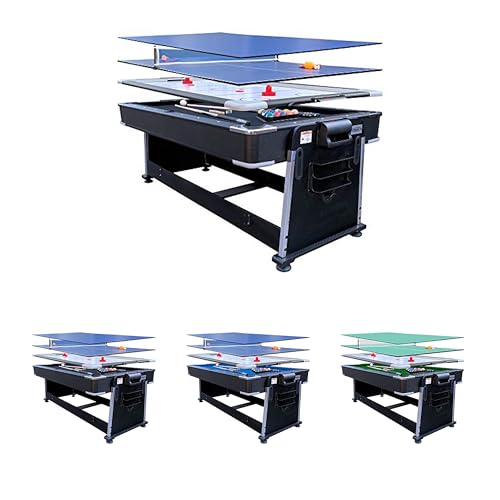
Compare the best 7 foot air hockey tables by type, with each type's pros and cons, ideal users, and price range, so you can choose the right style.
Seven feet is the size most home players picture when they imagine real air hockey, big enough for fast rallies and bank shots, small enough for a garage or game room. Yet the best 7 foot air hockey tables on sale differ enormously in blower strength, cabinet build, and how honestly they hold up to daily family play. Two tables with the same length can feel like different games entirely.
This guide compares the main types plainly, what each does well, what it gives up, and what it usually costs. Then it covers the measurements and features that decide whether a table still plays well in year three. Use the comparison table below to match the types against real listings as you narrow your choice.


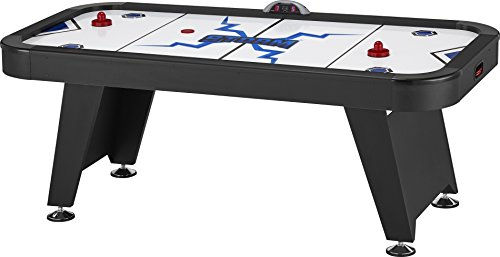

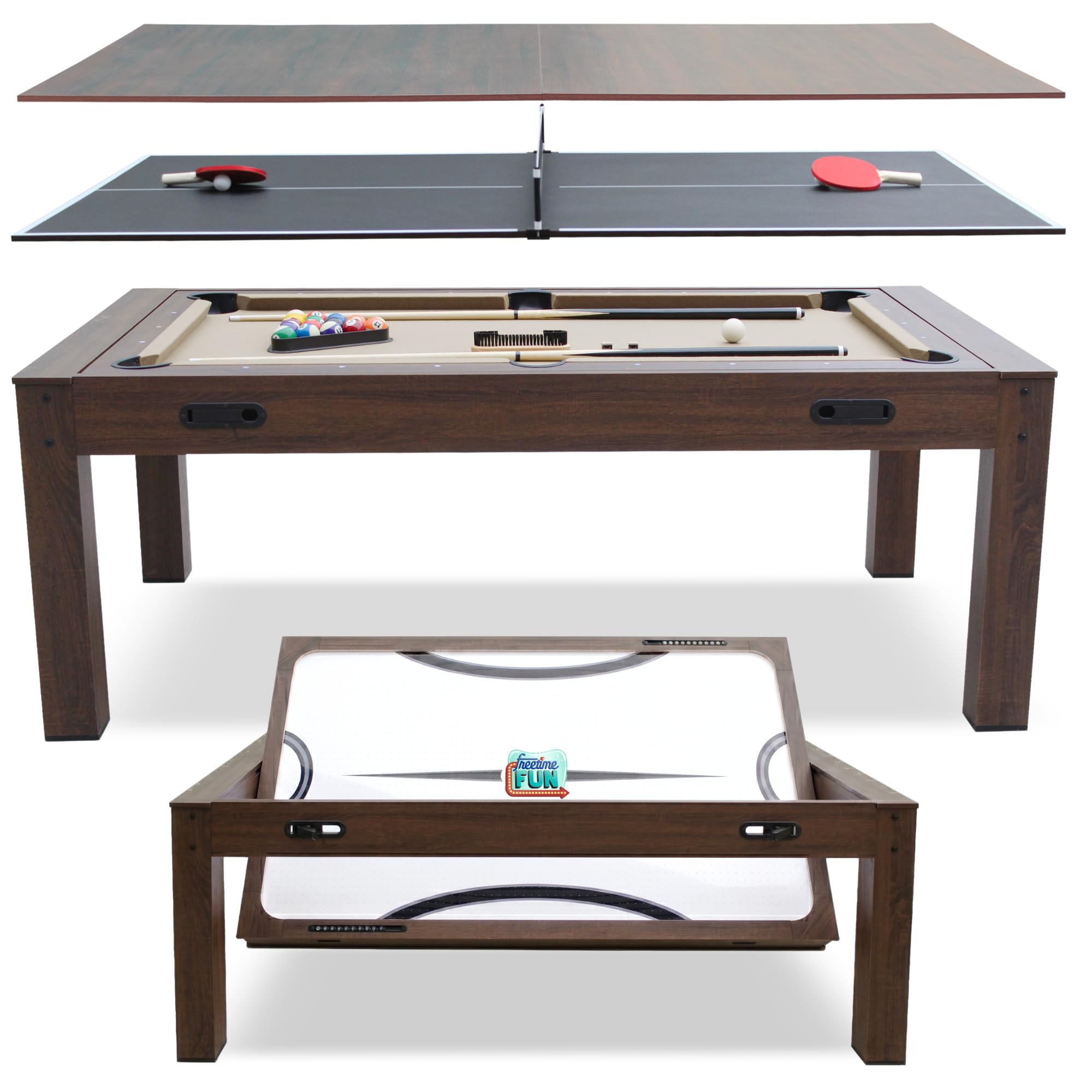
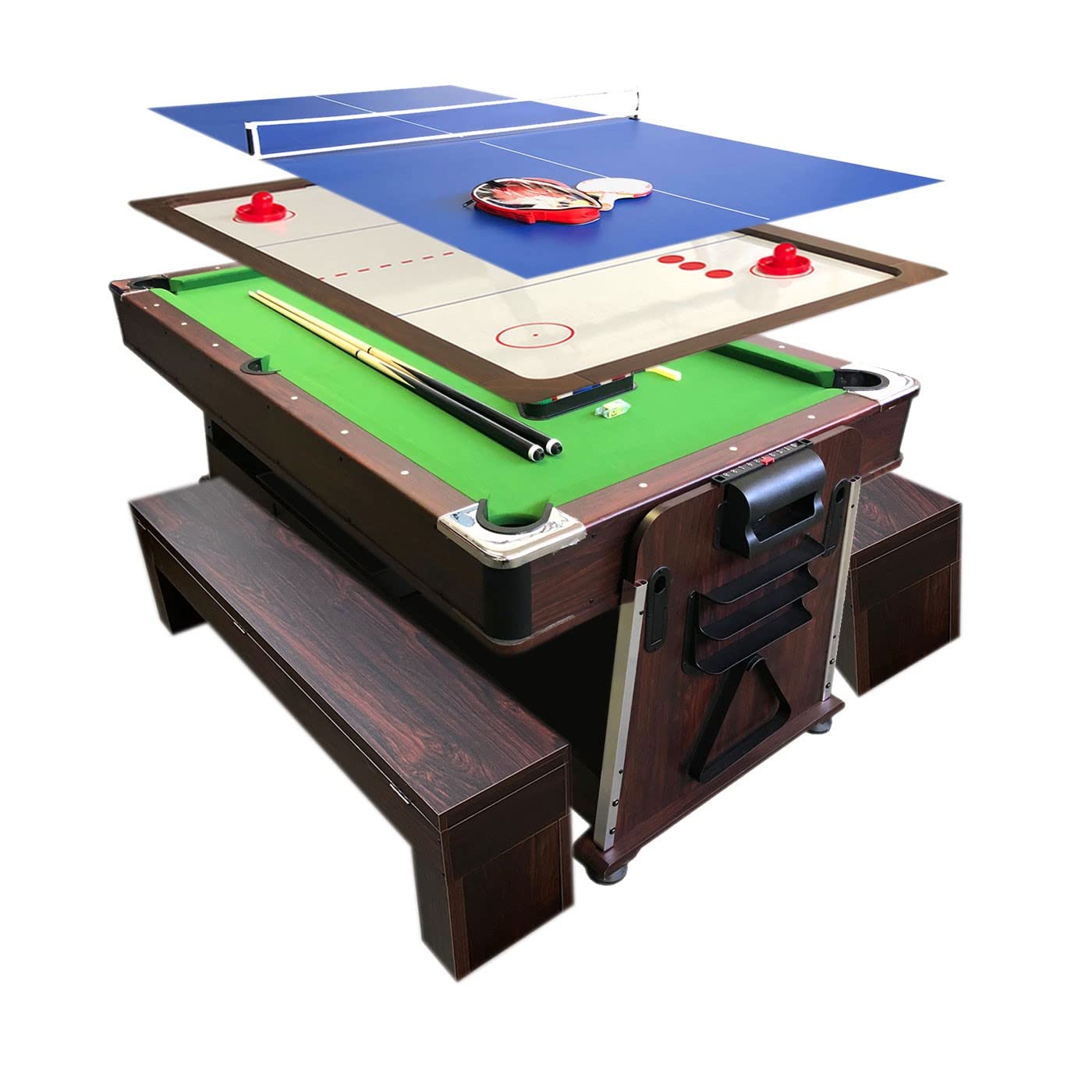
Types of 7 Foot Air Hockey Tables Compared
All air hockey tables share one idea: a blower pushes air through hundreds of tiny holes so the puck floats on a cushion and glides with almost no friction. The types below differ in cabinet construction, leg design, and blower power. As a rough price map, budget models run about $300 to $600, sturdy home models about $600 to $1,200, space saving designs about $400 to $800, and arcade style models about $1,200 and up.
Space Saving Models
Space saving models keep the full 7 foot playing surface but fold their legs, use slimmer aprons, or stand on end for storage against a wall. They suit homes where the game room also serves as a guest room, a gym, or a garage that still parks a car. The engineering trade off is rigidity, because folding joints and lighter legs flex a little more during hard play, and a flexing table can develop an uneven surface. Setup also takes longer each time you play. If your room truly must return to other duties, this type is the only honest answer, and good examples feel far sturdier than older folding designs.
Budget Models
Budget models use thinner playfields, lighter cabinets, and smaller blowers to reach a friendly price. They deliver genuine fun for casual family play, younger kids, and occasional game nights, and many include electronic scoring that children love. The limits show up as dead spots where the puck slows, rails that absorb rebounds instead of returning them, and legs that wobble once bolts loosen. Lifespan is the real cost, since a budget table played hard every day may feel tired within a few years. Buy this type with clear eyes and it can be a sensible first table.
Sturdy Home and Arcade Style Models
Sturdy home models and arcade style tables use thick playfields, heavy cabinets, strong blowers, and wide legs with levelers, aiming to copy the arcade experience. The puck glides evenly corner to corner, rebounds stay lively, and the whole table feels planted during aggressive play. These tables also tend to use full size pucks and mallets, which changes the game in a good way. The costs are price, weight, and commitment, because a heavy table needs a permanent home and usually two strong adults to move. Our broader guide to the best air hockey table options explains how this class compares with smaller home sizes.
Space Saving Models vs Budget Models: Which Should You Choose?
These two types compete for the same buyers, so compare them directly. On room use, space saving wins, since it stores away, while a budget table still occupies its full footprint every day. On play quality, a good budget table with a rigid fixed frame often beats a folding table at the same price, because none of its budget went into hinges. On durability, fixed legs again tend to outlast folding joints. On price, the two overlap, with space saving designs charging a premium for their hardware. On convenience, folding wins only if you truly fold it often. Choose space saving when storage is a real weekly need, and choose a fixed budget model when the table will live in one place, which describes most garages and basements.
How to Choose the Right 7 Foot Air Hockey Table
Playfield and Cabinet Materials
The playfield surface should be smooth, hard, and resistant to scratches, because every scuff adds friction and slows the puck. Laminate surfaces over a dense core hold up better than thin printed boards, and a thicker playfield resists warping that creates dead spots. Cabinet sides and aprons in solid wood or thick engineered board absorb the impact of hard shots without cracking. Check how the rails are made as well, since aluminum or solid rails return rebounds crisply while soft plastic rails deaden them. Readers comparing game table categories in general may also browse our overview of the best hockey tables before settling on air hockey specifically.
Blower Strength and Airflow
The blower is the heart of the table, and even airflow matters more than raw power claims. A good blower floats the puck uniformly, so it never stalls near the corners or drifts toward one end on a level surface. Look for a motor with a clear air volume rating and a plenum design that spreads air across the whole underside of the playfield. A weak or uneven blower cannot be upgraded later, unlike pucks and mallets, so this specification deserves priority over scoring displays and sound effects when you compare two tables at similar prices.
Size, Dimensions, and Room Clearance
A 7 foot table is roughly 7 feet long and about 4 feet wide, and players need room to stand and swing at both ends and along at least one side. Plan for about 3 feet of clear space at each end and 2 feet on the sides, which means a room near 13 feet long suits the table comfortably. Measure doorways, hall turns, and stair landings before ordering, because the cabinet usually arrives as one large piece. Check the weight too, and confirm your floor can take it easily, which almost any ground level floor can.
Style and Room Fit
Air hockey tables are large, bright furniture, so choose a finish you will enjoy seeing daily. Dark wood finishes suit traditional game rooms, while white and modern finishes fit brighter family spaces. Consider leg style as well, since pedestal bases give more foot room for seated players and arcade legs look the part for standing play. Overhead scoring units add presence but need ceiling clearance. If replacement pucks and mallets matter to your plan, our guide to the best air hockey pucks explains the sizes and weights that match full size tables like these.
How to Make Your 7 Foot Air Hockey Table Last Longer
Level the table carefully at setup using the leg levelers and a long level in both directions, then recheck after the first month as the floor and legs settle. Keep the playfield clean by wiping it with a slightly damp cloth and drying it fully, since dust and spills clog the air holes and add friction. Vacuum or blow out clogged holes gently rather than poking them with sharp tools. Tighten leg and apron bolts every few months, keep drinks off the rails, and store pucks and mallets in a drawer so their smooth bases stay unscratched. Supervise young children around the table edges and the blower intake, and switch the blower off when play ends.
FAQs
How long should a good 7 foot air hockey table last?
A sturdy home model should last about 8 to 15 years with basic care, because its main wear points are the playfield surface and the blower motor, both of which age slowly when kept clean and dry. Budget models played daily may show wear in 3 to 5 years. Keeping the air holes clear and the surface unscratched does more for lifespan than any other habit.
How do I choose the right size air hockey table for my room?
Start with the room, not the table. A 7 foot table plus player space at both ends needs a room roughly 13 feet long and at least 8 feet wide. If your space falls short, a smaller table that fits with room to play honestly beats a 7 foot table squeezed against walls, because cramped ends ruin rallies. Measure doorways and turns as well, since delivery fit decides the question before gameplay does.
Is an expensive 7 foot air hockey table worth it?
It is worth it when the table will be played often and hard, because the extra money buys even airflow, a playfield that stays flat, and rails that keep rebounds lively for years. For occasional holiday play, a budget model delivers most of the fun for far less. Think in cost per year of real use, and remember that a heavy table also commits a room, which is its own kind of price.
What features matter most for long games on a 7 foot air hockey table?
Even airflow, accurate leg levelers, and comfortable mallet size matter most across long sessions. Level play keeps rallies fair, full size mallets with smooth bases protect the surface and your wrists, and a quiet blower keeps conversation possible. Electronic scoring with a clear display also helps during long matches, since manual scorekeeping interrupts play. Families who also enjoy other table formats can compare with our notes on the best table hockey sets, which reward some of the same build qualities.
Final Thoughts
Choose the type by your room and your habits first, space saving for shared rooms, budget for casual play, sturdy or arcade style for committed players. Then confirm blower quality, playfield build, and true room clearance before you order. Check your finalists against the product table above, and the best 7 foot air hockey tables for your home will be the one that fits your space, floats the puck evenly, and still plays fast years from now.


