
The Best 5x8 Speakers: Buying Guide and Checklist for 2026
Disclosure: We may earn a commission when you buy through links on this page, at no extra cost to you. As an Amazon Associate I earn from qualifying purchases. Learn more

Learn how to choose the best 5x8 speakers with clear guidance on sound quality, power handling, exact fit, materials, and value for cars and trucks.
A worn factory speaker buzzes, distorts at half volume, and makes every drive sound tired. Replacing it with the right best 5x8 speakers is one of the cheapest sound upgrades you can make, but only if the new pair fits your doors and matches your stereo. This guide explains the specs that matter, the tiers worth paying for, and the mistakes that lead to returns.
The comparison table below shows the current options side by side. Below it, you will find tier guidance instead of hype, plus a step by step way to check fit, power, and materials before you spend anything.


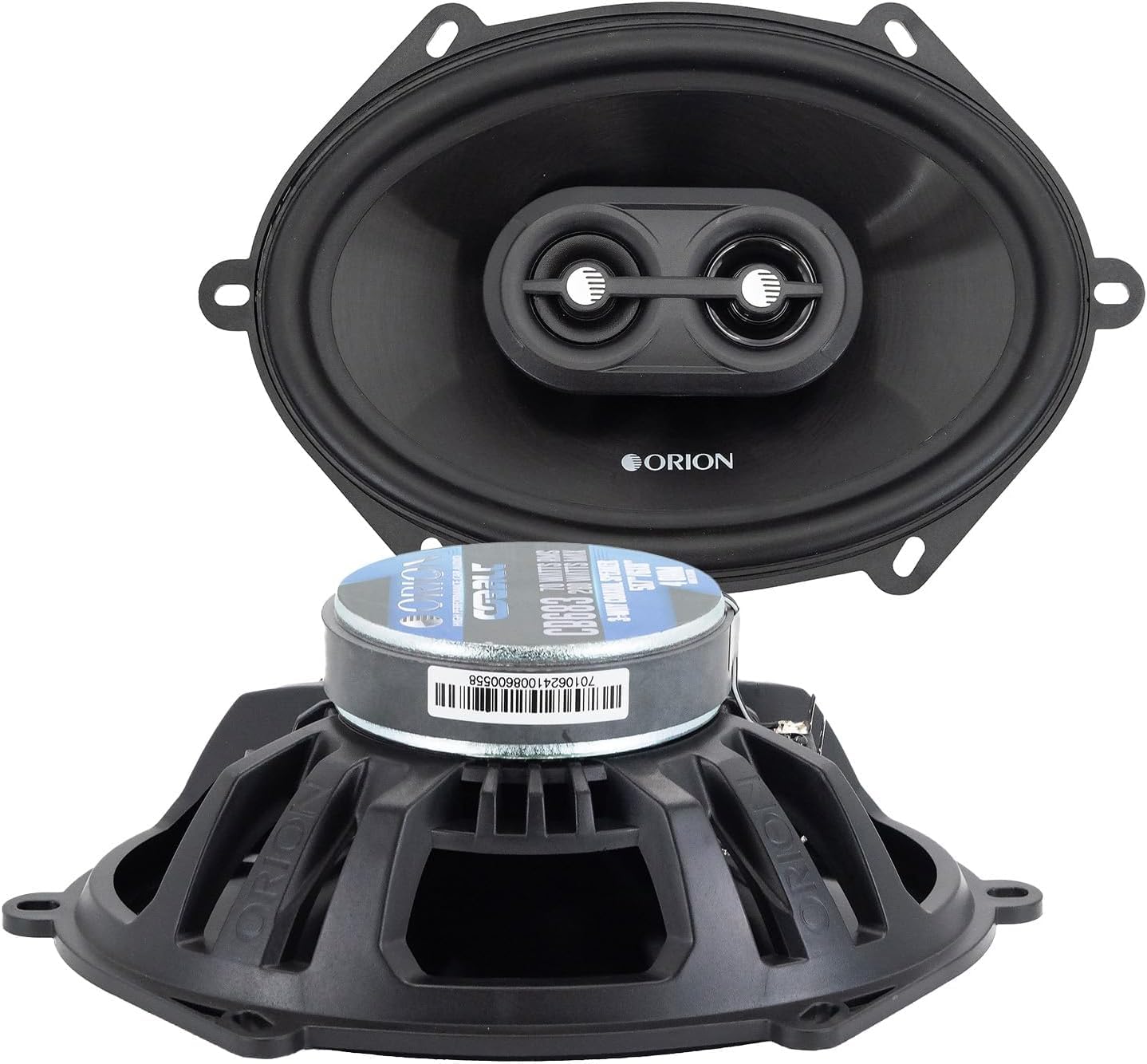


Three Ways to Buy: Tier Guidance at a Glance
Balanced Tier for Most Drivers
For most cars and trucks, the sweet spot sits around $70 to $130 per pair. At this level you get a polypropylene or treated woofer cone, a real tweeter rather than a simple cone whistle, and sensitivity high enough to play clearly on a factory stereo. Sound is fuller than stock, with cleaner voices and less buzz at volume. This tier suits daily drivers who listen at moderate levels and want a clear improvement without adding an amplifier or rewiring the car.
Value Tier for Tight Budgets
Value pairs at around $40 to $70 per pair make sense when a factory speaker has failed and you mainly need clean, working sound again. Expect simpler materials, smaller magnets, and less bass weight, but a good value pair still beats a torn original speaker by a wide margin. Choose this tier for a work truck, a first car, or a vehicle you plan to sell soon. Spend your savings on fresh mounting clips and a little sound deadening for the door, which improves any speaker.
Upgrade Tier for Amplified Systems
Upgrade pairs at around $130 to $250 per pair bring stronger magnets, better crossovers, and tweeters made from silk, aluminum, or other rigid materials that stay detailed at high volume. These speakers need amplifier power to show their worth, so budget for a small amp if your stereo is stock. This tier suits listeners who play music loudly on long drives and who plan to add a subwoofer later. Without extra power, an upgrade pair can actually sound quieter than a sensitive value pair, so match the tier to your system.
How to Choose: A Complete Buying Guide
Sound Quality and Tuning
Start with sensitivity, stated in decibels. A pair rated at about 90 dB or higher plays loudly on factory power, while a pair near 86 dB needs an amplifier to reach the same level. Frequency response tells you the range the speaker can reproduce, and most 5x8 models cover roughly 50 Hz to 20 kHz on paper. Treat the low number with caution, because a door mounted oval woofer will not deliver deep bass no matter what the box claims. Look instead for smooth mids, since voices, guitars, and podcasts live there, and for a tweeter that adds detail without harshness.
Fit and Door Clearance
The 5x8 size is common in many Ford and Mazda doors and rear decks, and it shares its footprint with 6x8 speakers, which are the same size under a different name. Measure your opening anyway, because trim rings and window tracks vary by year. Check mounting depth against the space behind the panel, and confirm the window rolls all the way down without touching the magnet. Know how point: test fit one speaker and cycle the window and door lock before you wire anything, because fixing an interference problem takes minutes now and an hour after the panel is back on.
Power Handling and Stereo Matching
Judge power by the RMS figure, which is the continuous power a speaker handles safely, not the large peak number printed for marketing. Factory stereos send roughly 10 to 20 watts RMS per channel, and most aftermarket stereos send about 15 to 25 watts. A speaker rated at 30 to 60 watts RMS works happily in either setup and leaves room for a future amplifier. Very high RMS ratings are not a quality mark by themselves: a speaker built for 100 watts will sound thin and quiet if your stereo can only feed it 15.
Materials and Durability
Doors are harsh places, with heat, cold, and moisture that drips past the window seal. Polypropylene cones and rubber surrounds handle that cycle for years, while untreated paper cones and foam surrounds can soften and tear. A plastic or coated steel basket resists the rust that forms inside older doors. Tweeters in silk sound smooth, aluminum sounds brighter and can feel sharp in a reflective cabin, and basic polymer tweeters sit between the two. Whatever you choose, confirm the speaker uses materials meant for a car door rather than a sheltered home shelf.
Placement and Location in the Vehicle
Where a 5x8 speaker sits changes what you should buy. Front door pairs carry the voices and most of the detail, so spend more there. Rear deck or rear door pairs mainly fill the cabin, and a simpler pair is fine, especially if rear passengers are rare. If you are replacing only one location, do the front first. Also think about aim: a tweeter that can pivot a few degrees lets you point high notes toward the seats instead of the floor, which helps in deep door mounts. For general background on judging clarity across speaker types, see our guide to the best sounding speakers.
Connectivity and System Options
Passive car speakers have no Bluetooth, no battery, and no app, and that is a strength: they turn on with the car and never need charging. Your stereo handles the wireless link to your phone, along with calls and streaming. If you want portable sound outside the car instead, that is a different product class entirely, covered in our guide to the best bt speakers. For door speakers, the connections that matter are simple spade terminals, correct polarity, and a harness adapter that plugs into the factory wiring so you never cut a wire.
Types of 5x8 Speakers
Coaxial Models
Coaxial models place a tweeter in front of the woofer, so one unit covers the full range and drops into the factory location with no extra holes. They are the default choice for this size, easy to install in under an hour per door for a careful owner. Sound quality ranges from basic to genuinely refined at the upper tiers, which makes coaxial pairs the right answer for most replacements.
Component Models
Component sets split the tweeter away from the woofer and add an external crossover. Mounting the tweeter near the dash or mirror lifts the sound stage and improves clarity, at the cost of more installation work and a higher price. In the 5x8 size these sets are less common, and many owners achieve a similar result with a good coaxial pair plus careful equalizer settings. Choose components only if you enjoy installation projects and plan to add an amplifier.
Full Range Single Cone Models
The simplest designs use one cone with a small whizzer cone in the center instead of a separate tweeter. They are cheap, light, and durable, and they suit work vehicles where radio, news, and podcasts matter more than music detail. High notes sound softer and less defined, so music lovers will notice the gap quickly. As a like for like repair of a failed factory unit on a tight budget, they do an honest job.
How to Make Your 5x8 Speakers Last Longer
- Keep volume below the point of distortion, because a clipped signal overheats the voice coil and is the top cause of early failure.
- Use a harness adapter and firm connections, since a loose terminal can crackle, arc, and damage both the speaker and the stereo.
- Check the door water barrier after installation and reseal it, so rain that enters the door drains away from the speaker instead of onto it.
- Set a sensible bass limit on the stereo if you have no subwoofer, because asking a small oval woofer for deep bass shortens its life.
- Inspect the surrounds once a year through the grille for cracks, and replace a failing foam surround early before the cone tears.
5x8 Speakers: Your Questions Answered
Is ANC worth the extra cost on 5x8 speakers?
No, because car door speakers do not include active noise cancellation, and no pair in this size offers it. Road and engine noise in a car is handled by the vehicle insulation and, in some newer cars, by a system built into the car itself. Spend the money on sensitivity and a little door deadening instead, since both give you clearer sound at lower volume on the highway.
Do I need a special codec for 5x8 speakers?
No codec is needed for the speakers, because they receive an analog signal from your stereo. Codecs only affect the Bluetooth link between your phone and the stereo. If streaming quality matters to you, pick a stereo with modern Bluetooth support and set your music app to its high quality mode. The speakers will simply play whatever the stereo sends them.
Wired or wireless: which sounds better for car speakers?
Wired is the only real option for door speakers, and it is also the better sounding one. A wired connection carries full power with no compression and no delay, which keeps music in sync with any video playing on a dash screen. Wireless speakers belong in portable products you carry from place to place, not in a door panel where a permanent wire already exists.
How long does the battery last on 5x8 speakers?
There is no battery to measure, because 5x8 car speakers are passive and draw power from the stereo only while the car runs. Their lifespan is measured in years of service instead. A pair with rubber surrounds and a moisture resistant cone commonly lasts the remaining life of the vehicle, while cheap foam surrounds may start to crumble after several hot summers.
What IP rating do I need for outdoor use?
Car speakers rarely carry an IP rating, because they are designed for the sheltered space inside a door rather than open weather. If your project is truly outdoors, such as a patio, a boat, or an open utility vehicle, choose a marine rated speaker instead of a car model. Inside a normal car door, material choice matters more than any rating: polypropylene and rubber shrug off door moisture for years.
Our Verdict
Match sensitivity to your stereo, confirm the fit with the window down, and choose door proof materials, and the rest is preference. Most drivers should buy in the balanced tier and put any leftover budget into door deadening. Compare your shortlist in the product table above, and pick the best 5x8 speakers that suit your power, your doors, and your budget.


