Best 3 Ton Floor Jacks 2026: A Safe Lifting Guide
Disclosure: We may earn a commission when you buy through links on this page, at no extra cost to you. As an Amazon Associate I earn from qualifying purchases. Learn more

Learn how to choose 3 ton floor jacks by lift range, saddle size and build quality, and how to lift cars and trucks at home safely.
Lifting a car at home feels simple until you face a low clearance car, a heavy truck, or a jack that will not reach the lifting point. A clear best 3 ton floor jacks guide helps you compare lift height, reach, and build quality before you buy, so the tool you choose fits your vehicles and your garage. The product table below shows the main differences at a glance.
A 3 ton rating suits many cars and light trucks, but rating alone does not make a jack safe or suitable. You also need jack stands, a flat surface, and a careful lifting routine every time. This guide explains the basics, the key features, and the safety steps that matter most for first time buyers and home mechanics.



Floor Jack Basics for First Time Buyers
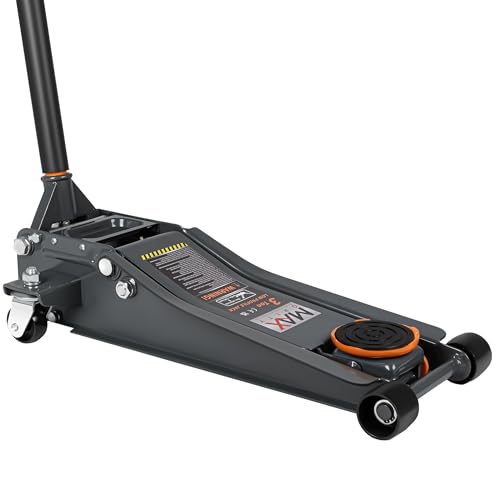
A floor jack uses a hydraulic pump and a long handle to raise a vehicle from a jacking point, and a release valve to lower it in a controlled way. The rated capacity tells you the maximum load the jack is designed to lift, but you should stay well within that rating and never use the jack as the only support while you work underneath. Jack stands, wheel chocks, and a level floor are essential partners, not optional extras.
Lift range is the distance from the lowest saddle height to the highest point, and it must suit your vehicles. Low profile jacks slide under sports cars and lowered cars, while longer reach and higher lift help trucks and SUVs with greater ground clearance. Measure your jacking points and ground clearance before you shop, since a jack that cannot reach or cannot lift high enough is useless no matter how strong it claims to be.
Key Features That Affect Everyday Use
Saddle size and shape affect stability, because a wider saddle spreads load and grips the jacking point more securely. Some saddles include a rubber pad to protect the vehicle frame and reduce slipping, which is a useful detail for painted or coated surfaces. Handle length matters too, since a long handle gives more leverage and keeps you further from the vehicle while pumping.
Wheel quality and swivel action decide how easily the jack rolls into position on a garage floor. Large rear wheels and smooth casters help on slightly rough concrete, while small hard wheels can jam on cracks and expansion joints. A dual piston pump lifts faster with fewer strokes, which saves effort when you raise a vehicle often, and a slow controlled release valve gives finer control when lowering.
Choosing the Right Jack for Your Vehicles
Start by listing every vehicle you plan to lift, including its weight and ground clearance, then choose a jack that covers the heaviest and the lowest vehicle on that list. A car owner may prioritise a low profile design and easy storage, while a truck owner may need greater lift height and a longer chassis for stability. If you work on both, look for a compromise model with a low entry height and a high maximum lift.
Consider garage space and storage as well, since a long frame jack takes more floor area than a compact model. Weight matters if you carry the jack to different locations, and a heavier steel jack often feels more stable but is harder to move. Aluminium models can be lighter, yet they still need a solid build and a trustworthy rating, so do not choose on weight alone.
Safety Steps You Should Never Skip
Always work on a flat, hard surface, chock the wheels that stay on the ground, and engage the parking brake before you lift. Raise the vehicle only at a maker approved jacking point, then place jack stands under solid frame points and lower the vehicle gently onto the stands. Give the vehicle a firm shake test before you slide underneath, and keep hands and tools clear of pinch points throughout.
Never work under a vehicle supported only by a hydraulic jack, and never exceed the rated capacity of the jack or the stands. Inspect seals, wheels, and the release valve regularly, and store the jack with the handle secured and the saddle lowered. If a jack leaks, drifts down under load, or feels rough when pumping, take it out of service and have it checked rather than hoping the problem goes away.
Costs, Durability, and Long Term Value
Prices vary with build material, pump design, and lift range, and a very cheap jack may cut corners on seals, wheels, or frame thickness. A mid range model from a reputable maker often gives the best balance of durability and price for home use, while professional use may justify a heavier duty design. Think about how often you will lift, since occasional use and weekly use place very different demands on seals and moving parts.
Check warranty terms and whether spare parts such as seals and wheels are available, because a repairable jack can last far longer than a disposable one. Read the manual for maintenance advice, including keeping the hydraulic fluid clean and the moving joints lightly lubricated. A well kept jack that suits your vehicles is better value over years than a bargain model that leaks, wobbles, or cannot reach your cars.
For related lifting guides, see best floor jacks, best hydraulic floor jacks, and best harbor freight floor jacks for broader, hydraulic, and store specific options.
A Final Check Before You Buy
Before you buy, confirm that your jack, stands, and chocks all suit the heaviest vehicle you own, and that your garage floor is flat and hard enough for safe lifting. A jack that works on a smooth showroom floor may struggle on cracked or sloped concrete, so check the surface where you will actually work. If the floor is uneven, repair or level the working area before you lift anything heavy.
Practice the full routine on a calm day before you need the jack for an urgent repair, so each step feels familiar when pressure is higher. Place the jack, raise slowly, set the stands, lower gently, and shake test, then reverse the process carefully. Familiarity reduces mistakes, and a dry run reveals missing tools, such as a torch, gloves, or a low profile creeper, before they matter.
Finally, store the jack where it stays clean, dry, and easy to reach, with the handle secured and the saddle lowered. A jack buried behind clutter is a jack you will avoid using properly, and a dirty hydraulic unit ages faster. Good storage, regular inspection, and a disciplined routine together make home lifting safer and far less stressful.
Frequently Asked Questions
What does a 3 ton rating actually mean?
A 3 ton rating means the jack is designed to lift up to three tons under its stated conditions, which covers many cars and light trucks. You should still check your vehicle weight and stay within the rating, and always use jack stands rated for the load. Never guess a vehicle weight, and never use a jack beyond its rating even for a quick job.
Do I need jack stands as well?
Yes, jack stands are essential, because a hydraulic jack is a lifting tool, not a support device for working underneath a vehicle. After lifting, lower the vehicle onto stands placed at solid frame points, then test stability before you begin work. Skipping stands is one of the most dangerous shortcuts in home car maintenance.
How do I know if a jack fits my car?
Measure ground clearance at the jacking point and compare it with the minimum saddle height, then check that the maximum lift reaches your stands. Also check reach, since the saddle must sit squarely under the jacking point without the frame hitting bodywork. If your car is lowered, a low profile model is usually necessary.
Steel or aluminium: which is better?
Steel jacks are often heavier and feel very stable, while aluminium jacks are lighter and easier to carry and store. Both can be safe when well made and correctly rated, so focus on frame thickness, weld quality, and pump design rather than material alone. Choose the weight you can move safely in your own garage.
How do I maintain a floor jack?
Keep the jack clean, check for fluid leaks, and inspect wheels, saddle, and release valve before use. Store it on a level surface with the saddle lowered and the handle secured, and follow the manual for fluid and lubrication advice. If the jack drifts down under load or the pump feels rough, stop using it and seek professional advice.
Final Thoughts
A good floor jack should fit your lowest car, lift your heaviest vehicle with margin, and feel stable and controlled every time you use it. The product table above can help you compare lift range and design, but safety habits matter more than any single feature. Buy the stands, chocks, and time to learn the routine before your first lift.
Compare best 3 ton floor jacks on minimum height, maximum lift, saddle size, and wheel quality, and choose the model that matches your garage and your vehicles. A careful choice, used with stands and a flat surface, turns a daunting job into a routine one.