13 Best Deer Feeders for 2026

Consistently drawing deer to a specific spot takes more than just scattering corn on the ground. A good deer feeder dispenses food on a schedule, extends your feed's shelf life by keeping it dry, and helps establish the predictable feeding patterns that make for better hunting or wildlife viewing.
Here's what actually separates a genuinely reliable deer feeder from one that jams or wastes feed, followed by three standout picks and a full lineup of other strong options to compare.

What to Look for in a Deer Feeder
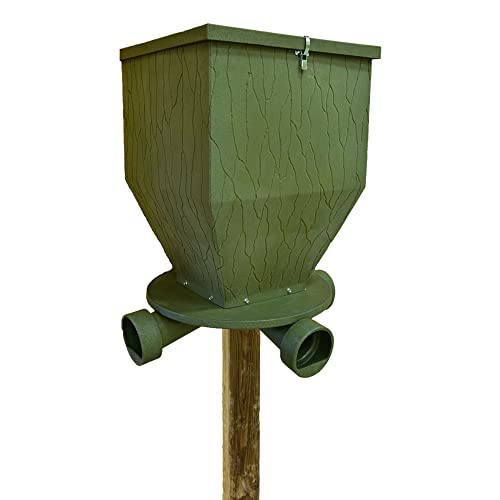
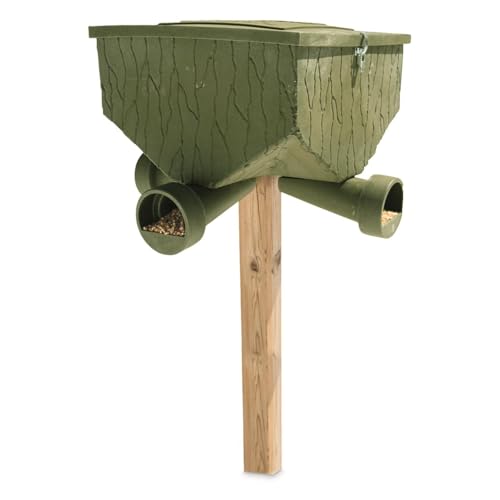
Feeder type is the first major decision. Gravity feeders rely on feed naturally flowing down as deer consume it, requiring no power or timer, while spin-plate feeders with a digital timer actively broadcast feed at scheduled times, giving you more control over when deer show up.
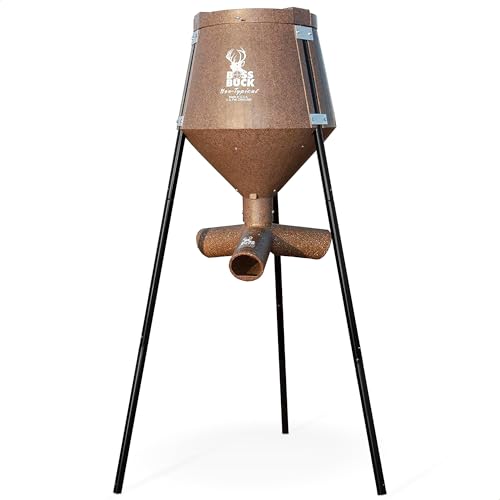
Capacity determines how often you'll need to refill, which matters a lot if the feeder is in a remote or hard-to-access spot. Smaller 30 to 100-pound gravity feeders suit portable, test-a-location use, while 200-pound-plus tripod feeders cut down on trips for established feeding stations.
Timer programmability on spin-plate feeders affects how precisely you can time feeding to actual deer activity. Look for multiple daily feed events with adjustable duration, so you can concentrate feeding during optimal early morning and evening movement windows.
Weatherproofing and construction genuinely matter for something left outdoors year-round. Galvanized steel and durable poly barrels resist rust and UV damage far better than thin plastic, and a sealed lid keeps moisture and pests out of the feed between fills.
Smart connectivity is a newer but genuinely useful feature on premium feeders. Bluetooth or cellular-connected models let you adjust feed schedules remotely without disturbing the hunting area with an in-person visit, which can meaningfully reduce human scent near the feeding site.
Portability and setup vary quite a bit between styles. Tripod feeders need assembly but offer stable, elevated dispersal, while gravity bag feeders strap directly to a tree in minutes, making them easier to test multiple locations before committing to a permanent setup.
Pest resistance is worth factoring in if raccoons, squirrels, or other wildlife are common in your area. Locking lids and varmint-resistant spinner designs help keep feed reserved for deer rather than getting raided overnight by smaller animals.
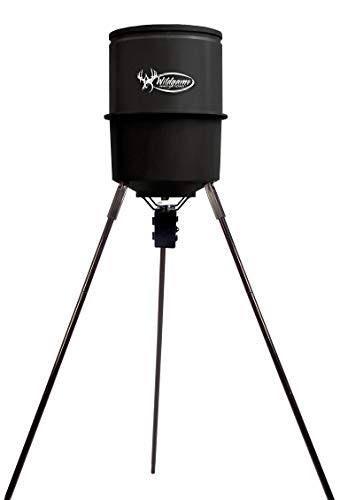
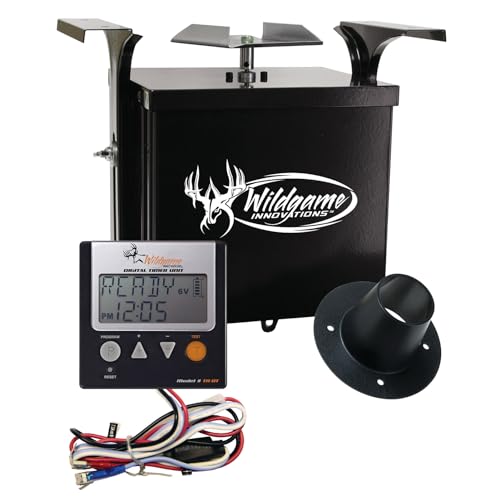
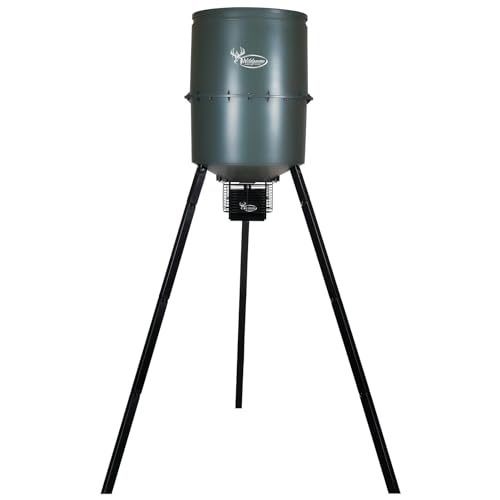
Best Overall: WILDGAME INNOVATIONS Quick-Set 225 lb Game Feeder
With well over 3,000 reviews, this deer feeder has become a go-to entry point into tripod feeding for good reason. A 225-pound capacity paired with a 30-foot feed radius covers a wide area, and the programmable digital timer offers up to four daily feed times customized to your preferred duration.
- Capacity: 225 lbs, 30-ft feed radius
- Timer: Up to 4 daily feed times, 5-20 second durations
- Best for: Buyers who want a proven, reliable entry-level tripod feeder
Pros:
- Large capacity and feed radius cover a wide feeding area
- Heavy-duty coated legs and galvanized spinner plate built for hunting environments
- Quick 15-20 minute assembly and lightweight enough to relocate
Cons:
- Basic timer lacks the smart connectivity of premium models
- Entry-level construction won't match heavy-duty steel feeders long-term
Best Budget: WILDGAME INNOVATIONS Treehugger 100 lb Gravity Bag Feeder
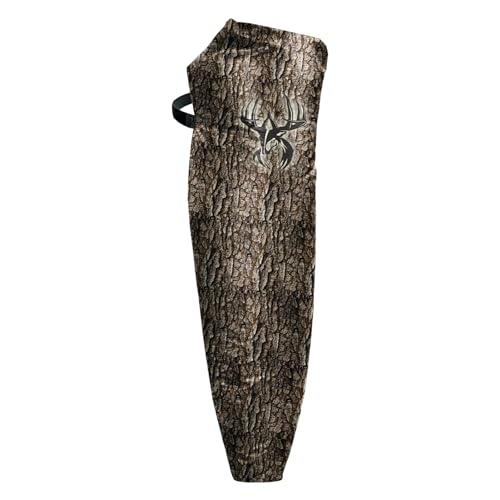
At a genuinely low price, this gravity bag feeder skips the electronics entirely and just works, straps around any tree trunk in under five minutes, and holds up to 100 pounds of corn, pellets, or attractant. It's an excellent way to test a new feeding location before investing in a permanent tripod setup.
- Capacity: Up to 100 lbs
- Setup: Straps to any tree, no tools required
- Best for: Testing feeding locations or budget-conscious hunters
Pros:
- Extremely affordable with no power or electronics needed
- Sets up and moves to a new location in minutes
- Weatherproof PVC construction with a sealed roll-top closure
Cons:
- No timer means feed is always available rather than scheduled
- Smaller capacity requires more frequent refilling than tripod feeders
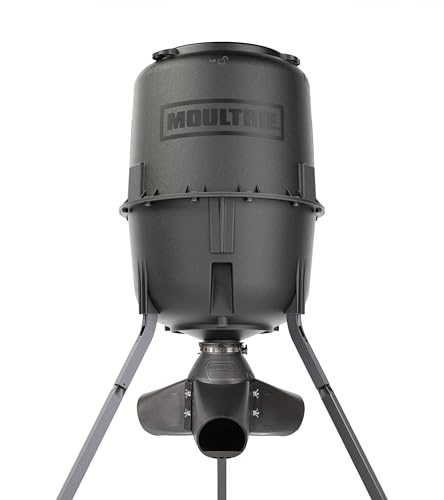
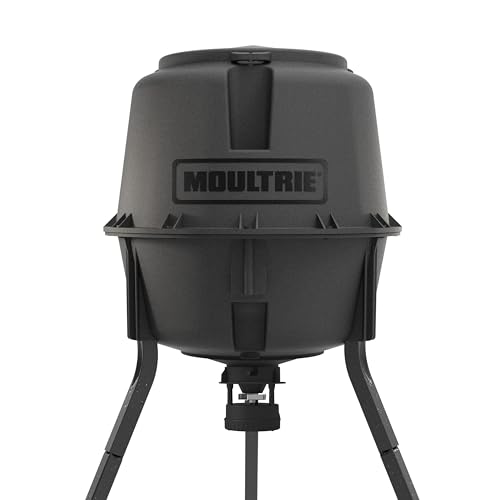
Best Smart Feeder: Moultrie 250 Lb Pro Hunter III Tripod Feeder
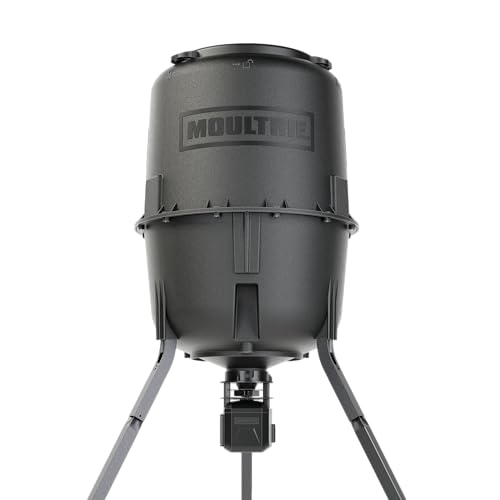
Bluetooth control from up to 300 feet lets you adjust feed schedules without walking into the hunting area, and pairing with a compatible cellular camera extends that control to anywhere with a signal, no subscription required. Ten programmable daily feed events with adjustable spin plate speed give serious hunters precise control over deer patterns.
- Capacity: 250 lbs, 6-ft fill height
- Timer: 10 daily feed events, up to 60 seconds each
- Best for: Hunters who want remote control and precise feed scheduling
Pros:
- Bluetooth and optional cellular control reduce human scent near the site
- 10 programmable feed events allow precise pattern management
- Solar panel port supports extended deployment without battery swaps
Cons:
- Significantly more expensive than basic timer-based feeders
- Battery and solar panel accessories sold separately
Gravity vs. Spin-Plate Feeders: Which Fits Your Hunting Style?
Gravity feeders are simpler, cheaper, and require zero power, making them ideal for testing new locations or supplementing feed in areas you don't want to run electronics or timers.
Spin-plate feeders with programmable timers give you real control over when and how much feed gets broadcast, which is valuable for concentrating deer activity during specific hunting windows rather than having food available around the clock.
Many serious hunters use both: gravity feeders for scouting and supplemental feeding across a property, and a scheduled spin-plate feeder at the primary stand location where precise timing actually matters for the hunt.
Budget also plays a real role in this choice. Gravity feeders cost a fraction of a full tripod setup, which makes them an easy way to establish several supplemental feeding spots across a property without a large upfront investment.
Frequently Asked Questions
Is it legal to feed deer where I hunt?
Baiting and feeding regulations vary significantly by state, and some states ban supplemental feeding entirely or restrict it to certain seasons or distances from hunting areas. Always check your specific state's wildlife agency regulations before setting up any feeder.
How far should a deer feeder be from where I'm hunting?
Placement depends on local regulations and your setup, but many hunters position feeders 30 to 100 yards from a stand for a clear, ethical shot while still keeping some distance to avoid spooking deer during setup and refilling. Wind direction relative to the feeder also matters for keeping your scent away from the approach paths deer will use.
How often do I need to refill a deer feeder?
It depends heavily on feeder capacity and local deer density, but a 200-plus pound tripod feeder in moderate use might need refilling every few weeks, while a smaller 50 to 100-pound gravity feeder could need attention weekly. Checking periodically for clogs or moisture buildup is worth doing regardless of how full the hopper still looks.
Conclusion
The WILDGAME INNOVATIONS Quick-Set is the best overall pick for most hunters, delivering reliable capacity and timer control at an accessible price. If you're just testing a new feeding location, the Treehugger gravity bag feeder gets you started for very little money. And for hunters who want precise, remote-controlled feeding, the Moultrie Pro Hunter III's Bluetooth connectivity is worth the investment. Whichever you choose, a good deer feeder takes the guesswork out of establishing a reliable feeding pattern.