Best Cordless Leaf Blower Under $200 (2026 Buying Guide)
Disclosure: We may earn a commission when you buy through links on this page, at no extra cost to you. As an Amazon Associate I earn from qualifying purchases. Learn more

The jump from a sub-$100 cordless leaf blower to the $150-200 range buys real, noticeable upgrades: higher CFM (airflow volume) and MPH (air speed) for clearing wet leaves and heavier debris, longer battery runtime, and often overlooked membership in a broader battery ecosystem shared with other yard tools from the same brand. At this budget, you're also firmly in territory covered by established power tool brands rather than generic marketplace listings, which matters for parts availability and battery compatibility years down the line.
This guide covers what actually separates a $180 blower from a $60 one, plus how to think about battery ecosystem lock-in before committing to a brand.


CFM and MPH: What the Numbers Actually Mean
CFM (cubic feet per minute) measures volume of air moved; higher CFM clears more debris per pass, which matters most for larger yards or heavier leaf coverage. MPH (miles per hour) measures air speed; higher MPH is better for moving wet, packed, or heavier debris that low-speed airflow just pushes around instead of clearing. Blowers in this price range typically deliver 450-650+ CFM and 120-190 MPH, a real step up from budget models that often top out around 300-400 CFM.
The Milwaukee M18 FUEL Blower delivers 450 CFM and 120 MPH from Milwaukee's professional M18 platform, the same battery system used across Milwaukee's much broader power tool lineup, which is a real advantage if you already own M18 tools or plan to invest in that ecosystem over time.
Battery Ecosystem: The Decision That Outlasts the Blower
This is the single most important long-term consideration at this price point. Buying into RYOBI's ONE+, Milwaukee's M18, WORX's Power Share, Greenworks' 40V/60V, or Makita's XGT/LXT platforms means every future battery-powered tool purchase from that brand can share your existing batteries and charger, genuinely significant savings over years of yard tool ownership. Buying a blower from a brand you have zero other tools from means starting a new, isolated battery investment. If you already own cordless tools from any of these major brands, strongly consider staying within that same ecosystem even if a competitor's specs look marginally better on paper.
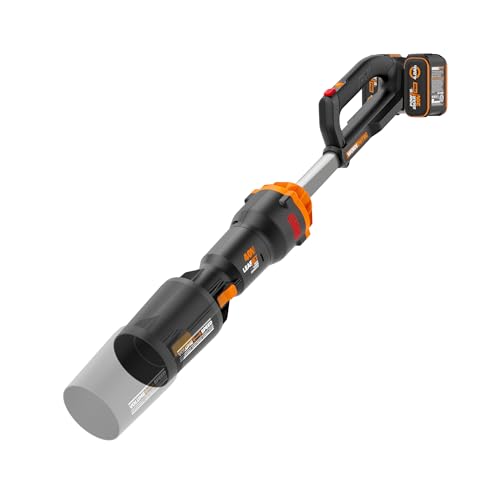
The WORX Nitro Cordless Leaf Blower stands out for its 620 CFM output combined with a "quiet" design focus. WORX specifically engineered the Nitro line to run noticeably quieter than typical cordless blowers at similar power levels, which matters if you're using it early morning or in a neighborhood with close-set houses.
Battery Voltage and Runtime
Higher voltage platforms (40V, 60V) generally deliver more power per battery than lower-voltage systems (18V, 20V), but runtime depends just as much on battery amp-hour (Ah) rating as voltage; a higher-Ah battery on a lower-voltage platform can still outlast a lower-Ah battery on a higher-voltage tool. Check the included battery's Ah rating specifically, not just the voltage number, and consider whether a second battery (sold separately on most platforms) is worth having on hand for larger yards where a single charge won't finish the job.
Weight and Ergonomics
Higher-power blowers in this range generally weigh more than budget models, partly due to larger batteries and more robust motors. If you'll be using it for extended sessions or have any concerns about arm fatigue, look for models with a shoulder strap option or better balance/grip design rather than judging purely on weight in pounds; how the weight is distributed matters as much as the total.
The RYOBI 40V HP Brushless Whisper Series is built specifically around noise reduction. RYOBI's "Whisper Series" branding reflects a real engineering focus on lower decibel output at 650 CFM, a genuinely useful combination of high power and reduced noise that's harder to find together in this category.
Brushless vs. Brushed Motors
Nearly every blower in this price range uses a brushless motor, which is worth confirming rather than assuming, since brushless motors run more efficiently, generate less heat, last longer, and typically deliver more power per battery charge than older brushed-motor designs. This is one of the clearest, most consistent upgrades separating $150+ blowers from cheaper budget models.
Variable Speed and Turbo Modes
Multiple speed settings let you match power to the task: a lower setting for light debris near flower beds or delicate landscaping, full power or a turbo boost mode for wet leaves or heavier cleanup. This also extends battery runtime meaningfully, since running at lower power when full blast isn't needed conserves charge for the parts of the job that actually require it.
Attachments and Nozzle Options
Most blowers in this range ship with at least one nozzle attachment for concentrating airflow into piles or corners, and some higher-end models include a secondary wide-flat nozzle for spreading debris across a larger area on a single pass. A few platforms also offer a vacuum/mulch attachment sold separately that converts the same motor housing into a leaf vacuum, worth checking if you'd rather collect leaves into a bag than just blow them into a pile for separate collection.
Maintenance and Battery Care
Cordless blowers need very little maintenance beyond keeping the intake vents clear of debris buildup, which restricts airflow and can strain the motor over time. For the battery itself, avoid storing it fully depleted for long periods between mowing seasons; lithium-ion batteries hold charge better long-term when stored at a partial charge rather than fully drained, and extreme cold or heat during storage (an unheated garage in winter, for example) can shorten battery lifespan faster than regular use does.
FAQs
Is a $150-200 cordless blower as powerful as a gas blower?
Modern brushless cordless blowers in this range have closed much of the gap with gas models for typical residential use, though top-tier gas backpack blowers still generally out-power the highest-end cordless options for heavy commercial use. For most homeowners, a quality cordless blower in this price range is genuinely sufficient.
How long does a single battery charge last?
This varies by battery Ah rating and how much you run at full power, but expect roughly 15-30 minutes of continuous full-power use from a single battery on most models in this range; variable-speed use at lower settings extends that meaningfully.
Should I buy into a battery ecosystem I don't already own?
If you're starting fresh with no existing cordless tools, consider which brand's other tools (mowers, trimmers, drills) you're most likely to want in the future, and start there — the blower itself is a smaller investment than the battery platform commitment behind it.
Do these blowers work for wet leaves?
Higher MPH models (150+ MPH) handle wet, packed leaves noticeably better than lower-speed blowers, which tend to just push wet debris around rather than actually moving it. If wet leaf cleanup is a regular need in your climate, prioritize MPH specifically over CFM alone.
Conclusion
At $150-200, prioritize brushless motors, a battery ecosystem you're willing to commit to long-term, and MPH specifically if wet or packed debris is common in your yard. The jump from budget blowers is real: more power, quieter operation on models built for it, and access to a broader tool platform, but the biggest long-term factor isn't any single spec; it's which battery system you're willing to keep buying into.