Best Comforters for Cold Sleepers in 2026: Buying Guide
Disclosure: We may earn a commission when you buy through links on this page, at no extra cost to you. As an Amazon Associate I earn from qualifying purchases. Learn more

Comforters for cold sleepers compared by fill, loft, shell weave, and drape so you stay warm through the coldest nights.
If you wake up cold at two in the morning, pull the covers higher, and still feel a chill at your feet, your comforter is not holding enough warmth for your body. Finding the best comforter for cold sleepers means looking past pretty fabric and checking fill power, loft, drape, and shell weave. The comparison table below sums up the main types so you can see the trade offs at a glance.
Cold sleepers lose heat faster than average, so a thin summer layer rarely works once nights turn cool. You need steady insulation that covers your shoulders and feet and stays in place when you turn. This guide explains how to match a comforter to your room, your bed, and your budget.




Types Compared at a Glance
Three fill families cover almost every warm comforter you will see. Down traps a lot of air for its weight and feels light on the body. Down alternative costs less and washes more easily, but you need more of it to match down for warmth. Wool adds steady warmth and handles moisture well, though it feels heavier and costs more.
Before you pick a fill, settle the format. A comforter is a finished piece you can use on its own, while a duvet insert goes inside a cover you remove for washing. If you are unsure which format suits your laundry habits, our guide to comforter vs duvet walks through the daily care and cost differences in plain terms.
Three Types Worth Considering for Cold Sleepers
Down Fill for Maximum Warmth With Light Weight
Down clusters expand to create loft, and loft is what traps warm air close to your body through the night. A winter weight down comforter can feel surprisingly light while still keeping your legs and feet warm in a cool room. Look for clear fill power and fill weight figures, because loft alone in a photo tells you little. A tight shell weave helps keep clusters inside and stops cold air from passing straight through the fabric.
Down Alternative Fill for Easy Care and Lower Cost
Synthetic fills made from polyester fibers copy the soft feel of down at a lower price, and most versions go in a home washing machine without special soap. They suit allergy concerns and guest rooms where easy care matters most. Warmth depends on how much fill is packed in and how evenly the stitching holds it, so check the fill weight rather than the word winter on the label. Our roundup of the best down alternative comforter options explains how these models differ.
Wool Fill for Steady Warmth and Moisture Control
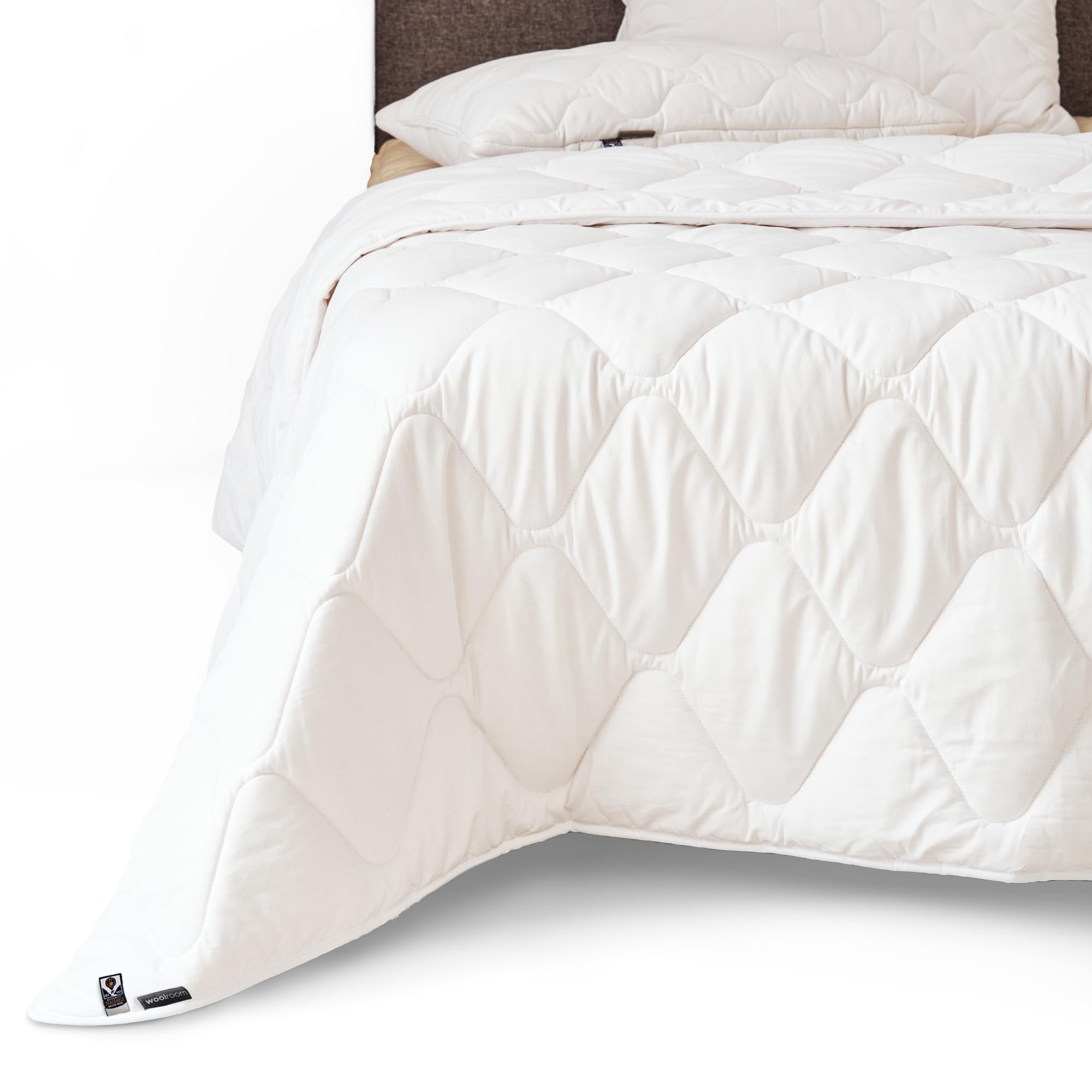
Wool fibers absorb a small amount of moisture and release it slowly, which helps the bed feel dry even when your body warms up under a heavy layer. The warmth feels steady rather than intense, and many cold sleepers like that even quality on very cold nights. Wool comforters weigh more than down, so expect a firmer sense of being tucked in. They usually need a cover and gentle care, since frequent hot washing can damage the fibers and shrink the fill.
What to Compare Between Types
Compare types on warmth for the weight, materials and certifications, temperature control, build quality, and value for the price. Maker specifications, fill weights, and shell details tell you far more than a winter label does. A type suits you only when its specs and your real room and winter nights line up clearly.
How to Choose the Right Comforter for Cold Sleepers
A warm label means little without the right size, fill amount, and shell for your room. Work through the points below in order, and use our broader notes on how to choose a comforter if you want a second view on sizing and care basics. Readers comparing all warmth levels can also start from our main guide to the best comforter styles before narrowing to winter weight options.
Size and Form Factor
Choose a size that drapes well past the sides of your mattress so cold air cannot slip in when you roll over. Twin suits a single bed, full and queen cover most couples and solo sleepers who like extra width, and king and California king suit wide beds and tall sleepers. An oversized king gives the longest drop, which helps if your mattress is thick or your partner pulls the covers. Measure your bed first, including mattress depth, before you trust a size name.
Type
Labels such as all season, winter, lightweight, and cooling describe a warmth range, not a fixed standard, so one brand winter model may match another brand all season model. For cold sleepers, winter and extra warm versions are the safer starting point unless your bedroom stays heated all night. Silk and organic cotton shells feel smooth and breathe well, while a weighted build is a separate choice that adds pressure as well as warmth. Match the type to your coldest month, not your average month.
Features Worth Paying For
Corner tabs or loops are worth the small extra cost if you use a duvet cover, because they hold the insert in place and stop it bunching at one end. Box stitching or baffles that keep fill spread evenly also matter, since thin spots become cold spots on your legs. A double stitched edge slows fill loss at the seams. Skip paying more for decorative piping or extra pillow shams if warmth is your main problem, because those add style without adding insulation.
Sleep Position and Body Type
Side sleepers bend their knees and create gaps at the waist and ankles, so a comforter with soft drape that falls into those curves keeps more warm air in. Back sleepers need even coverage across the chest and feet, while stomach sleepers often prefer warmth without too much bulk pressing on the torso. Smaller bodies may cool faster and need more fill weight for the same room. Couples with different needs can add a light throw on one side rather than overheating both sleepers.
Materials and Certifications
Shell fabric affects warmth more than many buyers expect, because a loose weave lets warm air escape even over a thick fill. Cotton shells feel natural and wash well, while smooth synthetic shells can hold fill in and resist stains. Look for recognised testing marks such as OEKO TEX for fabric safety and CertiPUR US where foam style fills apply, and read what each mark actually covers. If a listing hides its fill blend or shell content, treat its warmth claims with care.
Cooling and Breathability
Breathability sounds like the opposite of warmth, yet a warm comforter still needs to let some moisture escape or you will wake up damp and then cold. Natural fills and cotton shells tend to move moisture better than dense synthetic shells. If you run cold at bedtime but warm up later, choose steady insulation over the thickest option and leave one foot out as a simple release valve. A room kept very warm may also call for a medium weight layer plus a throw you can remove.
Trial Period and Warranty
A trial period matters for cold sleepers because one mild week of testing tells you little about a hard frost in mid winter. Read how long you get, who pays return shipping, and whether the comforter must stay unused, since a no use rule makes a trial almost pointless. Warranty cover usually protects stitching and fill defects, not a change of mind about warmth. Keep your order details and take a photo of the label so a claim stays simple later.
How Much Should You Spend?
Under about $50, expect basic synthetic fill, simpler stitching, and warmth that suits cool rooms more than freezing ones. Between about $50 and $100, fill weight and shell quality improve and winter weight options become realistic. From about $100 to $200, you will see higher down fill power, better baffles, and wool options with covers included. Above about $200 to $300, you are paying for premium materials, longer cover, and finer shells rather than a huge jump in warmth alone.
What Matters Most in a Comforter for Cold Sleepers
The core need is simple. You fall asleep cold, you cool down further in the early hours, and a standard layer leaves gaps at your feet, shoulders, and sides. Warmth that stays even across the whole bed matters more than a thick middle and thin edges. Drape matters too, because a stiff comforter tents above your body and lets cold air pool underneath, while a softer one settles close and holds the warm air you already made.
Think about your room as part of the system. A drafty house, a bedroom above a garage, or a thermostat set low at night all push you toward a winter weight fill and a longer drop on each side. If you also read about the down vs down alternative choice, focus on warmth per layer and care needs rather than on which fill sounds more premium. The right answer is the fill that keeps you warm in your room and that you will actually wash and store with care.
FAQ
What is the best comforter for cold sleepers?
For most cold sleepers, a winter weight comforter with even fill, a tight shell weave, and enough width to drape past the mattress edge works best. Down gives the most warmth for the weight, while wool suits people who want steady warmth with more heft. Your room temperature decides the final call, so a heated bedroom may need one step less warmth than a drafty one.
What should I look for in a comforter for cold sleepers?
Start with stated fill weight and warmth rating, then check baffle or box construction that stops fill shifting to the corners. Look at the shell weave, the drop length on your mattress size, and whether loops are included if you use a cover. One detail many buyers miss is the care label, because a warm comforter you cannot wash at home will cost more to own over time.
How long does a comforter last?
A well made comforter often lasts about five to ten years, depending on fill type, washing habits, and storage. Down tends to keep its loft longest when it stays dry and gets aired, while synthetic fills slowly flatten with heat and heavy washing. Replace yours when the fill stays flat after shaking, cold spots appear in the same places each night, or fill leaks at the seams despite a cover.
Is a comforter worth it for someone who sleeps cold?
Yes, if your current layer is the reason you wake up cold, because one proper winter weight comforter replaces the pile of thin blankets that shift and leave gaps. It also simplifies making the bed each morning. It is less worth it if your room itself is the problem, for example a broken window seal, since fixing the draft will do more than any bedding change alone.
How do you clean a comforter without ruining the fill?
Check the label first, then use a large machine, a gentle cycle, and a small amount of mild detergent so the fill rinses clean. Dry on low heat with pauses to break up clumps and shake the fill back into place by hand. Our step by step notes on how to clean a comforter add timing for thick winter fills, which take longer to dry fully than thin summer layers.
What is the most reliable comforter brand?
Reliability depends more on construction than on a name, so judge each model by its stitching, fill details, warranty length, and how clearly the maker states care limits. Brands that publish fill weight and shell content and honour returns tend to be safer bets than those selling on warmth slogans alone. Read recent buyer comments about leaking fill and flat spots, since those faults show up within the first season of regular use.
Final Thoughts
Start with your coldest nights, not your average ones, and pick the fill type that matches your care habits and your budget. Down suits light warmth, down alternative suits easy washing, and wool suits steady heat with more weight on the body. Check the product table above once more, measure your bed, and choose the best comforter for cold sleepers for your room so you can sleep through the night without waking up cold.