
Best Colour Cushions for Brown Leather Sofa 2026: Types Compared
Disclosure: We may earn a commission when you buy through links on this page, at no extra cost to you. As an Amazon Associate I earn from qualifying purchases. Learn more

Compare cushion color families for brown leather: warm neutrals, jewel tones, earthy accents, and patterns, plus size, fabric, and fill.
A brown leather sofa is warm, durable, and easy to live with, yet it can look heavy in a room until the cushions add contrast. Choosing best colour cushions for brown leather sofa options comes down to the shade of your leather, the light in the room, and the mood you want. This guide compares the main color families side by side so you can narrow your shortlist before you shop.
We look at warm neutrals, rich jewel tones, earthy accents, and patterned sets, then cover size, fabric, and fill. The product table below gathers the key details in one place.


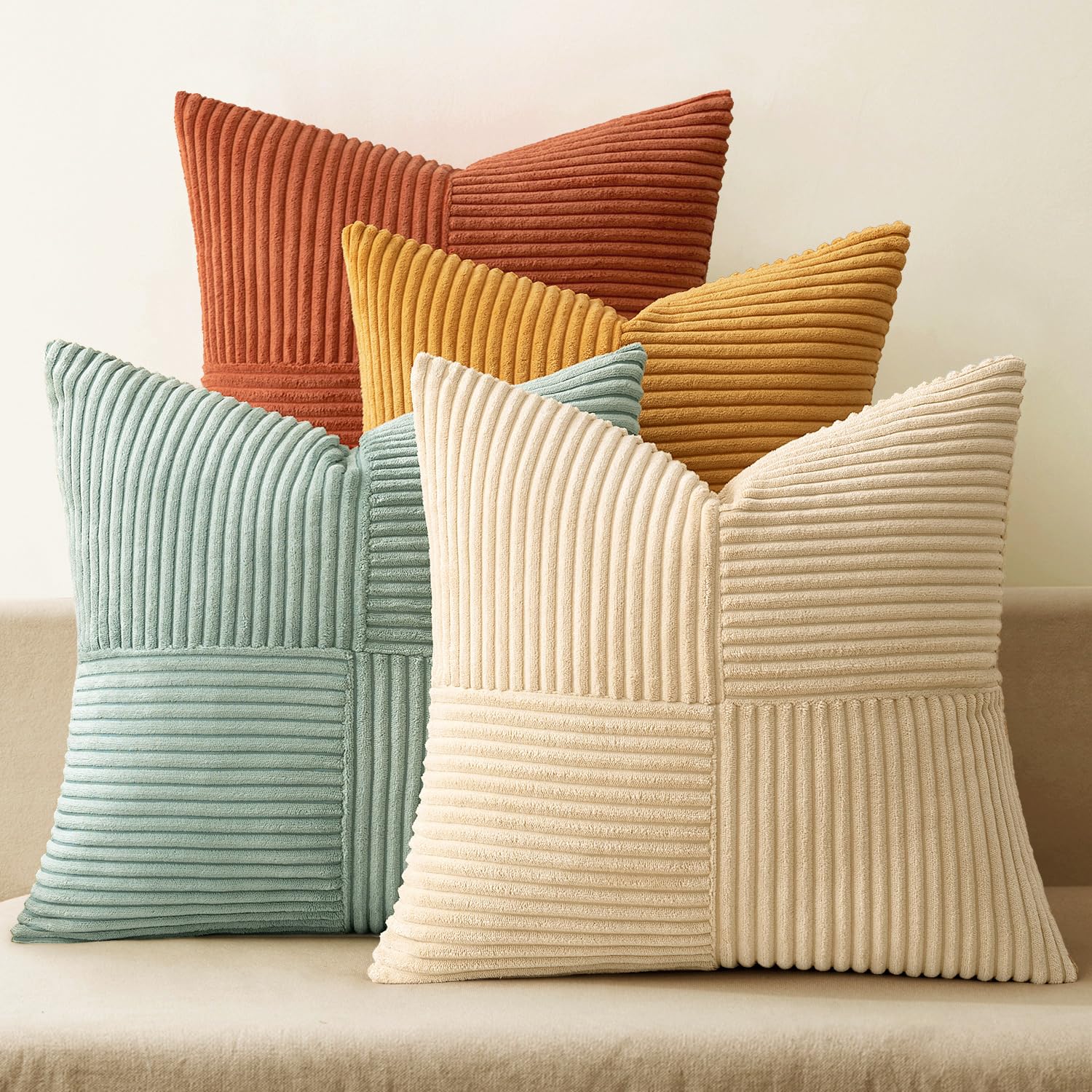


Types of Color Cushions Compared
Most cushion colors for a brown leather sofa fall into four broad families. Each family changes the room in a different way, so start with the effect you want and then pick shades inside that family. The product table above gives a quick overview.
Warm Neutrals in Cream, Ivory, and Beige
Warm neutrals give the strongest lightening effect on brown leather. Cream and ivory cushions lift a dark sofa at once, and they suit rooms with little natural light. Beige and oatmeal shades are softer if you want contrast without a bright white look that shows every mark.
Neutrals also act as a calm base for layering. Pair two cream cushions with one colored accent and you can refresh the look by swapping only that accent. The risk is a flat result, so choose neutrals with visible texture, such as a woven cotton or a slub linen, rather than a flat shiny fabric.
Rich Jewel Tones in Teal, Emerald, and Deep Blue
Jewel tones sit opposite brown on the color wheel in spirit, and that contrast makes both the leather and the cushions look richer. Teal and deep blue cool down leather that reads very orange, while emerald green keeps the warm feel but adds depth. These shades suit larger rooms and sofas that get good daylight.
Velvet is the classic fabric for jewel tones because its pile catches light and shows the color at its deepest. If velvet feels too formal, a matte cotton in the same shade gives a calmer version of the same contrast. Start with two jewel cushions rather than a full set, since a little of these colors goes a long way.
Earthy Accents in Rust, Mustard, and Terracotta
Earthy accents share the warm base of brown leather, so they blend in a relaxed and natural way. Rust and terracotta deepen the warmth of tan and mid brown leather, and mustard adds a cheerful note that still feels grounded.
Because earthy shades sit close to brown, contrast comes from lightness rather than from hue. A pale mustard cushion stands out on chocolate leather, while a rust cushion in the same depth as the sofa can almost disappear. Check each shade against your sofa in daylight and pick tones that are clearly lighter or clearly darker than the leather.
Patterned and Mixed Color Sets
Patterned cushions pull several colors together and can link the sofa to curtains, a rug, or artwork. A good pattern for brown leather includes at least one light tone and one color that echoes the leather, so the cushion feels connected but not matched. Geometric prints read modern, while stripes and small florals read traditional.
Mixed sets sold as a bundle save guesswork, but check what you are actually getting. Some sets repeat one print in several sizes, and others mix solids with patterns in a planned ratio. Confirm that the colors in the product photos match the palette you planned.
Light Brown Versus Dark Brown Leather: Which Colors Work Best?
The single biggest factor is the depth of your leather. Tan and cognac sofas are already light, so they handle deep colors well and can look washed out beside very pale cushions. Dark chocolate leather needs lighter cushions to avoid a heavy block of brown, and it rewards cream, pale gold, and soft sage.
If your sofa sits between those extremes, you have the widest choice, and undertone becomes the deciding factor instead of depth. Leather with a red cast pairs well with green and teal, while grayish brown leather suits blue and soft white. For a closer look at very deep shades, see our guide to the best color cushions to go with dark brown leather sofa for pairings built around chocolate tones.
Very dark brown leather can read almost black in low light, and some color rules for black sofas then apply as well. Pale cushions give the same crisp contrast, and metallic threads in a weave add sparkle that dark leather lacks. Our piece on the best color cushions for black leather sofa covers those schemes in more depth.
How to Choose the Right Color Cushion
Start With the Shade and Undertone of Your Leather
Hold a white sheet of paper next to your sofa in daylight. Against pure white, the leather will show its true cast, which may be reddish, golden, or grayish. That cast is the undertone, and cushion colors with a matching warmth level will look settled, while colors with the opposite warmth create lively contrast.
Decide which effect you want before you shop, because both can work. A warm scheme uses rust, gold, and cream on golden brown leather, while a cooler scheme uses teal, slate blue, and ivory to balance that same leather. For cushion shapes and fills in more detail, see our overview of the best cushions for brown leather sofa.
Size, Shape, and How Many Cushions to Use
Standard square cushions for sofas measure about 18 by 18 inches or 20 by 20 inches, and larger sofas with deep seats can take 22 by 22 inches without crowding. A lumbar cushion of about 12 by 20 inches adds a lower, longer shape that supports the back and breaks up a row of squares. Measure your seat depth and back height first, since oversized cushions push sitters forward on shallow seats.
For a three seat sofa, three to five cushions usually look balanced. An odd number reads relaxed and modern, while matching pairs read formal. Leave enough bare seat for people to sit without moving cushions to the floor.
Fabric and Texture Against Smooth Leather
Leather has a smooth, slightly glossy surface, so cushions are your main chance to add texture to the seat. Linen and woven cotton look matte and casual, velvet adds soft depth, and a knitted cover adds a cozy, handmade feel. Mixing two textures in one color family often looks richer than mixing many colors in one flat fabric.
Fabric also affects how cushions behave on leather. Smooth satin covers slide forward on a leather seat, while cotton, linen, and velvet grip better and stay where you place them. If you are comparing cushion fabrics across sofa types, the guide to the best cushions for leather sofa covers how common cover fabrics perform on leather in general.
Fill, Shape Retention, and Comfort
The insert decides whether a cushion holds a neat shape or slumps within a month. Feather and down inserts feel soft and mold to the sitter, but they need daily plumping to look full. Polyester fiberfill holds its shape with little effort and costs less, though it can feel firm and springy at first. A blend of feather and fiber tries to give softness with better shape retention.
Buy inserts one size larger than the cover when the seller allows it, so the corners fill out and the cushion looks plump rather than flat. Check whether the listing sells a cover only, a filled cushion, or a set of both, since color focused listings sometimes show a styled photo but ship the cover alone.
Room Light and the Colors Around the Sofa
Color is never seen alone. A teal cushion looks brighter beside a pale rug and moodier beside dark wood, and warm evening lamp light makes cream look golden and blue look gray. Test cushion shades at the time of day when you use the room most.
Pick one color from something already in the room, such as a rug border, a curtain, or a painting, and repeat it in the cushions. That single link makes the sofa feel planned rather than decorated at random. If your seating is fabric rather than leather, the ideas in our guide to the best cushions for brown sofa show how the same palettes behave on a matte surface.
Common Mistakes to Avoid
- Choosing cushions in the same depth as the leather, so the cushions vanish and the sofa looks like one flat block of brown.
- Buying only dark colors for a dark sofa, which makes the whole corner of the room feel heavy and dim.
- Matching the cushion color exactly to the curtains, which can look stiff and leaves no accent shade to add interest.
- Ignoring undertone and pairing a reddish leather with pinkish beige cushions, a mix that often looks slightly dirty in daylight.
- Filling the sofa with too many small cushions, so guests must move them aside before anyone can sit down.
- Ordering from screen colors alone, since phone and monitor settings can shift a shade enough to clash with your leather.
Care and Maintenance for Cushions on a Leather Sofa
Most cushion covers remove with a zip, and that is the feature to check before you buy. Covers that wash at home keep pale colors practical on a family sofa. Follow the label for each fabric, wash covers inside out, and zip them closed first so the teeth do not snag other items.
Before you use a new dark or strongly dyed cushion, rub a white cloth firmly over the cover. If color transfers to the cloth, keep that cushion off the leather until the loose dye is gone, because dye can stain pale leather and is hard to remove. This simple check matters most with deep indigo, rust, and printed cotton covers.
Plump feather and blended inserts daily and rotate cushions weekly so fading and wear stay even. Vacuum the sofa seat with a soft brush before you put washed covers back, since grit trapped under a cushion can scratch leather as people sit and shift. Let a washed cover dry fully before it goes back on the seat.
Frequently Asked Questions
What colors work best for cushions on a brown leather sofa?
Cream, ivory, teal, emerald, rust, and mustard all work well on brown leather. The right choice depends on depth: pale shades lighten dark leather, while deep jewel tones give light tan leather a richer look. If you want one safe starting point, choose warm cream for most of the cushions and add a single teal or rust accent, a mix that suits almost every shade of brown.
How many cushions does a brown leather sofa need?
Most brown leather sofas look best with three to five cushions. A two seat sofa usually needs two or three, and a corner sofa can take five to seven spread across both runs. A useful test is to sit down in your normal spot: if you have to move more than one cushion to sit comfortably, you have too many.
Can you mix patterned and plain cushions on a brown leather sofa?
Yes, mixing patterned and plain cushions works well on brown leather when the colors repeat. Use one pattern as the link piece, then pull one or two of its colors for the plain cushions beside it. Keep scale in mind too: a large bold print needs plain neighbors with strong texture, while a small print can sit beside a simpler stripe.
Which cushion fabrics are safest on a leather sofa?
Matte cotton, linen, and velvet are the safest cushion fabrics on leather because they grip the seat and are unlikely to mark the surface. Be cautious with covers that have metal studs, sequins, or rough embroidery on the back, since hard details can press marks into leather over time. Turn such cushions so the decorated side faces outward and the plain back rests against the sofa.
How do you stop cushions sliding on a leather sofa?
Choose textured covers and slightly larger inserts, because a full cushion with a matte fabric grips leather far better than a flat satin one. Placing the largest cushions at the back, against the sofa backrest, also stops smaller front cushions from creeping forward. If sliding persists, a thin strip of rug grip material under each cushion holds it in place without sticking to the leather.
How often should you replace cushion inserts on a leather sofa?
Replace cushion inserts when they stay flat after plumping or when the corners no longer fill the cover, often after about two to three years of daily use for fiberfill. Feather inserts last longer if you plump them often and air them in dry shade. The covers can stay in use far longer, so new inserts are a cheap way to revive the whole arrangement.
Final Thoughts
Color choice matters more than cushion count. Match the cushion depth to your leather first, respect the undertone second, and then pick a fabric that adds the texture leather lacks. The product table above brings those choices together so you can compare shades, sizes, and fills at a glance.
Start with one light neutral and one accent color, live with them for a week, and add a pattern only if the seat still feels plain. Chosen that way, the best colour cushions for brown leather sofa will lighten your room, flatter the leather, and stay easy to change when you want a fresh look next season.


