
Best Classroom Rugs 2026: Complete Buying Guide
Disclosure: We may earn a commission when you buy through links on this page, at no extra cost to you. As an Amazon Associate I earn from qualifying purchases. Learn more

The best classroom rugs handle daily foot traffic, spills, and group seating while staying flat and safe. Compare pile, backing, fiber, and cleaning needs.
Choosing the best classroom rugs feels easier once you know what actually matters for daily use, because the market offers many shapes, materials, and price levels. The comparison table below gives a quick overview, and this guide explains each choice in plain terms so you can match a rug to your room and your routine.
A classroom rug does more work than a living room rug. It marks the gathering spot for circle time, softens a hard floor for reading, muffles the scrape of thirty chairs, and takes glue, juice, and muddy shoes all year. The sections below cover who benefits most, the main types, the features worth checking, sizing, care, and what each price level usually buys.





Who Should Buy Classroom Rugs
Kindergarten and early elementary teachers gain the most, because a rug defines the carpet area where phonics, read alouds, and morning meeting happen. A printed rug with seating spots gives each child a place to sit, which saves minutes of shuffling at every transition. Preschools and daycare rooms need the best classroom rugs in a softer, more washable form, since toddlers spend more time on the floor than on chairs.
Upper elementary and middle school teachers usually want something quieter: a plain low pile rug under a reading corner or a small group table that reduces chair noise and gives the room a defined work zone. Homeschool families and tutors furnishing a learning space at home fall into the same group, and they can often use a smaller rug than a full class needs.
School librarians and special education teachers often buy for a specific job. A library story corner wants a plush rug that invites children to sit for twenty minutes, while a sensory or calm down space benefits from a soft rug with a muted pattern that does not add visual noise. Our guide to the best quality rugs covers construction basics that apply to every one of these rooms.
Types Compared
The main types differ in pile, purpose, and upkeep, so comparing them early saves time later. Use the table below as a starting point, then read the notes that follow for each type.
| Type | Best For | Typical Price |
|---|---|---|
| Low pile classroom rugs | easy cleaning and chair movement | about $50 to $300 |
| Plush reading rugs | soft seating for story time | about $50 to $300 |
| Printed learning rugs | letters, numbers, and seating spots | about $50 to $300 |
Low pile classroom rugs have a short, dense surface that chairs roll and slide over without catching. Crumbs and glitter stay on top instead of sinking in, so a vacuum lifts them in one pass, and spills can be blotted before they reach the backing. This is the type to put under tables, in walkways, and anywhere a rolling teacher chair travels. The trade off is comfort: a low pile rug is firm to sit on, so children on the floor for long stretches may want cushions.
Plush reading rugs use a taller, softer pile that feels good under knees and elbows, which is exactly what a story corner needs. The same depth traps more dirt and takes longer to dry after a wet clean, and chairs sink and wobble on it. Keep plush rugs in a corner with no furniture traffic, vacuum them more often, and accept that they will show wear sooner than a low pile rug in the same room.
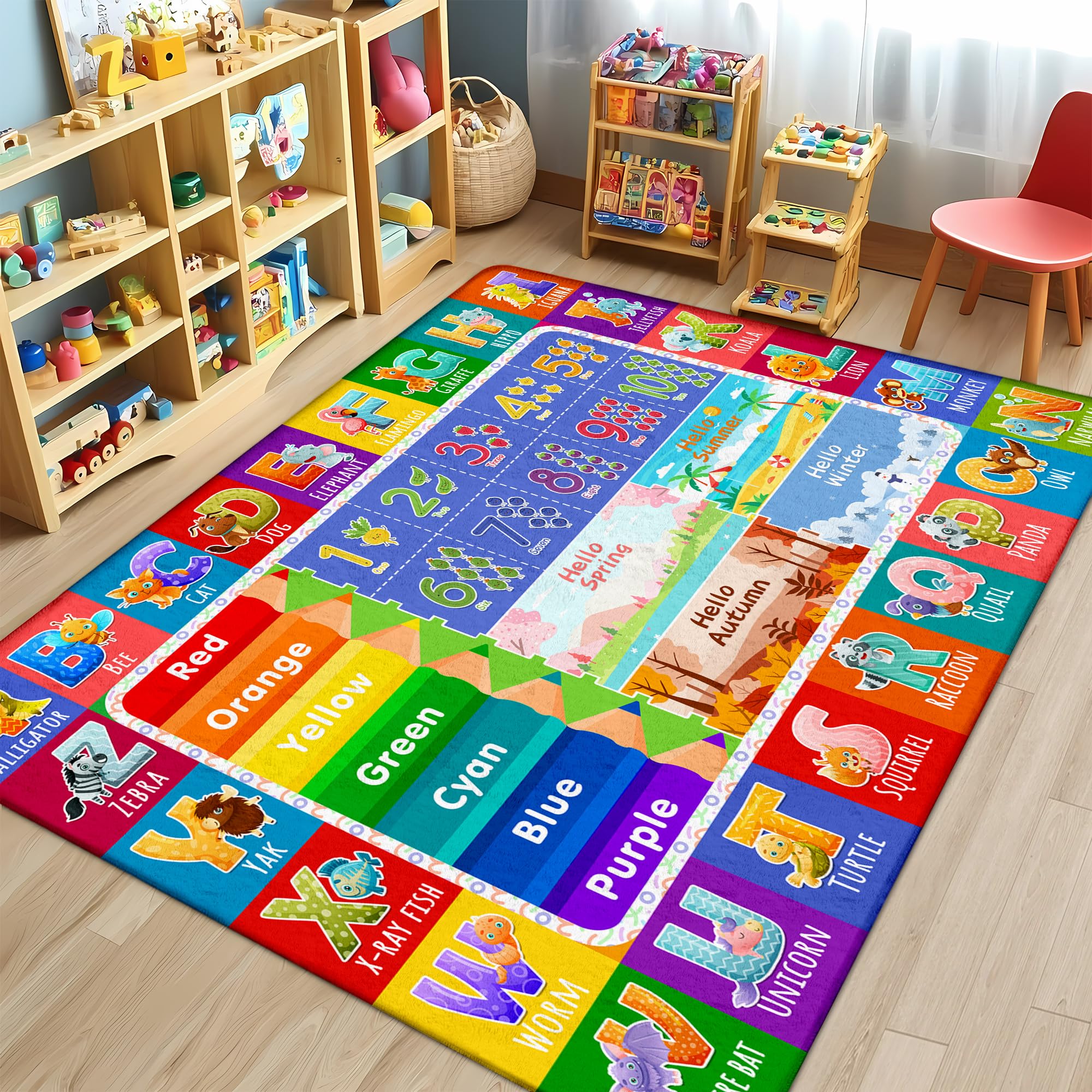
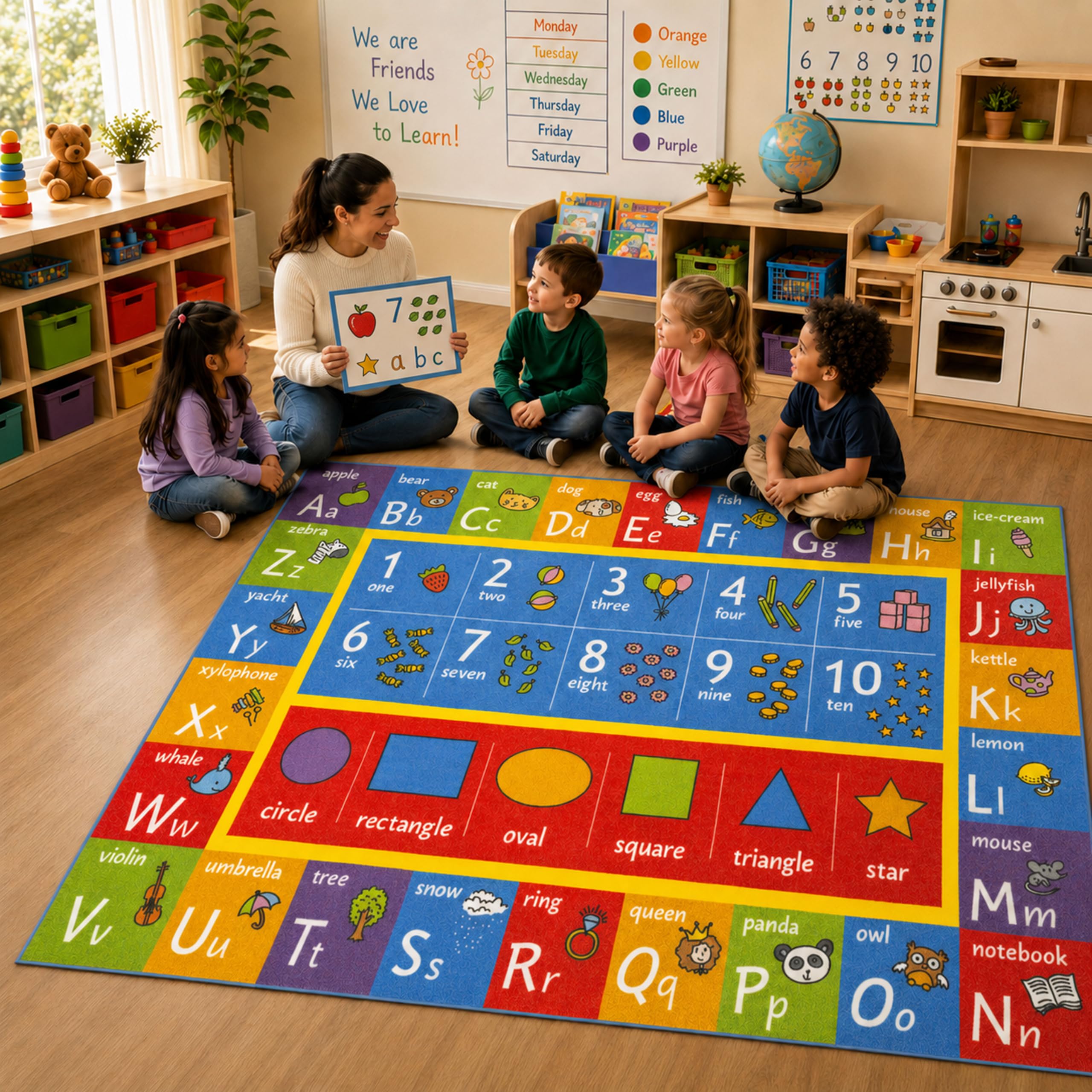
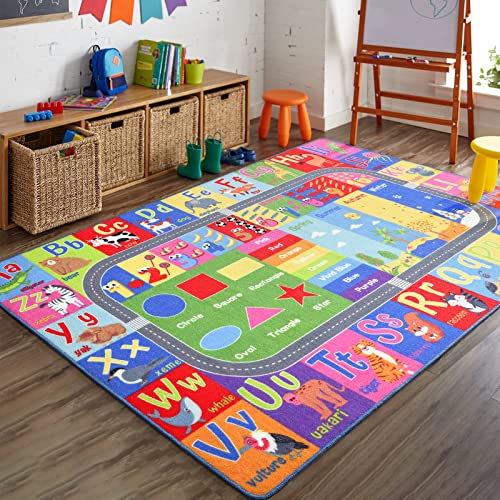
Printed learning rugs carry letters, numbers, shapes, maps, or a grid of seating squares. The print is a teaching tool: children find their square quickly, and a quick game of standing on a letter or a number turns a transition into practice. Most printed rugs are low pile nylon, so they clean like any low pile rug, but busy designs can distract younger children during quiet work, so match the print to one clear purpose.
Key Features to Check
Start with the two features that shape daily satisfaction more than any extra: a low pile that vacuums easily and resists stains, and a non slip backing that keeps the rug flat on tile or sealed concrete. A rug that creeps across the floor or curls at the edges becomes a tripping hazard within a week, so the backing matters as much as the surface.
Next, look at the fiber. Nylon is the standard for school rugs because it springs back under chair legs, holds color through many cleanings, and resists most food stains when it carries a stain treatment. Polyester feels softer and costs less, but it crushes faster in walkways. Polypropylene is the budget fiber and handles moisture well, which suits rooms near a door. Then confirm the practical details: edges that are bound or serged so they lie flat, a size that fits the seating group with room to spare, and colors or a mottled pattern that hide light dirt between cleans.
- a low pile that vacuums easily and resists stains
- a non slip backing that keeps the rug flat
- fibers that handle spills without holding odor
- edges that lie flat to reduce tripping
- a size that fits the seating group
- colors that hide light dirt between cleans
Two labels deserve a glance as well. A flame resistance rating in general terms shows the rug meets common school and childcare expectations, and a low emissions label on the backing matters in a room where children breathe near the floor all day. Follow the manufacturer's instructions for cleaning products, since the wrong chemical can void a stain treatment.
Sizing a Rug for Your Seating Area
Measure before you shop, and measure the group as well as the floor. A circle time rug needs about two square feet per child seated on the floor, so a class of 24 fits comfortably on a 6 by 9 foot rug and sits shoulder to shoulder on anything smaller. Printed seating squares make this simple, because the count of squares is the count of children the rug seats. A reading corner for four or five children can work on a 4 by 6 foot rug, and a small round rug of about 4 feet suits a single bookshelf nook.
Mark the footprint on the floor with painter's tape before you order, then walk the room. Leave clear aisles between the rug edge and desks, keep the rug away from the door swing, and check that the tape does not cross a heating vent or a floor outlet. A rug that is too large bunches against furniture legs, while one that is too small pushes the last few children onto bare floor every single day.
Think about the floor underneath too. Rugs on tile or polished concrete need a grippy backing or a thin rug pad, and rugs in a basement classroom face damp air that favors fibers that dry quickly, a point our guide to the best rugs for basement spaces explains in more detail.
Care and Everyday Use
Daily care is quick when the routine is simple. Vacuum low pile rugs every day or two during the school year, because grit ground in by shoes cuts fibers and dulls color faster than any spill. Blot wet spills at once with paper towels, working from the outside in, and follow with a mild cleaner the maker approves. Glue and paint should be scraped once dry rather than rubbed in while wet.
Plan a deeper clean at each long break. Many school rugs can be shampooed with a rented extractor or washed by a custodial team, while smaller washable rugs go straight into a large machine on a gentle cycle. Dry rugs flat and fully before rolling or laying them back down, since a damp rug on a sealed floor can grow a musty smell in a weekend. Rotate the rug half a turn once a term so the traffic path and the sunny edge wear evenly.
Protect the rug from the heaviest dirt before it arrives. A sturdy mat at the classroom door catches most of the grit and water that would otherwise travel onto the carpet area, and our guide to the best entry rugs covers mats that hold up to a line of thirty students twice a day.
Common Mistakes to Avoid
The most common mistake is buying a plush rug for a spot where chairs move. The pile crushes under chair legs, the chairs wobble, and the rug looks tired by the first parent evening. A second mistake is choosing a rug too small for the group, which crowds children and starts arguments over who sits on the floor.
Teachers also regret busy prints in rooms that already have bright walls and full bulletin boards, since the floor adds one more layer of visual noise. Finally, skipping the backing check leads to a rug that slides on tile, and no amount of tape fixes a backing that was never meant to grip a hard floor.
What Your Money Gets
Lower priced classroom rugs, usually about $50 to $120, are often polyester or polypropylene with a lighter backing and a printed design. They suit a reading nook, a small group area, or a first year classroom budget, and many are machine washable. Expect the pile to flatten in walkways within a year or two of daily use, and check that the edges are finished rather than simply cut.
Mid priced classroom rugs, about $120 to $220, step up to denser nylon, a thicker non slip backing, and clearer stain treatment. This is where most full class circle time rugs sit, and the extra density is what keeps seating squares readable after hundreds of vacuum passes.
Higher priced classroom rugs, about $220 to $300 and up, add heavier commercial grade construction, serged edges, and warranties written for school use rather than home use. They make sense for a rug that will outlast several class cohorts, or for a school buying a matching set for many rooms. At every level, compare the same core features, because a higher price alone does not guarantee a denser pile or a better backing.
Frequently Asked Questions
What pile height suits a classroom?
Low pile suits most classrooms because chairs move easily, vacuuming works faster, and spills clean up with less soaking. Plush pile feels softer for reading time but traps more dirt and takes longer to dry. Choose low pile for busy rooms, and reserve plush rugs for a small, supervised reading corner.
How do I keep a classroom rug clean?
Vacuum often, blot spills right away, and deep clean on a regular schedule that matches foot traffic. Check the care label before using strong cleaners, since some fibers react badly to bleach or heat. A rug with a stain resistant finish and a removable washable option often saves time over a school year.
What size rug do I need?
Measure the seating area, then add room for children to sit without crowding the edge. A rug that is too small pushes children onto hard floor, while a rug that is too large can bunch near furniture. Mark the area with tape first, then order the size that fits the marked space.
Are printed rugs useful or distracting?
Printed rugs with letters, numbers, or seating spots can support lessons and help children find a place quickly. Very busy patterns can distract younger children during quiet work. Choose a print that matches one clear purpose, such as seating spots for circle time, rather than many competing designs.
How can I reduce tripping on rug edges?
Choose a rug with a flat, bound edge and a non slip backing, and place it on a smooth floor without curled corners. Tape or a rug pad can help on slick floors, and regular checks catch lifted edges early. Move furniture so children do not step directly across a raised edge.
Final Thoughts
Take your measurements, decide between low pile and plush for the spot you have in mind, and compare backing, fiber, and edge finish before you look at prints. The best classroom rugs are the ones that stay flat, clean up in minutes, and still look welcoming after a full year of small shoes. The product table above gives a useful starting point, and the sections in this guide give you a clear way to judge each option.


