Best Cholesterol Monitors in 2026: Which Type Is Right for You?
Disclosure: We may earn a commission when you buy through links on this page, at no extra cost to you. As an Amazon Associate I earn from qualifying purchases. Learn more

Compare the best cholesterol monitors by panel type, accuracy, strip cost, and result tracking, plus tips for safe and correct home testing.
Home cholesterol testing sounds simple until you compare the options. Some meters report one number, others report a full panel, and their strips cost very different amounts. The best cholesterol monitors match the readings you need and fit your comfort with a fingerstick. Use the comparison table below to check panel type, strip cost and result time side by side.
This guide compares monitor types rather than naming products. It explains who home testing suits, which features change accuracy and ease of use, and how to test correctly. It also covers the limits of home testing, because a home result is a tracking tool, not a diagnosis.


Who Should Buy a Home Cholesterol Monitor?
Home testing suits people who already have a reason to track cholesterol between lab visits. It works best as part of a plan you share with your clinician, not as a stand alone way to judge heart health.
People Tracking Known High Cholesterol Between Lab Visits
You know your cholesterol runs high and your clinician wants trend readings between office labs. A full panel monitor shows whether total cholesterol, HDL and triglycerides move together or apart. Bring a dated log to appointments. Seek urgent care at once for chest pain, trouble breathing, sudden weakness on one side or trouble speaking, and talk with your clinician about personal needs and any reading that worries you.
Adults Who Want an Early Picture Before a Checkup
You have a family history of high cholesterol and no recent lab result, so you want a rough picture before booking a checkup. A basic meter can serve this first look, as long as you treat the number as a prompt to arrange proper lab testing. A home result cannot confirm a diagnosis or set a treatment plan.
Caregivers Helping an Older Parent Test at Home
You help a parent who finds clinic trips hard and needs readings on a steadier schedule. Choose a monitor with large result numbers, few steps and adjustable lancing depth, because sore fingers and small print are the usual reasons testing stops. Sit together for the first few tests, keep results in a shared notebook, and pass any sharp change in the trend to their clinician.
Types of Cholesterol Monitors Compared
The best cholesterol monitors fall into three groups. Start with the readings you need, then weigh strip cost.
Basic Meters That Report Total Cholesterol Only
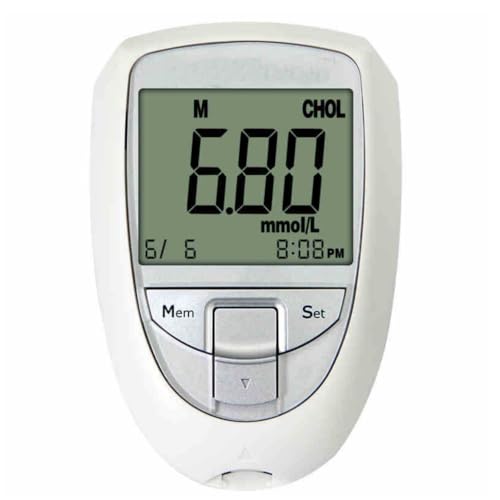
A basic meter uses a strip and a small drop of blood to report one figure, your total cholesterol. Testing is quick and strips usually cost the least, so this type suits a simple trend check on a tight budget. Its limit is real, though. One figure cannot show whether HDL is low or triglycerides are high, and those details often guide a clinician.
Full Lipid Panel Systems
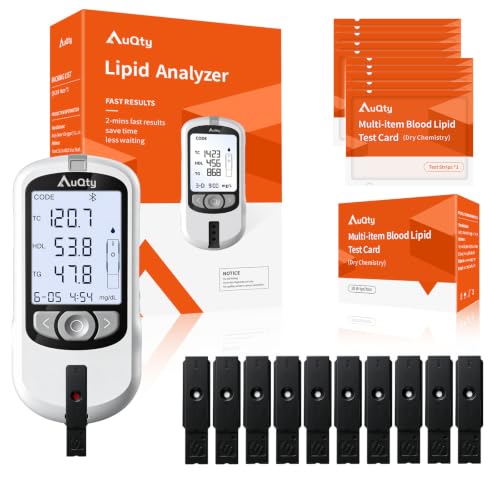
A panel system measures total cholesterol, HDL and triglycerides from one sample, then calculates LDL from those values. That fuller picture matches most lab reports, so home trends are easier to compare with office results. Panel strips cost more per test and some systems need a larger drop of blood. Choose this type if you test regularly and share numbers with a clinician.
Connected Monitors That Send Results to an App
A connected monitor stores readings and sends them to a phone app, where you can view charts and export a history for appointments. Testing works like a standard meter, so judge panel type and strip cost first and treat the app as a bonus. This type suits people who test often and lose paper notes. Check that the app is free to use.
Key Features to Compare
Compare these five factors in order. They decide whether a monitor stays useful after the first box of strips runs out.
What the Test Panel Actually Measures
The panel is the set of values a monitor can report, and it is the first thing to check. A total cholesterol result gives one combined figure. A full panel adds HDL, often called good cholesterol, plus triglycerides, and most systems then calculate LDL rather than measuring it directly. If your clinician tracks a specific value, the monitor must report that value, so match the panel to the questions you want answered.
Accuracy, Calibration and Control Checks
Home meters are less precise than a lab test drawn from a vein, so look for signs that a system controls its own accuracy. Many meters code each box of strips automatically or with a code chip, and control solution lets you check that meter and strips read within their stated range. Choose a monitor cleared for home use in the United States. A result outside its range may show as an error or a high or low flag.
Blood Sample Size and Lancet Comfort
Every home cholesterol test needs blood from a fingerstick, and systems differ in how much blood a strip must absorb. A smaller sample means a shallower stick and an easier test for people with thin skin or cold hands. Adjustable lancing depth helps, and warming hands improves blood flow. If a strip gets too little blood, most meters show an error and the strip is wasted, so a forgiving sample size saves money.
Test Strip Cost, Storage and Shelf Life
The meter is a one time purchase, while strips are the cost you pay for every test. Compare the price per strip and how often you plan to test, then do the yearly math before you buy. Strips have an expiry date and most must be stored away from heat and damp, with the vial closed at once. A cheap meter with costly or hard to find strips becomes expensive fast.
Result Time, Memory and Screen Readability
Most home systems show a result in about one to five minutes, and a shorter wait makes a morning routine easier to keep. Built in memory matters if you test often, because stored readings with dates let you spot a trend instead of reacting to one figure. Look for large, high contrast numbers you can read without glasses. If two people will test, check whether the meter keeps separate records.
How to Take a Home Cholesterol Test Correctly
Good technique protects accuracy more than any single feature. Wash hands with warm water and soap and dry them fully, because food residue or hand cream can distort a reading. Follow any fasting guidance your clinician gave you, since food can lift triglycerides for hours.
Prick the side of a fingertip rather than the pad, let a full drop form without squeezing hard, and touch the drop to the strip as the manual shows. Note the result and whether you fasted. Rotate fingers between tests so no spot grows sore.
Common Mistakes to Avoid
- Testing with food or lotion on your hands, which can distort the reading and waste a strip.
- Squeezing a fingertip hard to force blood out, which can dilute the sample and skew the result.
- Using strips past their expiry date or from a vial left open, which makes numbers unreliable.
- Treating one home reading as a diagnosis, which can cause needless worry or false comfort.
- Skipping the control solution check with a new box of strips, which lets a faulty batch pass unnoticed.
Care and Maintenance of a Cholesterol Monitor
Keep the meter in its case at room temperature, away from bathroom steam and direct sun, and wipe the outside with a soft, slightly damp cloth. Never wash the meter under a tap or let liquid enter the strip port. Remove the batteries if you will not test for months.
Store strips in their original vial in a cool, dry cupboard. Run a control solution check when you open a new box, drop the meter or get a result far from your usual range. Place used lancets in a sharps container, and follow local disposal rules.
FAQ
Does a home cholesterol monitor replace a lab blood test?
No, a home cholesterol monitor does not replace a lab blood test. A lab draws blood from a vein and gives your clinician results with tighter accuracy for diagnosis and treatment choices. Home testing fills the gap between visits by showing trends. If a home trend and a lab result disagree, trust the lab result and ask your clinician which home schedule still helps you.
Do you need to fast before using a cholesterol monitor at home?
Often you do not need to fast, but follow the guidance your clinician and the meter manual give you. Food mainly lifts triglycerides, and because panel systems calculate LDL from triglycerides, a recent meal can shift that figure too. Testing at the same time of day, in the same state each time, matters more for a clean trend than chasing perfect conditions once. Note on your log whether you ate.
Why does a home cholesterol result differ from a lab result?
A home result can differ because the two tests use different blood sources and methods. Home meters read capillary blood from a fingertip, while labs test venous blood with larger equipment and tighter controls. Recent food, a strip near expiry and a sample that was too small can each move a home figure. A small gap is normal, so judge home readings as a group trend rather than matching them one by one against lab values.
What should you do if a home cholesterol reading seems very high?
Stay calm, wash your hands and repeat the test once with a new strip if the reading seems far from your usual range. A repeat that stays very high is a reason to contact your clinician soon for a lab test, not a reason to change any medicine on your own. Chest pain or trouble breathing are emergency signs at any reading, so call emergency services at once.
Wrapping Up
Start with the panel. Decide whether total cholesterol alone answers your question or whether you need HDL, triglycerides and calculated LDL as well. Then check strip cost, sample size and memory, because those points decide whether testing stays easy month after month. Use the product table above to compare them across the monitors you are weighing.
When you compare best cholesterol monitors this way, the right type usually stands out quickly. Pick the simplest system that reports the values your clinician tracks, test on a steady schedule, and share the trend at each visit.