Best Charcuterie Board for Your Home in 2026: A Smart Guide and Quick Checklist
Disclosure: We may earn a commission when you buy through links on this page, at no extra cost to you. As an Amazon Associate I earn from qualifying purchases. Learn more
Choose the best charcuterie board for your home with clear sizing, material, care and budget guidance for your space and household.
Picture a Friday night at home. Neighbors are coming over, the fridge holds three cheeses, salami, grapes, and olives, and your only serving surface is a dinner plate that is far too small. Choosing the best charcuterie board fixes that moment for good, giving every spread a home that looks generous instead of crowded.
This guide helps you choose by your table and storage space, how many people you feed, and how much care you will realistically give a board. Work through the checklist, compare the buying profiles, and use the comparison table below to narrow your shortlist before you spend anything.
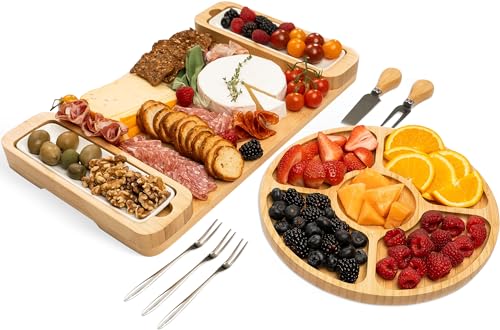

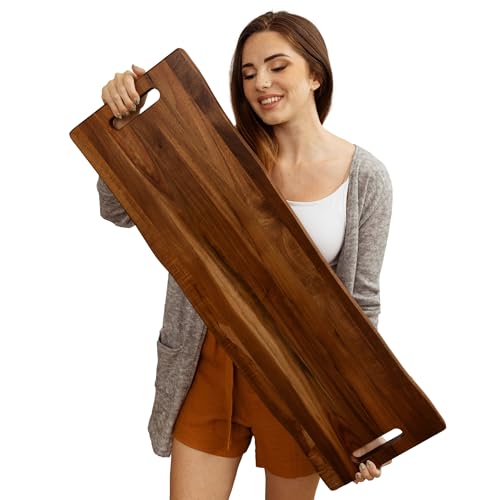
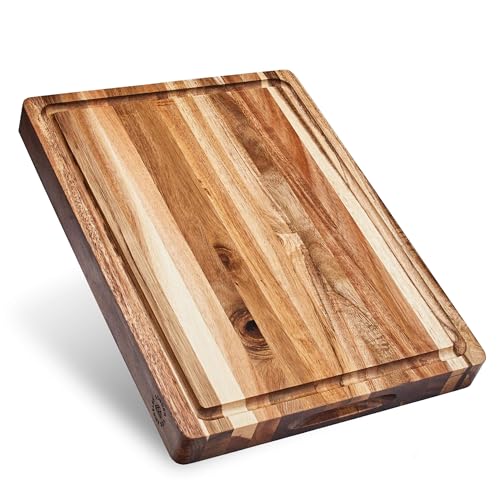


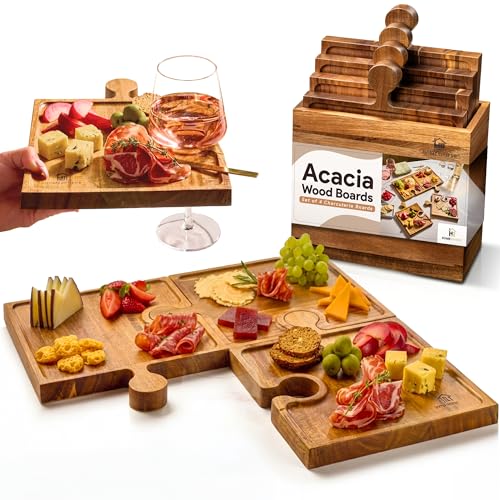

Quick Answer: The Short Version of This Guide
Most homes do well with a rectangular wood board about 15 to 18 inches long, thick enough to feel solid, with cut out handles or a slight lip to stop food rolling off. That size serves about four people, stores upright in a cupboard, and suits both weeknight snacks and weekend guests. Smaller households can size down, while frequent hosts should size up or buy two medium boards instead of one giant one.
- Start with size: match the board to your table, guest count, and storage space.
- Then pick a material: choose the surface whose care routine fits your habits.
- Then judge extras: pay for handles and useful bowls, and skip decoration that steals space.
Before You Buy: A Quick Checklist for Choosing a Charcuterie Board
Size: Match the Board to Your Space and Table
Measure before you shop, because size is the choice readers regret most. A small board about 12 inches long suits one or two people, while a medium board about 15 to 18 inches long holds a mixed spread for about four. When you regularly feed six or more, see our guide to the best large charcuterie board, where lengths of about 20 to 24 inches give food room to breathe.
Rectangular boards use a table corner well and line up neatly beside bowls and drinks, while round boards suit a central spot where guests stand on all sides. Check storage too, and keep the board at least an inch shorter than your deepest cupboard or widest drawer.
Material and Type: Match the Surface to Your Routine
Wood is the classic choice, and acacia, walnut, and olive wood bring warm grain that suits most home styles. If grain leads your decision, our guide to the best wood charcuterie board compares the main wood types in more depth. Wood needs hand washing and occasional oiling, but it forgives knife marks and drops better than stone does.
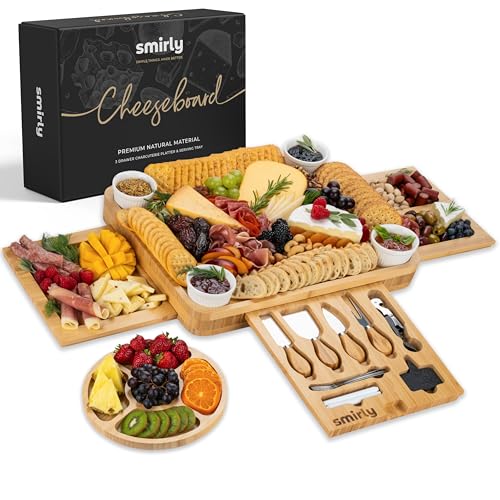
Bamboo is lighter and usually costs less, though it can feel harder under a cheese knife. Marble stays cool and helps cheese hold its shape on a warm evening, but it is heavy, can chip, and stains from wine and berries left sitting. Slate gives a dark background for pale cheeses and takes chalk labels well, yet it is brittle and best kept for seated serving. Tiered and swivel boards save table space but are harder to store and clean, so a plain flat board stays the most flexible choice for daily use.
Features Worth Paying For and Ones to Skip
Sturdy handles or cut outs make a loaded board safer to carry, and small feet keep it from sliding while guests slice. A shallow groove near the edge catches juice from fruit and pickles, and two or three small bowls corral olives, nuts, and spreads. Cheese knives are worth it only if you serve varied cheeses often, because a spreader and a firm cheese fork do different jobs.
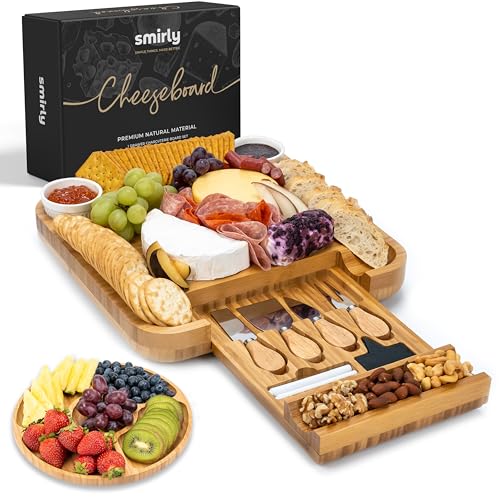
Skip a built in drawer unless knife storage is a real problem, since drawers add weight, trap crumbs, and make washing awkward. Also skip novelty shapes, because narrow points and curves waste serving area and make arranging food harder.
Food Safety, Glazes, and Surface Finishes
Wood and bamboo boards should have a food grade oil or wax finish rather than a glossy varnish that can chip into food. For glazed ceramic boards, look for clear labeling that the glaze is free of lead and cadmium, and avoid serving on a glazed surface that is cracked or heavily crazed, because damaged glaze is harder to clean well.
Keep raw meats off a serving board entirely, and use a separate cutting board for prep work. Arrange cured meats just before serving and return leftovers to the fridge within about two hours, sooner on a hot day.
Dishwasher, Heat, and Everyday Limits
Most wood, bamboo, marble, and slate boards are hand wash only. Dishwasher heat and long soaking warp wood, dull slate, and can crack stone along natural veins. If easy cleanup matters most, choose a glazed ceramic or glass board the maker rates as dishwasher safe, accepting extra weight. Keep every board away from ovens and hot pans unless the maker states a clear heat rating, because a serving board is not a trivet.
Set Size and Buying More Later
A set is good value only when you truly need the extras, such as bowls for dips or a second board for a sweet spread. Count what you already own first, since many homes already have small bowls and a decent cheese knife. Wood grain and stone veining vary from piece to piece, so if a matched pair matters for holidays, buy both boards at once rather than a year apart.
Realistic Budget Ranges for Home Buyers
Under $20, expect small bamboo or thin wood boards that handle snacks for two but may warp if soaked. About $20 to $50 covers the sensible middle ground: larger acacia or bamboo boards, some with handles, a groove, or a few bowls. Most homes should shop in this range first.
About $50 to $100 buys thicker hardwood, larger formats, marble, or fuller sets, and the gain is mainly size, weight, and finish. Above that you pay for craftsmanship, unusual wood, or gift presentation. A board at about $40 can serve the same cheese just as safely as one at about $90.
Three Buying Profiles and What to Prioritize
The Versatile Pick for Most Homes
Prioritize a rectangular hardwood board about 15 to 18 inches long and at least three quarters of an inch thick. That thickness resists warping, gives handles real strength, and feels steady when guests slice firm cheese. Choose a finish you can refresh with food grade oil, simple edges that wipe clean, and feet or a groove if the price stays inside about $20 to $50.
The Smart Pick for Tight Budgets and Small Kitchens
Prioritize a compact bamboo or acacia board that stores upright beside your cutting boards. A charcuterie board set with two small bowls can stretch a modest spread, because bowls make a small surface look full and keep wet foods off the wood. Skip drawers and knife bundles at this budget. A board under $30 that you use weekly beats a larger one that never leaves its box.
The Long Term Investment Pick
Prioritize dense hardwood about an inch thick or more, in a simple shape with no thin cut out sections that could split. Small knife marks blend into the grain over time instead of standing out, and a heavier board stays put during serving. Budget about $50 to $100, and plan on a few minutes of oiling a few times a year as the cost of that long life.
How to Evaluate a Charcuterie Board Before You Buy
Work through five checks in order. First, does the material match your care habits? Second, are you willing to hand wash and oil it, or do you need a dishwasher safe option? Third, do the size, shape, and color fit your table and storage? Fourth, does every piece in a set solve a real problem? Fifth, compare boards at the same size and thickness, not the same photo angle, and move on from listings that hide dimensions or finish details.
Choosing by Household and Space
Couples and solo hosts get the most use from compact boards that feel generous without demanding a full table. Our guide to the best small charcuterie board covers sizes for two people and apartment kitchens where storage counts. A small board also works as a weekday lunch board, so it earns its place far more often than a party only piece.
Gifts are the one case where looks can lead. For a wedding or housewarming, our guide to the best personalized charcuterie board explains engraving styles, placement, and ordering times. Check the spelling on your proof with care, and choose corner or edge engraving, because deep engraving near the center can catch crumbs.
For large families, two medium boards often beat one huge board. You can carry each one safely when loaded, set them in different spots so guests do not crowd one corner, and store them in normal cupboards.
Common Mistakes to Avoid
- Buying by photo instead of measurements: a board that is too small crowds food until crackers break and cheese slices overlap.
- Choosing a material you will not care for: wood that never gets oiled dries and splits, and marble left with wine stains looks tired within a year.
- Paying for extras you already own: bundled knives and bowls add cost and clutter when your drawer already holds good ones.
- Using the serving board as a cutting board: heavy chopping scars the surface you show guests, so prep on a work board instead.
- Ignoring storage until delivery day: a board with no home ends up warped beside a warm oven or buried under counter clutter.
Cost of Ownership and Care
After purchase, the only real cost is a bottle of food grade mineral oil or board cream, about $10 to $15 and lasting a year or more. Wash the board promptly in warm water with mild soap, dry it right away, and stand it upright so air reaches both faces. Our step by step guide on how to clean a charcuterie board covers stain removal and deep cleaning in full.
Oil wood when it looks pale or feels dry, usually every one to three months with regular use. Wipe on a thin coat, let it sit for a few hours, then buff off the excess. Never soak a wood board, and store every board somewhere dry with air flow rather than sealed in plastic.
Your Questions, Answered
What is the most reliable charcuterie board brand?
No single brand is the most reliable, because reliability comes from material, thickness, and finish rather than a name. A thick hardwood board with a food grade oil finish will outlast a thin board from any maker. Check warranty and return terms before you buy, since cover for warping and splitting in the first year tells you something useful about maker confidence.
How do you clean a charcuterie board?
You clean a charcuterie board by hand washing it in warm water with mild soap, rinsing, and drying it fully right away. For lingering odors from garlic or strong cheese, rub the surface with half a lemon and a pinch of coarse salt, then rinse and dry again. That gentle scrub lifts smells without harsh chemicals and is safe for wood, bamboo, and slate.
Is a charcuterie board worth it?
Yes, a charcuterie board is worth it if you host even a few times a year or enjoy relaxed snack style dinners at home. One good board replaces a jumble of plates, makes modest food look plentiful, and speeds serving and cleanup. Keep prep knives on a separate work board, and the smooth serving surface will stay presentable for years longer.
How long does a charcuterie board last?
A well cared for hardwood board can last ten years or more, while bamboo boards often serve about three to five years of frequent use before wear shows. Marble and slate can last far longer, as long as edges do not chip from knocks in the sink or cupboard. Storing stone boards upright with a soft cloth between pieces prevents most edge damage.
What is the best charcuterie board?
The right board is the one whose size fits your table and storage, whose material matches the care you will give it, and whose price sits in the sensible middle range. Before you order, trace the board dimensions in tape or paper on your table and set your usual bowls and glasses inside the outline. That two minute test shows crowding problems no product photo ever will.
Final Thoughts
Decide in the right order: size first, material second, extras last. Match the board to your household, your storage, and the care routine you will actually keep, and it will serve everything from Tuesday night snacks to your biggest holiday spread. Use the product table above to compare your finalists, and you will end up with the best charcuterie board for your home, not just the prettiest one in a photo.