Best Car Seat Travel Bag: Protecting Your Child Seat in Airports and Hotels (2026)
Disclosure: We may earn a commission when you buy through links on this page, at no extra cost to you. As an Amazon Associate I earn from qualifying purchases. Learn more

How to choose the best car seat travel bag: padded versus basic covers, wheels, backpack straps, sizing for infant and convertible seats and airline tips.
The first time you check a car seat on a flight, you learn how rough baggage handling can be. Dust, grease, rain and bumps are part of the journey, and a seat that arrives scuffed or damaged is a worry. A good bag keeps the seat clean and adds a little protection.
The best car seat travel bag is large enough for your seat, strong enough to survive handling and comfortable enough to carry through a terminal. The product table above includes padded bags, wheeled designs and a cart, so you can see a range of approaches.


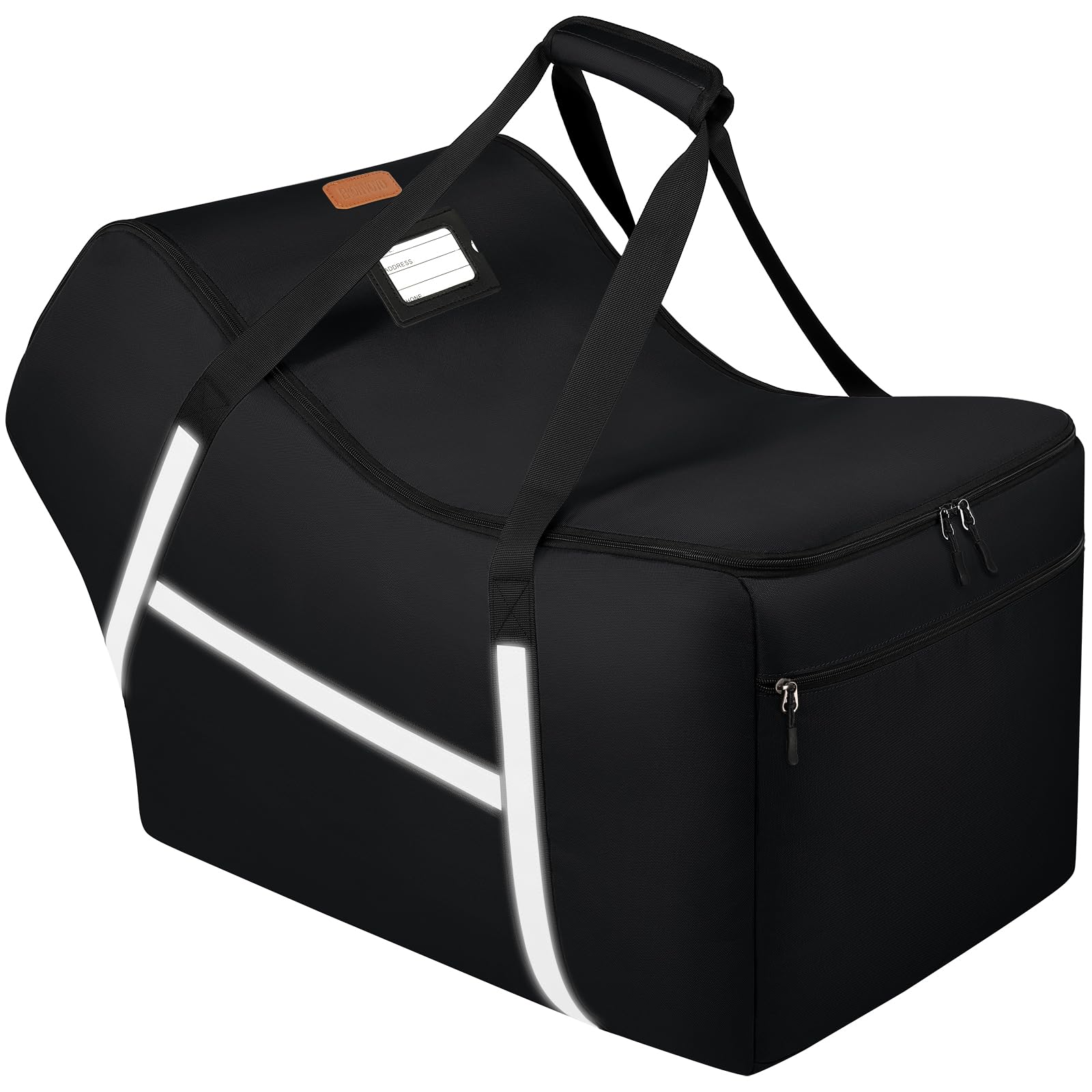


The right choice depends on the seat you own and how you travel, so start with these basics.
Why Use a Bag?
A plain plastic bag from the airline keeps dirt off but does little for protection and may tear. A durable bag can reduce scuffs and keep straps from catching on conveyor belts. It also gives you a way to carry the seat hands-free and keeps the straps from snagging on things. If your seat is expensive, a bag is cheap insurance, though it does not prevent every kind of damage.
Padded or Basic?
Padded Bags
These have a thick lining that cushions the seat and covers the corners. They provide the most protection and are the best choice for gate-checking or checking the seat with luggage. They are heavier, and they cost more.
Basic Covers
Thin nylon or polyester covers protect against dirt and dampness. They fold small and weigh little, making them useful when you gate-check for a short trip.
Sizing and Fit
Seats come in many shapes. A narrow infant carrier needs a different bag from a wide convertible or an all-in-one seat. Check the interior dimensions in the listing and compare them with your seat's width, height and depth.
Remember to measure with the cup holders and the headrest at its highest. Some bags are made to fit a specific brand or stroller system, while universal ones are cut to fit most seats. Choose a size with a little room to spare, and look for adjustable straps inside.
Carrying Options
- Backpack straps: let you carry the seat on your back and keep your hands free for the child.
- Wheels: a wheeled bag rolls through the terminal, which is helpful for heavy seats.
- Shoulder strap: simple but tiring over a long walk.
- Top and side handles: useful when you load the bag into a car or a cart.
Padded straps and a firm back panel make a heavy seat more comfortable to carry.
Durability
Look for heavy fabric that resists scraping, strong stitching and a zipper that closes fully. Reinforced corners are an advantage because the bag will be dragged and dropped. Wheels should be sturdy and not wobble, because a broken wheel makes the bag awkward to carry. Check that the handle attachments are well made.
Water and Dirt Resistance
Baggage areas get wet and dirty. A coated fabric repels rain, and a dark color hides marks. Some bags have a bright color or a reflective tag so you can spot them on the carousel. A zippered closure keeps the seat from sliding out.
Carts and Dollies
A travel cart is a small frame with wheels that holds the seat on a strap. It lets you push or pull the seat through the airport, and some convert to a stroller-like arrangement for toddlers. Carts are good for long walks, but they add an item to carry.
A foldable cart that fits in the bag is an elegant compromise. Check that the cart is compatible with the seat and the airline's rules.
Extra Pockets
A bag with a side pocket can hold a blanket, a diaper or the manual. Do not stuff the bag with heavy items, since airlines may count extra weight and the contents can damage the seat. Check your airline's baggage rules before packing anything alongside the seat.
Airline Tips
Most airlines allow a car seat to be checked free, either at the ticket counter or at the gate. Gate-checking means the seat is handled fewer times, but check each airline's policy. Attach a luggage tag, and tell the staff that it is a child seat. When you collect it, inspect it for cracks, frayed straps or loose parts, and stop using it if you suspect damage.
Cleaning and Storage
Shake out the bag and wipe it with a damp cloth. Let it dry fully, then fold it and store it with your travel gear. Wash a soiled bag following its label. Keep the seat's manual in a pocket so that it travels with the seat.
Choosing the Best Car Seat Travel Bag
Match the bag to your seat's dimensions and to the way you travel. Choose padding if you check the seat, and a lightweight cover if you gate-check. Pick wheels or backpack straps depending on your route through the airport. Read the listing to make sure it fits your seat type, and keep the receipt in case it does not.
Wheeled Bag or Backpack Style?
A wheeled bag suits a straight, smooth route, such as an airport with long corridors. A backpack bag helps when stairs, cobblestones and crowds are on the route, because you can carry the seat on your back and keep a hand for the child. Some bags offer both, with a retractable handle and shoulder straps.
Think about your usual trips before you decide. If you travel with a stroller too, you may find that a bag that slides onto the stroller handle is a useful design.
Infant Carriers and Strollers in One Bag
A bag made for an infant carrier is smaller and lighter than a convertible bag. Some travel bags hold a carrier and its base together, and others hold a stroller. If you have a travel system, look at whether you need two bags or one large one.
Do not pack extras that could press on the seat. Foam pads or blankets fill gaps, but avoid sharp or heavy items.
Saving Money on Travel Gear
A bag is useful, but it is not the only way to protect a seat. A sturdy plastic bin or the original box can work for a one-off trip. You can also take advantage of free gate-check bags offered by some airlines, though these are thin. For frequent trips, a durable padded bag pays for itself over time, and it can be used for years by siblings.
Related Guides
- Best Car Seat Cover
Frequently Asked Questions
Do I need a bag for a car seat?
It is not required, but it protects against dirt and scuffs.
Will a bag stop damage?
It reduces scuffs, but cannot prevent every impact. Inspect the seat afterward.
Should I check or gate-check?
Gate-checking means fewer handoffs. Follow the airline's policy.
Do bags fit all seats?
Not always. Check the dimensions and the seat type.
The Bottom Line
The best car seat travel bag fits your seat, carries comfortably and stands up to rough handling. Choose padding and the carrying method that suit your trip, inspect the seat after each flight and keep it clean.