
Best Automatic GMT Watches: A Practical Travel Guide for 2026
Disclosure: We may earn a commission when you buy through links on this page, at no extra cost to you. As an Amazon Associate I earn from qualifying purchases. Learn more

Travellers and mechanical watch fans can compare how the GMT hand works, movement, fit and price levels before choosing an automatic GMT watch.
Choosing the best automatic gmt watches comes down to a few practical questions: how does the second time zone work, how reliable is the movement, and does the case fit your wrist on a long travel day? A GMT watch adds a fourth hand that tracks a second zone, and the mechanical movement inside winds itself from wrist motion, so there is no battery to replace.
The comparison table below lines up current options. Use the sections that follow to judge what you see there, from the GMT mechanism to bezel legibility, strap choice and care, so you can buy once and enjoy the watch on every trip.


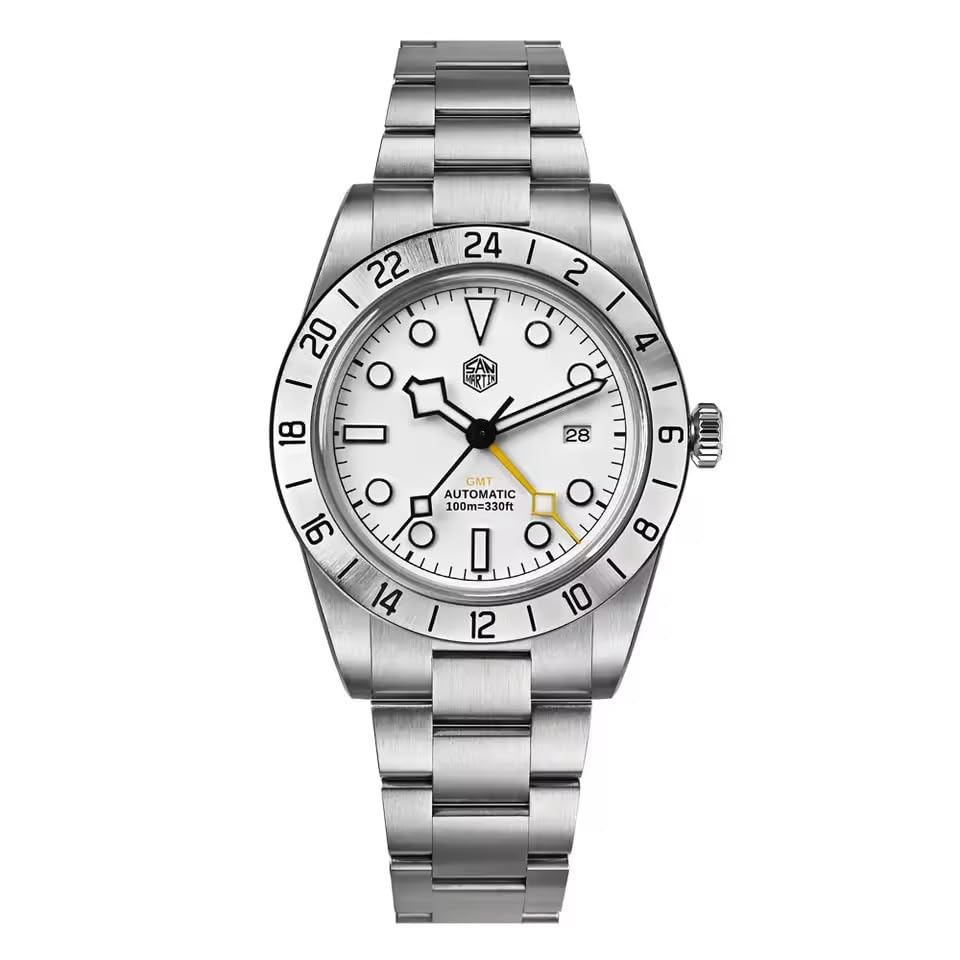


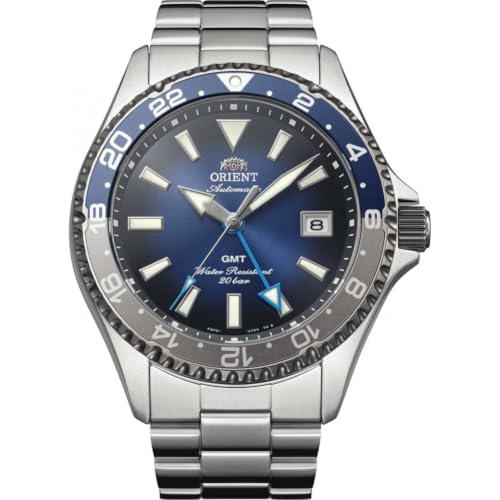
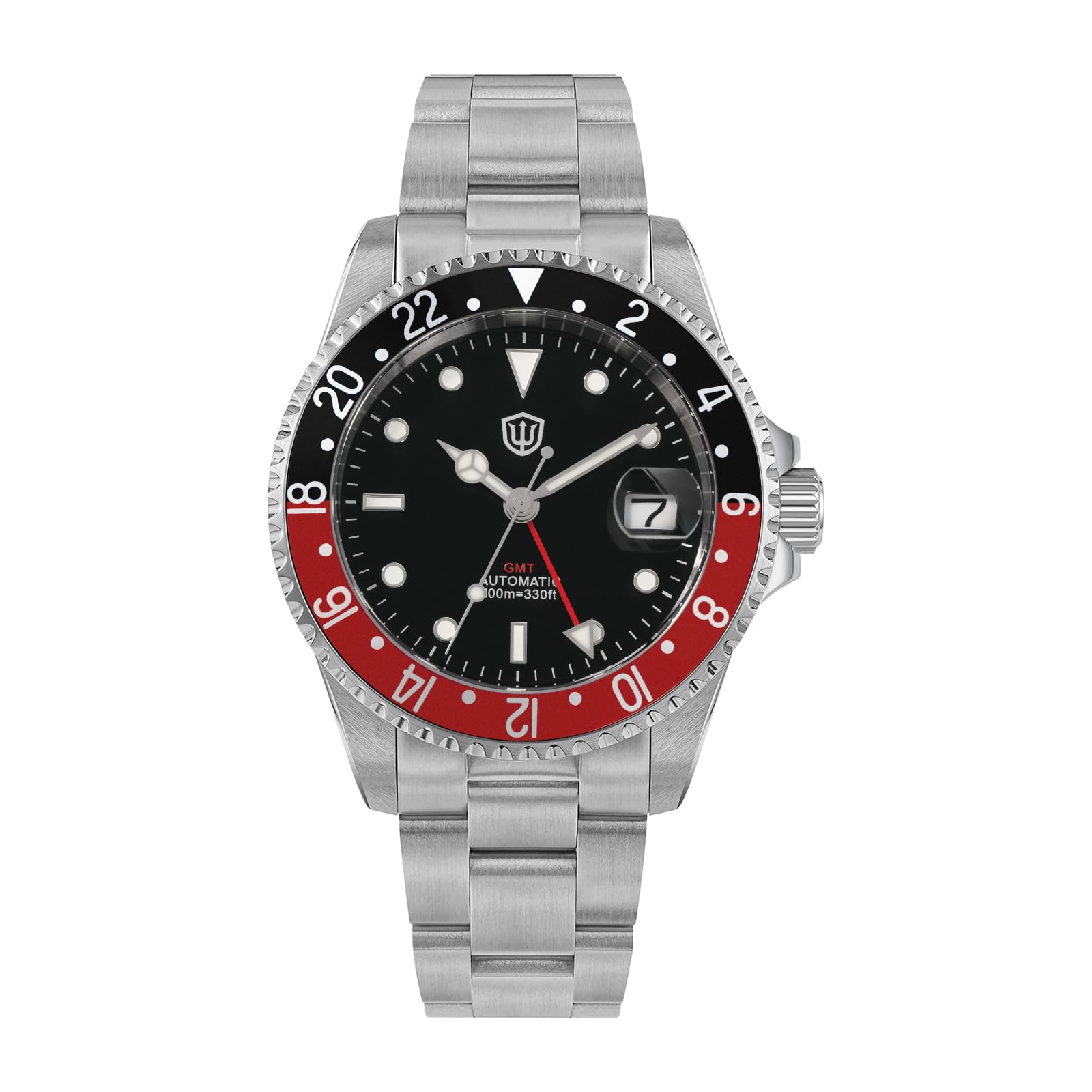
Who Should Buy an Automatic GMT Watch
A GMT watch suits frequent travellers, remote workers who talk to colleagues in other time zones, and anyone who likes watching two zones at a glance. The best automatic gmt watches also suit mechanical watch fans who want a more useful complication than a plain date.
It is less useful if you never leave one time zone and have no reason to track another. In that case a simpler three hand automatic is lighter, thinner and cheaper, and the extra hand would only be decoration.
How the GMT Hand Works
The GMT hand is an extra hour hand that circles the dial once every 24 hours. Read against a 24 hour scale on the bezel or dial, it points to a second zone, usually your home time while you travel.
There are two common systems. A true GMT lets you jump the main hour hand forward or back in one hour steps with the crown, without stopping the watch, so local time changes instantly while the GMT hand keeps home time. A caller or office GMT instead sets the second zone with the crown and leaves the main hour hand alone. Choose the true GMT if you cross zones often, and the simpler system if you mostly track one fixed zone.
Movement and Power Reserve
Affordable automatic GMT watches usually use proven movements such as the Seiko NH34, the Sea-Gull ST16 family or Swiss designs at higher prices. A named movement with a stated power reserve of about 40 hours or more is a good sign, because it means the watch keeps running over a weekend off the wrist.
Mechanical watches gain or lose a few seconds a day, which is normal. Judge accuracy over a week rather than a day, and check whether the seconds hand stops when you pull the crown, a feature called hacking that makes setting the time exact.
Bezel and Legibility
A fixed 24 hour bezel reads the GMT hand directly, while a rotating bezel lets you move the scale to a third zone. Look for a GMT hand in a contrasting colour, such as red or orange, so you can tell it apart from the other hands at a glance. Strong lume on the hands and markers keeps the dial readable on a night flight or in a dim hotel room.
A crowded dial can hurt legibility. If you plan to check the second zone quickly in meetings or on the road, favour a clean layout with clear numerals over extra scales.
Case Size and Comfort
Most GMT watches run from about 38 to 42 mm across, and the extra hand and gearing make the movement slightly thicker than a plain automatic. Check the thickness and the lug to lug length, not only the diameter. A watch around 12 to 13 mm thick usually slides under a cuff, while a tall case can feel awkward on travel days. Smaller wrists often look best in 38 to 40 mm cases.
Water Resistance for Travel
A rating of 100 meters covers hotel pools and rain, and 200 meters suits snorkelling and beach days. A screw down crown adds security. Do not assume every GMT is swim ready, because dress style GMT models may offer only 30 to 50 meters. Check the rating and the crown type before you pack the watch for a beach trip.
Strap and Bracelet Choice
A steel bracelet handles daily wear and suits business trips, but it is heavier and may need link adjustments. Rubber and fabric straps are lighter, dry fast and handle heat well on active trips. Standard 20 or 22 mm lug widths and quick release bars make it easy to carry a second strap for a change of look.
What You Get at Each Price Level
- About $100 to $250: mechanical movements from Japanese or Chinese makers, mineral or sapphire glass, and 100 meter resistance. Finishing is simpler, but the GMT function works well.
- About $250 to $600: sapphire crystal, better lume, stronger bracelets and true GMT movements from respected makers.
- About $600 and above: Swiss or in house movements, refined finishing and longer warranties. The gains are mostly polish and brand value rather than travel usefulness.
How to Set a GMT Watch
- Pull the crown to its outermost position and set the main hour and minute hands to local time.
- Move the GMT hand to your reference zone, as the manual describes, using the position that adjusts only that hand.
- Read the second zone against the 24 hour scale, remembering that the hand points to the hour of the day, not only the hour of the night.
- When you travel, use the hour jump position (on a true GMT) to move the main hour hand to the new local time.
Care and Common Mistakes
Service the movement every 5 to 7 years, rinse the watch in fresh water after salt water, and keep it away from strong magnets such as speaker grills and magnetic bag clasps. Never adjust the date between about 9 pm and 3 am on models that warn against it, because the date mechanism is engaged at that time.
Common mistakes include buying on looks without checking the hand system, ignoring lug to lug length, and assuming every GMT is waterproof enough for swimming. Check each of these in the listing before you order.
Related Choices Worth Comparing
To widen the search, read our guides to best gmt watches, best automatic watches, best gmt automatic watches under 1000, best affordable automatic watches and best men's automatic watches.
FAQ
What is a GMT watch?
A GMT watch shows a second time zone with an extra hand that makes one turn every 24 hours. You read it against a 24 hour scale, so you can see home time while your main hands show local time.
Do automatic GMT watches need winding?
Wrist motion winds them while you wear the watch, and you can also wind them by hand with the crown. If a watch stops after sitting for a couple of days, wind it about 30 turns and set the time again.
How do I set a GMT hand?
Pull the crown to the position the manual names for the GMT hand and turn it to your reference zone. On a true GMT, the main hour hand has its own jump position so local time can change without stopping the watch.
Are GMT watches good for travel?
Yes, they are among the most practical mechanical watches for frequent travel because they show home time and local time at once. They also suit remote workers who schedule calls across zones.
How much power reserve do I need?
About 40 hours covers a weekend off the wrist. Longer reserves help if you rotate between watches, but they matter less if the GMT stays on your wrist every day.
Final Thoughts
Pick the hand system that matches how you travel, check the movement name and water resistance, and make sure the case fits your wrist. Use the product table above to compare finalists, and the best automatic gmt watches will turn from a confusing category into an easy choice for your next trip.


