Best 2 Person Plug and Play Hot Tubs at Every Price: What Your Money Really Gets You for 2026
Disclosure: We may earn a commission when you buy through links on this page, at no extra cost to you. As an Amazon Associate I earn from qualifying purchases. Learn more

Compare the best 2 person plug and play hot tubs by price tier with this buying guide on heaters, jets, insulation, power needs, upkeep and value.
A plug and play hot tub runs from a standard household outlet, which removes the electrician visit that a hardwired spa requires. That convenience explains the wide price range in this category, because makers compete on insulation, pumps, and build while sharing the same power limit. Knowing where extra money actually shows up helps you find the best 2 person plug and play hot tubs for your budget instead of paying for decoration.
This guide sorts the market into three price tiers, then covers the features worth funding and the costs that arrive later. Keep the product table open as you read and check each model against the tier it claims to sit in.
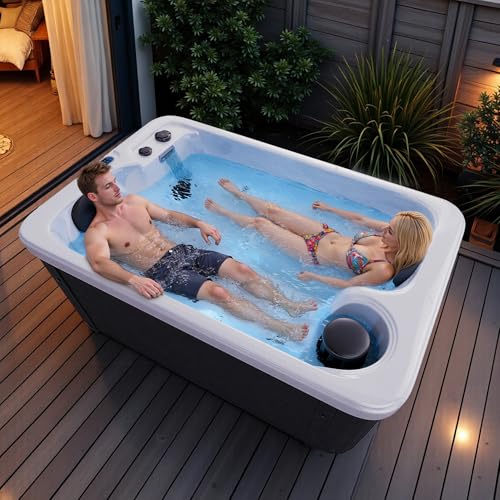
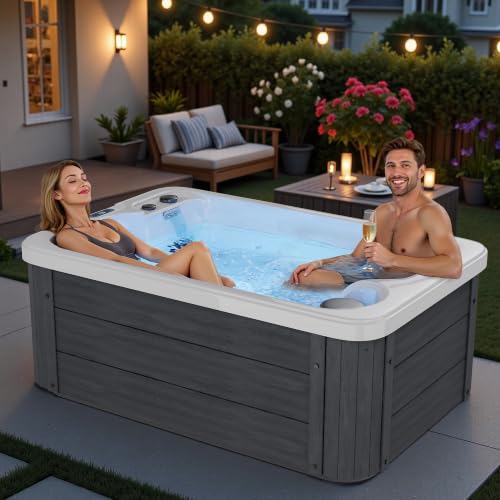
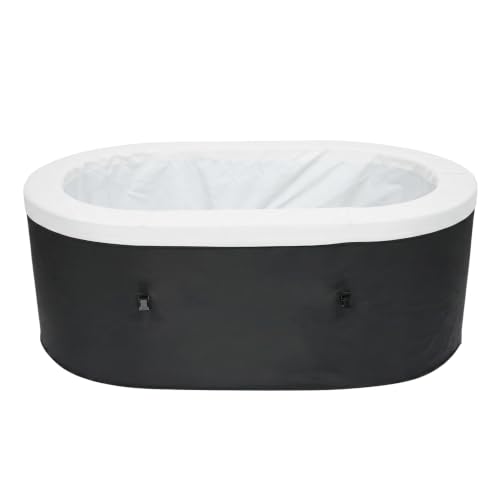
What Each Price Tier Should Deliver
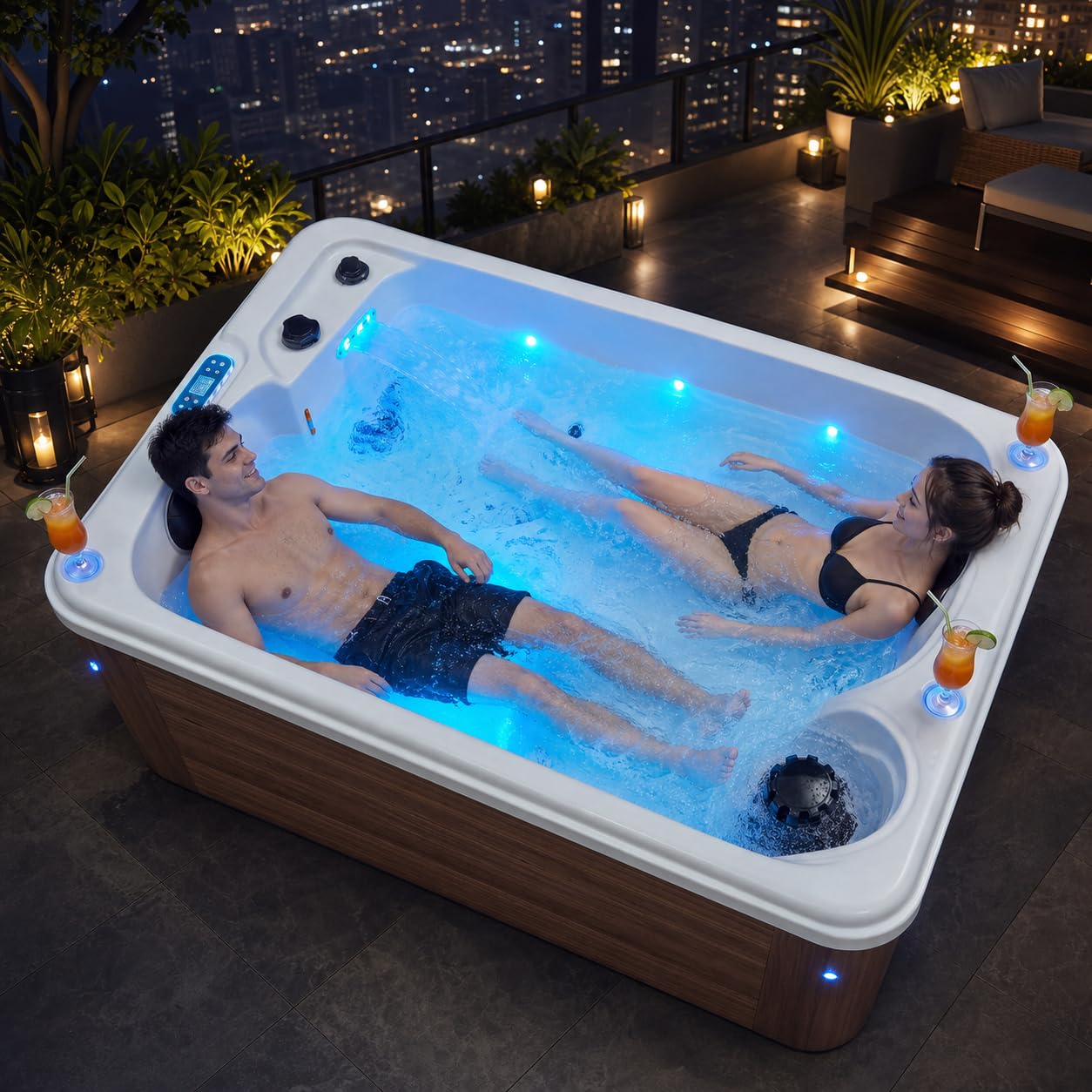
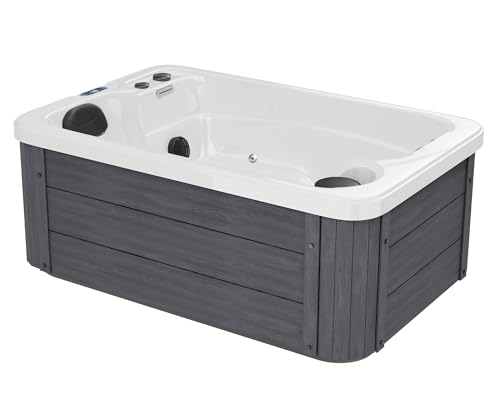
Treat the three profiles below as yardsticks. A tub priced like a premium model should show premium insulation and warranty terms, and a budget tub should at least cover the safety and comfort basics. Profiles keep you honest when a listing leads with jet counts and lights.
The Budget Profile: Simple Soaking, Honest Limits
Budget plug and play tubs, usually around $2,000 to $3,000, give you a molded shell, a small number of jets, and basic controls. Heat up times are slow because the heater shares the standard outlet limit, and insulation may be partial rather than full. This profile suits mild climates, seasonal use, and buyers who want an easy first step into hot tub ownership. Verify that a proper insulated cover is included, because buying one separately can erase much of the saving.
The Midrange Profile: Where Most Buyers Land
Midrange models, roughly around $3,000 to $4,500, add full insulation, better seating shapes, stronger pumps, and warranties that cover equipment for a few years. Heating still takes patience compared with hardwired spas, but a well insulated midrange tub holds temperature well once it is hot. Filtration and sanitation aids improve at this level, which lowers weekly chores. For most couples in most climates, this tier offers the most comfort per dollar, and it is the benchmark the other tiers must beat.
The Premium Profile: Build and Insulation First
Premium plug and play tubs, often about $4,500 to $6,500, spend your money on thicker shells, the best insulation in the category, quieter pumps, and longer warranties. Controls get nicer and cabinets look better, but the real gains are lower running costs and slower heat loss between soaks. This profile suits cold climates and near daily use, where insulation quality pays you back every week. It does not remove the core limit of the format: the heater still cannot run at full power while the jets run hard on many models, so check that detail in the specs.
Best 2 Person Plug and Play Hot Tubs: What Your Money Gets You
The tiers overlap at the edges, and sale prices blur the lines further, so judge by construction rather than the tag alone. The pattern to remember is simple: as price rises, insulation, components, and support improve first, and luxury extras arrive last.
Budget Tier: What to Expect
Expect a rotationally molded or basic acrylic shell, modest jet counts, and a single speed pump. Covers may be thinner, so winter running costs in cold states can disappoint. Setup is the easiest here, with lighter dry weights that two adults can position on a pad. This tier works best where winters are mild or the tub will be drained and stored for the cold season.
Midrange Tier: The Sweet Spot for Most Buyers
At this level you should see full foam or quality perimeter insulation, a locking cover with real thickness, and seating shaped for two different body sizes. Pumps move water with more authority, so jets feel purposeful rather than decorative. Warranty coverage on equipment for two to three years is a fair expectation. If a midrange tub lacks any of these, it is a budget tub wearing a midrange price, and you should negotiate or move on.
Premium Tier: When Spending More Pays Off
Premium money buys durability: reinforced shells, better plumbing parts, stronger covers, and service networks that stock parts. It also buys quieter operation, which matters when the tub sits near a bedroom window or a neighbor's fence. Energy use per soak drops thanks to insulation, so the running cost gap versus midrange narrows the price gap over years. Buyers comparing installation styles can also read our guide to the best 2 person outdoor hot tubs, which covers hardwired models and their trade offs.
Features Worth Paying For (and Ones to Skip)
Four checks separate a sound purchase from a shiny one in this category. Run through them before you compare colors or lighting.
Intended Use and Who It Is For
Match the tub to your real pattern: nightly relaxation, post workout recovery, or weekend social soaking. Plug and play models reward planners, because you set the temperature and keep the tub hot rather than heating from cold each time. If your household schedule is irregular, strong insulation matters even more, since the water must stay near ready between uses. Renters who may move should value lighter weight and simple setup, while permanent installations can favor heavier, better insulated builds.
Size, Weight, and Fit for Your Space
Two person tubs are compact, but a filled unit still weighs roughly 1,200 to 1,800 lb, so the surface must be level, firm, and rated for the load. A ground level pad is the safest default, and any deck installation deserves a structural check first. Confirm the tub fits through gates and along the delivery path before ordering. Leave room on the equipment side for a technician, and keep the outlet location in mind so the cord reaches without strain or extension leads, which should never be used with a hot tub.
Key Performance Specs
The specs that matter most are heater behavior, pump strength, and insulation method. Many plug and play tubs heat at a reduced rate while jets run, so ask how the model handles both at once if long jet sessions matter to you. A reasonable heat up rate is roughly one to two degrees per hour, which makes an insulated cover essential. Jet count means little without pump power behind it, so favor fewer well placed jets over a forest of weak ones. For a wider look at the format, see our guide to the best plug n play hot tubs across sizes.
Build Quality and Materials
A rigid shell that does not flex underfoot, plumbing you can access through a proper panel, and a cabinet that sheds weather all predict a longer life. Check that the cover uses marine grade vinyl and dense foam, because the cover is both your insulation and your safety barrier. Stainless or quality plastic jet fittings resist the corrosion that cheap fittings show within a few seasons. Ask about freeze protection behavior if the power fails in winter, since standing water in pipes is the classic cold climate failure.
Picking the Right Size for Different Uses
Most readers of this guide want a two person tub, but it is worth one short check of the larger option before you commit, because stepping up in size changes the power, cost, and space picture completely.
Best 6 Person Plug and Play Hot Tubs: Where Your Money Goes
The best 6 person plug and play hot tubs stretch the same outlet limit across far more water, so heat up times grow longer and strong insulation becomes non negotiable. Filled weight climbs well beyond what many decks accept, and delivery paths get tighter. Choose that size only when group soaking is truly your main use. For couples, the two person format heats faster, costs less to run, and fits more yards, which is why it remains the sensible default.
Long Term Costs to Factor In
Electricity is the headline running cost, and insulation quality decides it: a well insulated tub in a mild climate may cost a modest monthly amount, while a thin walled tub in a cold state can cost several times more. Add filters once or twice a year, water care chemicals, and a replacement cover every four to six years. Budget models sometimes need earlier pump or heater service, which is another reason the midrange tier often wins on total cost. Keep receipts and a simple maintenance log, because documented care supports warranty claims. Shoppers watching the entry price closely can compare the simpler end of the market in our guide to the best affordable plug and play hot tubs.
FAQs
How long does a 2 person plug and play hot tub last?
A well kept model typically serves ten years or more, with the cover, pump, and heater as the parts most likely to need replacement along the way. Molded shells often outlast their equipment by years. Water balance is the biggest controllable factor, since neglected chemistry attacks heaters and seals. Keep the tub covered, the filter clean, and the cabinet vents clear, and have small leaks fixed early before they soak insulation and framing.
Are expensive 2 person plug and play hot tubs worth it?
They are worth it when the premium buys insulation, shell strength, and warranty length, because those reduce running costs and repairs for years. They are not worth it when the premium buys mostly lights, speakers, and styling. Cold climate and daily use tilt the math toward premium builds, since heat loss is a nightly expense. Mild climate weekend users can stay midrange and lose very little.
How do I maintain a 2 person plug and play hot tub?
Check and balance the water a few times a week, rinse the filter regularly, and keep the cover on between soaks. Small water volume means chemistry shifts faster than in a big spa, so little and often beats occasional large corrections. Drain and refill every few months based on use. Never use an extension cord to reach an outlet, keep the GFCI protection in place, and ask an electrician to check any outlet that trips repeatedly rather than resetting it and hoping.
What features matter most when buying 2 person plug and play hot tubs?
Insulation, cover quality, and heater behavior matter most. Together they decide how much each soak costs and how ready the tub feels when you want it. Next come seat comfort and honest warranty terms. Jet counts, lighting, and water features add pleasure but cannot rescue a cold, costly tub. Finally, confirm the electrical setup is a dedicated GFCI protected outlet installed to local code, and keep children supervised at all times around the water.
How much should I spend on a 2 person plug and play hot tub?
Most buyers do well around $3,000 to $4,500, where insulation and components become genuinely dependable. Below that range, inspect the cover and insulation claims carefully and plan for higher winter power bills. Above it, demand longer warranties and clear build advantages. Set aside extra for site preparation, delivery, and the first season of chemicals and filters so the true total does not surprise you.
Wrapping Up
Choose your tier by climate and how often you will soak, then verify insulation, cover quality, and warranty before anything decorative. That order of priorities is what separates a relaxing purchase from an expensive lesson. On those terms, the best 2 person plug and play hot tubs are the ones that stay hot, stay cheap to run, and fit your pad without drama, so check your finalists against the product table above and buy the tier you can own happily for a decade.