
Best 10 Inch Windows Tablets: Our 2026 Checklist
Disclosure: We may earn a commission when you buy through links on this page, at no extra cost to you. As an Amazon Associate I earn from qualifying purchases. Learn more

Learn how to choose the best 10 inch windows tablets with a clear checklist covering processor, RAM, display, battery life, ports, and keyboard fit.
A small Windows tablet can replace a notebook for travel, classes, and light office work, but only if the core parts are strong enough. This guide scores the best 10 inch windows tablets against a simple checklist, so you can compare any model in minutes. You will learn what counts as good or weak for the processor, keyboard, battery, display, memory, and ports, and you can check the picks in the product table against those same marks.
The 10 inch size is a compromise by design. It is light enough to hold for reading and notes, yet small enough that a weak chip or a cramped keyboard hurts fast.



How We Evaluate 10 Inch Windows Tablets
Use this section as a scorecard. For each area below, a good mark means the tablet handles daily Windows work without slowdowns, and a weak mark means you will feel the limit within weeks. If a listing hides a spec instead of stating it, treat that as a weak mark until you can confirm it elsewhere.
Processor and Performance Tier
The processor decides whether the tablet feels quick or tired. For email, documents, and web work, look for a current mid range chip with at least four cores and a rated speed that stays steady under load. Entry chips with very low power limits can open apps slowly and stutter when you split the screen. If you edit photos, work in large spreadsheets, or run several browser tabs at once, step up a tier. A stronger chip also extends useful life, because Windows updates and apps grow heavier each year.
Keyboard, Trackpad, and Build
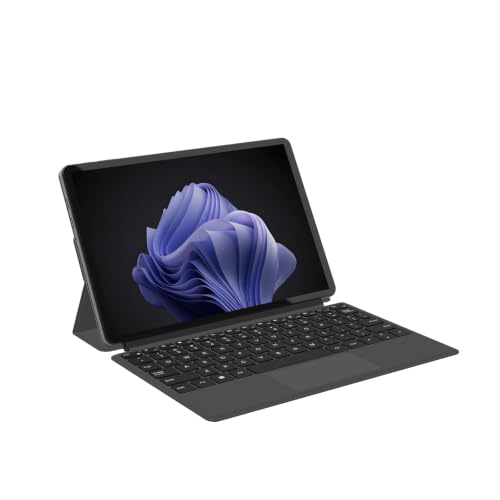
Most 10 inch models rely on a detachable keyboard cover, so judge that cover as part of the product, not as a bonus. Keys should have clear travel and little flex when you press the center rows. A trackpad that tracks smoothly and clicks evenly matters more than a large size on this class of device. For the body, metal shells resist flex and feel solid in a bag, while plastic shells weigh less. Check the kickstand too. A stand that holds firm angles makes desk and lap use far easier.
Graphics (Integrated vs Dedicated GPU)
At this size, graphics are almost always integrated into the processor, and that is fine for most buyers. Integrated graphics handle video calls, streaming, photo edits, and light creative work without trouble. What they cannot do well is modern gaming at high settings or heavy 3D design. If those tasks are central for you, a 10 inch tablet is the wrong tool, and a larger laptop will serve you better. Judge graphics by your real tasks, not by a headline claim, and favor newer integrated graphics over older ones.
Battery Life in Real World Use
Maker claims usually assume low brightness and light tasks, so expect less in daily use. A good target is a full work or school day of mixed use, meaning web work, documents, and some video at moderate brightness. Ask how fast the tablet charges over USB C, because a quick top up during lunch can offset a smaller battery. Also check whether the charger in the box matches the fastest charging speed. A slow bundled charger can turn a strong spec into a daily annoyance.
Display Size, Resolution, and Brightness
On a 10 inch screen, resolution of at least 1920 by 1200 keeps text sharp when you read documents up close. Brightness matters just as much. Around 400 nits or more lets you work near windows and under bright office lights without strain. Touch response should feel instant, and pen support is worth checking if you take notes or mark up files. If you are also weighing plain media tablets, see our guide to the best 10 inch tablets for how this size feels across systems.
RAM and Storage
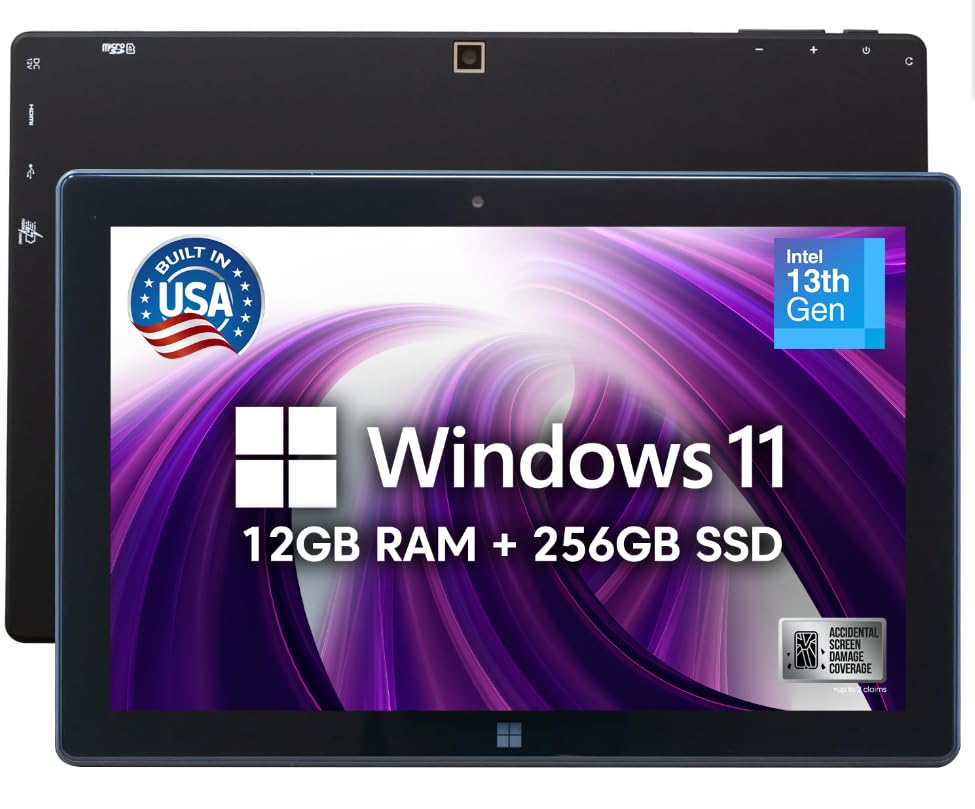
Treat 8 GB of RAM as the floor for smooth Windows use, and prefer 16 GB if you multitask or plan to keep the tablet for several years. Storage should be a solid state drive, listed as SSD, with 256 GB a sensible target for most people. Models with only 128 GB fill quickly once Windows, updates, and a few large apps are installed. Slow embedded storage, often listed with a different label, can make even a decent chip feel sluggish. Confirm the storage type before you buy.
Ports and Connectivity
A single USB C port is common at this size, but it forces choices between charging and accessories. A second port, or a port that supports fast data and video output, adds real flexibility for a monitor, a drive, or a hub. Modern WiFi, such as WiFi 6E where available, improves speed on busy networks at school or work. Bluetooth should pair reliably with a mouse, pen, and earbuds at the same time. If you need wired internet or many plugs, budget for a compact hub from the start.
Three Profiles for the Best 10 Inch Windows Tablets
Instead of naming models, use these three profiles to sort the product table. Each profile describes the spec mix that earns a pass for a common type of buyer, plus the limit you accept at that level. Match your main tasks to one profile, then check price only after the specs fit.
All-Round Profile
This profile suits buyers who want one device for work, study, and travel. Look for a mid range or stronger processor, 16 GB of RAM, and a 256 GB SSD. The display should be sharp and bright, and the keyboard cover should feel firm enough for long typing sessions. Expect to pay in the upper part of the range, roughly about $700 to $1,100 depending on the pen and keyboard bundle. The trade off is weight and cost, since stronger parts and metal builds add both.
Value Profile
The value profile fits students and home users whose work is mostly documents, browsing, and streaming. An entry to mid range chip, 8 GB of RAM, and 128 GB to 256 GB of storage can be enough if the storage is a true SSD. Prices often land around $350 to $600. The limit is headroom. Heavy multitasking will feel tight sooner, and the keyboard cover may be sold apart, so add that cost before you compare totals.
Compact Profile
This profile is for readers, note takers, and frequent travelers who value low weight above raw speed. Prioritize a light body, a bright screen, and battery life that covers a full day away from outlets. A modest chip is acceptable here because the tasks are light. If you mostly want a simple screen for media and reading, our guide to the best android tablets 10 inch covers a lighter weight option worth comparing. The limit is clear. Small and light rarely pairs with strong sustained performance.
Quick Buyer Checklist
Run through these questions before you pay. A no answer does not always rule a model out, but two or more no answers mean you should keep looking.
- Does it have at least 8 GB of RAM, and 16 GB if you multitask?
- Is the storage a true SSD of 256 GB or more?
- Is the screen at least 1920 by 1200 and bright enough for your rooms?
- Does the keyboard cover come in the box, or did you add its cost?
- Can it charge and use an accessory at the same time, or do you own a hub?
- Does the pen work with the apps you plan to use for notes?
- Is the warranty at least one year, with clear repair options?
- Does the total weight with the keyboard still suit your bag?
If size is your main open question, our roundup of the best tablets with 10 inch screen explains how this footprint compares with nearby sizes. Readers who find 10 inches too tight for split screen work can also look at the best tablets over 10 inches for more room.
Red Flags to Watch For
Vague spec sheets are the biggest warning sign. If a listing will not state the exact chip, RAM, or storage type, assume the weakest common option. Be wary of storage described only by size, since slow embedded storage is often hidden that way. Very short warranties, under one year, suggest low confidence from the maker. Prices far below the usual range, around $200 or less for a full Windows device, usually mean old parts and poor battery health. Finally, check return terms, because keyboard feel and screen glare are hard to judge from photos alone.
Budget shoppers still have sound choices if they check the basics with care. Our guide to the best inexpensive 10 inch tablets shows where lower priced models usually save money and where they should not.
Care and Maintenance Tips
Keep Windows and the device firmware updated, since updates often improve battery use and pen or touch response. Avoid leaving the tablet plugged in at full charge for weeks at a time, which can age the battery faster. Use a padded sleeve when you commute, because the thin glass and the keyboard cover pick up damage easily in a crowded bag. Wipe the screen with a soft dry cloth, and keep the charging port free of lint so the cable seats fully.
FAQs
Is a Chromebook enough for school?
For many students, yes, if the school works mainly in a browser and web apps. A Chromebook cannot run full Windows programs, though, so check whether your courses need specific desktop software, offline file access, or a pen app that only runs on Windows. Also confirm how your school handles printing and exam software, since those two needs often decide the question more than daily classwork does.
Is a dedicated GPU worth it in a 10 inch tablet?
For most buyers, no, because this size class almost never offers one and the tasks it suits do not need one. A dedicated GPU helps with heavy gaming, 3D work, and long video renders. If those tasks matter to you, the better move is a larger laptop with proper cooling. Paying for stronger integrated graphics and more RAM gives a small tablet a bigger daily gain than chasing a GPU it cannot cool.
Should I buy a laptop or a tablet?
Choose a tablet if touch, pen notes, and light weight matter most and your work is mainly documents, web apps, and media. Choose a laptop if you type for hours, need many ports, or run demanding software, since a fixed keyboard and better cooling help every day. A practical check helps. If you would keep the keyboard attached nearly all the time, a small laptop may simply fit your routine better.
How long should a 10 inch windows tablet last?
A well chosen model should last about four to five years for everyday work. Battery health fades first, so expect shorter unplugged time in later years even if the chip still feels fine. Buying more RAM and storage at the start is the simplest way to extend useful life, because neither can be upgraded later on most models. Careful charging and a protective sleeve also reduce the wear that ends a tablet early.
How much RAM do I need in a 10 inch windows tablet?
You need at least 8 GB for smooth basic use, and 16 GB is the safer choice for multitasking and longer ownership. With 8 GB, Windows plus a browser and office apps can fill memory quickly, which slows switching between tasks. If you edit photos, join video calls while sharing your screen, or keep many tabs open, treat 16 GB as your starting point rather than an upgrade.
Our Verdict
The specs that decide satisfaction are the processor tier, RAM and storage type, and keyboard quality. Get those three right and the 10 inch size becomes a real strength for travel and flexible work. Get them wrong and no low price will make up for daily slowdowns. Work through the checklist, match one profile to your tasks, and compare your shortlist with the product table before you settle on the best 10 inch windows tablets for your needs.


